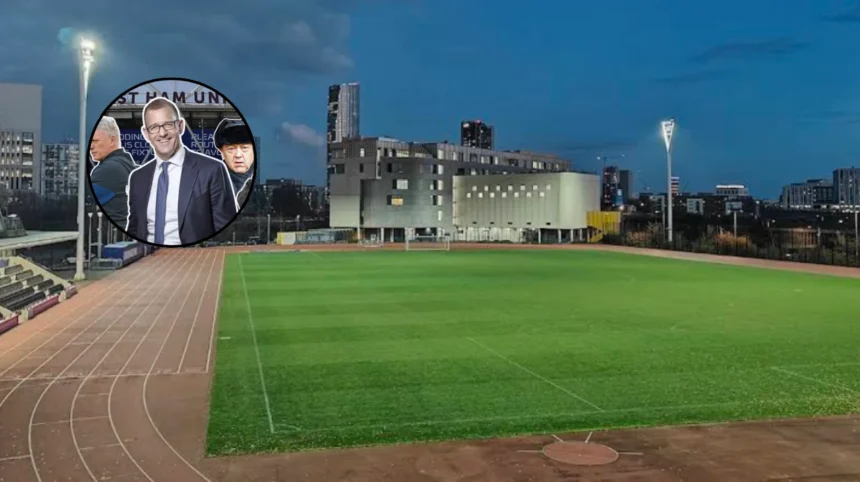
Key Points
- David Sullivan has confirmed his ongoing position at West Ham United alongside Daniel Kretinsky, addressing speculation about his departure.
- Reports emerged linking Karren Brady’s exit to a potential sale of Gold family shares to Kretinsky, who initially bought 27% of the club for £150m in November 2021.
- Fans have protested against Brady and Sullivan throughout the season, viewing Brady’s departure as progress toward broader ownership changes.
- No immediate takeover by Kretinsky as majority stakeholder has been confirmed; Sullivan remains the majority shareholder.
- Speculation suggests Brady’s last act may have facilitated share transactions, but Sullivan clarified stability in the current ownership structure.
West Ham (East London Times) April 22, 2026 – David Sullivan, West Ham United’s chief, has directly addressed media reports suggesting his exit and a shift toward Czech billionaire Daniel Kretinsky becoming the majority stakeholder. Sullivan confirmed that both he and Kretinsky maintain their positions at the club, quelling immediate speculation triggered by Karren Brady’s recent departure.
- Key Points
- Why Did David Sullivan Address West Ham Ownership Speculation?
- What Role Did Karren Brady Play in Recent West Ham Developments?
- How Has Daniel Kretinsky’s Involvement Evolved at West Ham?
- What Are the Current Ownership Shares at West Ham?
- Has Fan Pressure Influenced West Ham’s Leadership Changes?
- Background of the Development
- Prediction: Impact on West Ham Supporters
As reported by the Hammers.news team, Sullivan spoke out shortly after Karren Brady left the club, with claims that her final act involved overseeing the sale of some Gold family shares to Kretinsky. This followed Kretinsky’s initial acquisition of a 27% stake in November 2021 for £150m, a move that positioned him on the board alongside Pavel Horsky.
Why Did David Sullivan Address West Ham Ownership Speculation?
Sullivan’s statement came amid fan protests calling for both Brady and himself to leave West Ham, intensified by the club’s move from Upton Park to the London Stadium in 2016.
Hammers supporters saw Brady’s exit as “one down, one to go,” according to fan sentiments noted in multiple reports.
Hammers.news detailed that no sooner had Brady departed than reports surfaced about share sales, raising questions on how Kretinsky could gain majority control without a full takeover, given Sullivan’s majority holding. Sullivan clarified his and Kretinsky’s joint position, stating there were no plans for immediate changes.
As noted by Reuters in earlier coverage, Kretinsky’s 1890s Holdings group, majority-controlled by him and partner Patrik Tkac, had secured the initial 27% stake, valuing the club at around £600m at the time. Sullivan’s confirmation aligns with the current structure where he holds 38.8%, Kretinsky 27%, Gold family 25.1%, and Albert Tripp Smith 8%.
What Role Did Karren Brady Play in Recent West Ham Developments?
Karren Brady’s departure has left Sullivan facing a leadership headache, as reported by Football Insider’s finance correspondent. Brady, vice-chair, had been a close ally to Sullivan amid ongoing fan discontent over the stadium relocation and club performance.
Hammers.news highlighted that reports suggested Brady oversaw Gold family share sales to Kretinsky as her last act, though no concrete evidence of a majority shift emerged.
Fans celebrated her exit, with speculation mounting ahead of West Ham’s match against Everton.
Football Insider’s Keith Wyness, speaking on the Inside Track podcast, indicated he would “not be surprised” to see Sullivan and Brady step down at season’s end, citing years of fan unhappiness. Wyness stated,
“The fans obviously have shown their unhappiness for many months now, many years even, with Sullivan and Brady.”
How Has Daniel Kretinsky’s Involvement Evolved at West Ham?
Daniel Kretinsky joined West Ham’s board in 2021 after his £150m investment, as confirmed by BBC Sport. The Czech billionaire, owner of Sparta Prague, and associate Pavel Horsky were appointed alongside joint-chairmen Sullivan and the late David Gold, plus vice-chair Brady.
Recent reports from The Sun suggested Kretinsky’s interest in buying David Gold’s shares for £150m to become majority owner, following an initial stake purchase valued between £180m-£200m. However, Sullivan’s confirmation indicates no such transaction has altered the balance yet.
Claretandhugh.info reported ownership changes flagged “within weeks,” echoing Wyness’s comments on potential Sullivan and Brady exits. Yet, Sullivan’s statement reaffirms stability with Kretinsky.
What Are the Current Ownership Shares at West Ham?
West Ham’s ownership remains split: Sullivan at 38.8%, Kretinsky at 27%, Gold family at 25.1%, and Tripp Smith at 8%, per Football Insider. This structure complicates any takeover, as noted in discussions of potential £300m+ bids if relegation occurs.
West Ham World observed that board changes post-Brady spark hope for modernising leadership, though Sullivan’s majority stake persists. Speculation ties timing to season-end announcements, but Sullivan dismissed imminent departures.
Albert Tripp Smith, holding 8%, recently met US investors, per YouTube reports, amid pressure on ownership, but details on buying Gold shares or full takeover remain unclear.
Has Fan Pressure Influenced West Ham’s Leadership Changes?
West Ham fans have protested Sullivan and Brady all season, rooted in the 2016 stadium move, as covered by Football Insider. Brady’s exit aligns with “one down, one to go” chants, placing further pressure on Sullivan.
Hammers.news reported celebrations expected at the Everton match, viewing board shifts as foundational for growth. Fan misgivings with leadership have persisted, amplified by recent events.
Keith Wyness of Football Insider noted,
“There’s got to be questions about Sullivan and the ownership going forward,”
reflecting prolonged discontent.
Background of the Development
West Ham’s ownership dynamics trace to 2021 when Daniel Kretinsky acquired 27% for £150m, joining the board amid rejections of prior takeover bids by David Gold and David Sullivan. Karren Brady’s role as vice-chair involved navigating fan backlash over the London Stadium transition from Upton Park.
Sullivan has held majority control since earlier investments with Gold, whose passing prompted share-related speculation. Fan protests have intensified with on-pitch struggles, culminating in Brady’s exit and Sullivan’s clarifying statement. Kretinsky’s stake, via 1890s Holdings, marked external investment in the club valued at £600m then.
Prediction: Impact on West Ham Supporters
This development provides short-term reassurance to West Ham supporters by confirming Sullivan and Kretinsky’s positions, potentially stabilising leadership amid protests. It may temper immediate calls for Sullivan’s removal post-Brady, allowing focus on remaining fixtures. However, ongoing speculation could sustain fan pressure if performance dips, affecting match atmospheres and attendance. Supporters might see board changes as steps toward modernisation, influencing loyalty and engagement with future ownership talks. Prolonged uncertainty risks deepening divides, impacting community ties and merchandise sales.