Key Points
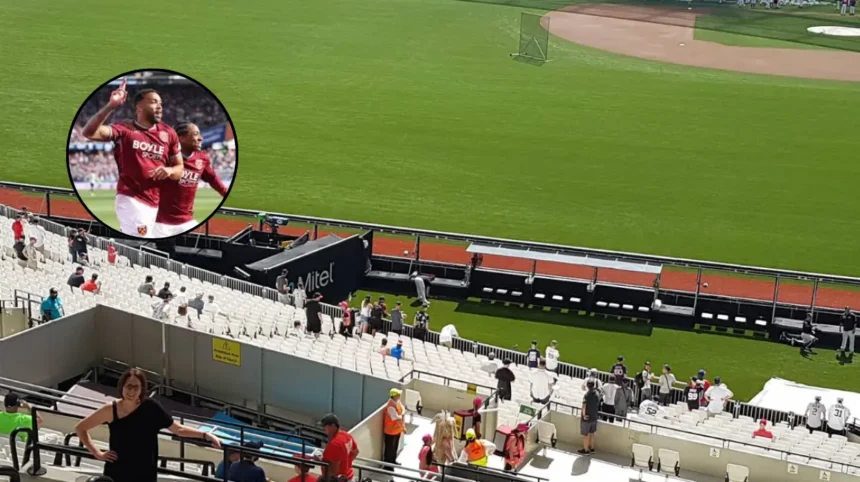
- Callum Wilson scored a 92nd‑minute winner as West Ham United beat Everton 2‑1 at the London Stadium to stay out of the Premier League relegation zone.
- Tomas Soucek had opened the scoring with a 51st‑minute header before Kiernan Dewsbury‑Hall equalised for Everton in the 88th minute.
- West Ham remain in 17th place, two points above the drop zone, following the result.
- Manager Nuno Espirito Santo’s side clung on to a vital three points after a topsy‑turvy, tense second half full of late chances and conceding when on the verge of a draw.
- West Ham player‑rating analyses since the match highlight Tomas Soucek as a standout performer, while several others have been given mixed or low marks.
- Everton’s own player ratings have also been published, with several Toffees actors graded around the 5–6/10 mark amid frustration at the late collapse.
West Ham United, (East London Times) April 27, 2026 –East London news desk – Late drama at the London Stadium kept West Ham United out of the Premier League bottom three after Callum Wilson struck a 92nd‑minute winner in a 2‑1 home victory over Everton. The goal, scored moments after the referee had signalled at least eight additional minutes, snatched all three points for the Hammers in one of the most tense finishes of the season so far.
- Key Points
- How did the match unfold?
- Who were the key West Ham players?
- What did Everton’s player ratings show?
- Manager reactions to the late twist
- How will this result affect morale and the table?
- How does this fit into the broader Premier League picture?
- Background of the development
- Prediction: How this can affect fans, supporters and local communities
As reported by Richard Morgan of Sky Sports,
“Callum Wilson came off the bench to score in stoppage time as West Ham beat Everton 2‑1 to stay out of the Premier League relegation zone.”
The win meant West Ham remained in 17th place, two points above fourth‑from‑bottom Tottenham Hotspur, with the relegation picture tightening as the campaign enters its final stretch.
How did the match unfold?
West Ham had appeared to be in full control after Tomas Soucek’s 51st‑minute header, which gave the hosts the lead following a well‑taken corner.
The Czech midfielder, as highlighted in post‑match player‑rating pieces by West Ham‑focused outlets, was branded a standout performer for his work in both boxes and his ability to capitalise on set‑piece opportunities.
Yet Everton refused to roll over. As the match drew into the closing stages, Kiernan Dewsbury‑Hall equalised in the 88th minute, firing past Mads Hermansen after a slick move that involved a James Tarkowski assist. That strike seemed to have salvaged a point for the visitors, only for the momentum to swing back in the Hammers’ favour deep into injury time.
Who were the key West Ham players?
West Ham’s in‑house and fan‑driven player ratings, collated by independent outlets such as West Ham Zone, have rated Tomas Soucek as one of the clear stars of the match.
One such rating summary notes that Soucek “looked lively from the off and proved decisive when he got on the scoresheet,” underlining his influence in the middle of the park.
Callum Wilson, meanwhile, was again singled out for praise after his late intervention. A short analysis on a West Ham‑themed platform notes that Wilson has
“struck some important goals recently and is becoming a surprise hero in West Ham’s fight to avoid the drop,”
underlining his growing value from the bench.
Other players received more mixed marks. For example, one rating piece comments that goalkeeper Mads Hermansen was “solid but not spectacular,” while defenders such as Konstantinos Mavropanos, Axel Disasi and El Hadji Malick Diouf were assessed as “reliable but not flawless,” reflecting the late‑stage pressure exerted by Everton’s attacking moves.
What did Everton’s player ratings show?
On the Everton side, Liverpool Echo’s coverage of the match published individual player grades, with several Toffees figures sitting on 5–6/10. Jake O’Brien was rated 6/10 for a bright start, including a pass that helped create Dwight McNeil’s early involvement, though he later went into the book for halting a West Ham break.
Vitalii Mykolenko, James Tarkowski and Michael Keane were also graded around 6/10, with the notes acknowledging their steady work but also pointing to the defensive lapse that preceded Wilson’s winner. The Echo’s rater observed that Mykolenko
“contributed to the equaliser but was caught off guard by Diouf’s cross”
for the late West Ham goal, illustrating how quickly the moment can shift against a back line under pressure.
Further down the pitch, Iliman Ndiaye was given 6/10 for his work on both flanks, while Thierno Barry was rated 5 for a mixed display that included both a blocked effort and a missed opportunity on the counter.
Manager reactions to the late twist
West Ham manager Nuno Espirito Santo, speaking to the club’s media team after the final whistle, underlined the importance of the result when asked whether the Hammers could still comfortably clear the relegation zone.
According to club‑issued quotes, he said the team “need to keep winning, because every point is crucial now,” avoiding euphoria while stressing the fragility of their position.
Everton’s manager David Moyes, on the other hand, admitted frustration at the outcome. As reported by BBC Sport, Moyes said he was “amazed” that his side were not awarded a penalty for a handball incident in the second half, arguing that referee decisions went against them once more in a tight contest.
He added that the late equaliser from Dewsbury‑Hall had given his players belief that they could secure a point, making the 92nd‑minute turnaround “even more difficult to take.”
How will this result affect morale and the table?
Within the stadium, fans loudly celebrated Wilson’s winner, with footage of the celebrations circulating on social platforms and supporter pages. One fan‑oriented post on Facebook’s West Ham Zone page described Wilson’s goal as
“a decisive blow as West Ham snatch the lead late on,”
capturing the sense that the striker had once again stepped up in a high‑pressure moment.
For the squad, the result offers a short‑term boost to morale but also exposes the ongoing vulnerability that has characterised West Ham’s campaign.
The 2‑1 scoreline, achieved only after twice surrendering control in the final 20 minutes, underlines the fine margins that separate safety from struggle.
How does this fit into the broader Premier League picture?
The outcome pushed West Ham two points above Tottenham in 18th, tightening the battle for survival with several other clubs still in the mix.
As the league table fluctuates weekly, each of these late‑minute results can swing multiple positions, especially when games are played simultaneously.
Everton’s defeat, meanwhile, continued a pattern of late‑season volatility under Moyes, with the club still hovering above the bottom three but far from secure. Their grading summaries and match reports emphasise that too many individual errors in the dying minutes have blunted what would otherwise be strong performances over 70–80 minutes.
Background of the development
The late‑match narrative at the London Stadium reflects a broader trend in West Ham’s recent fortunes: a sides seemingly capable of competing with top‑half sides but repeatedly vulnerable to late collapses and defensive lapses.
This particular clash with Everton came at a time when the Hammers had been relying increasingly on set‑piece routines and impact substitutes to secure points, as underlined by Soucek’s header and Wilson’s match‑winning cameo.
Everton’s own trajectory has followed a similar script across the campaign, with Nuno Espirito Santo’s side often finding themselves in or near the relegation zone before clawing back points through last‑gasp moments. The club’s internal messaging since the match has centred on the need to “be more clinical” and to “cut out late mistakes,” phrases that have cropped up in manager interviews and post‑match analyses published by club and independent outlets.
Prediction: How this can affect fans, supporters and local communities
For West Ham supporters in East London, the 2‑1 win over Everton will likely be remembered as a punctuation mark in an anxious season rather than a statement of long‑term stability. The late‑minute nature of Wilson’s goal will reinforce fans’ emotional investment in the club’s survival fight, fuelling both optimism and heightened stress as the campaign reaches its closing weeks.
Within the local community, particularly around the London Stadium and in areas such as Newham, Tower Hamlets and Hackney, the result may spur short‑term boosts in match‑day activity, with pubs and supporter hubs likely to see increased footfall and social media‑driven discussion around the significance of each remaining fixture. At the same time, the fragility of the club’s league position means that any subsequent slip‑up could quickly reverse the sense of relief, keeping the surrounding community on edge until the final whistle of the season.