Key points
- Everton manager David Moyes believes West Ham United currently hold a “key advantage” over Tottenham Hotspur in the Premier League relegation scrap.
- West Ham beat Everton 2‑1 at the London Stadium thanks to a 92nd‑minute winner from Callum Wilson, after Kiernan Dewsbury‑Hall’s 88th‑minute equaliser had put the Hammers back into the relegation zone on goal difference.
- Tottenham’s 3‑1 win over already‑relegated Wolves left them one point behind West Ham going into the closing stages of the matchday, creating a flurry of goals and permutations inside the final 10 minutes.
- Saturday’s match marked Moyes’ return to the London Stadium as Everton boss, as well as his 63rd birthday and his 750th Premier League game as a manager.
- The result keeps West Ham above Tottenham on points, although the gap between the two sides remains narrow with the season entering its final run‑in.
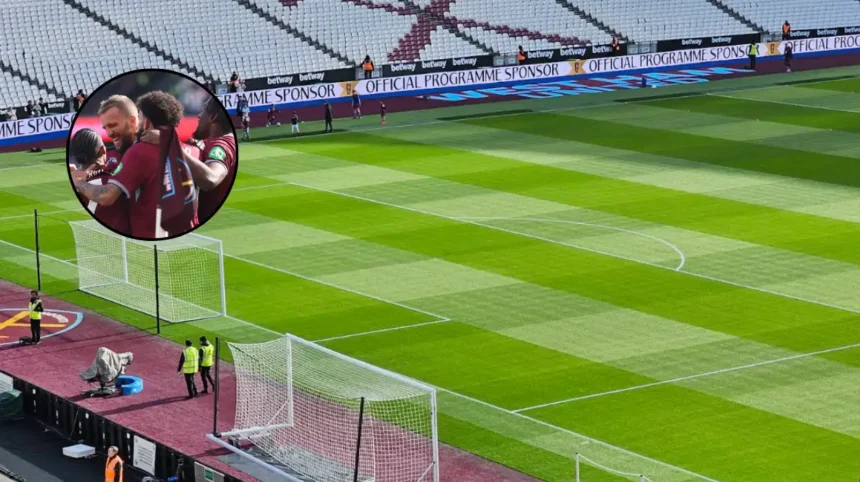
West Ham (East London Times) April 27, 2026 – In a late‑night scramble of goals and permutations, West Ham United edged back into a marginal but crucial advantage over Tottenham Hotspur in the ongoing Premier League relegation battle, after Callum Wilson’s 92nd‑minute winner sealed a 2‑1 victory over David Moyes’ Everton at the London Stadium.
- Key points
- What actually happened in those final eight minutes?
- Why does David Moyes believe West Ham possess the advantage?
- How did the form and events of the day shape the table?
- How are fans and analysts reacting to the twist?
- What is the background to this particular development?
- What might this development mean for Premier League relegation watchers?
As reported by Hammers News, the evening began with the Hammers apparently on course to be pushed into the bottom three on goal difference, after Tottenham’s 3‑1 win over already‑relegated Wolves had threatened to invert the table in north‑London’s favour. For several seconds, the numbers suggested West Ham would be heading into the relegation zone once Everton levelled, only for Wilson’s strike to restore their position outside the bottom three by the final whistle.
What actually happened in those final eight minutes?
According to All Football, the decisive sequence unfolded in a frantic spell in which both clubs and their supporters were forced to recalibrate their expectations in real time.
Tomas Souček’s first‑half goal had put West Ham in control, but Kiernan Dewsbury‑Hall’s 88th‑minute finish for Everton, following a miskilled cross and a header‑down by James Tarkowski, initially dragged the score back to 1‑1 and pushed the Hammers into the relegation zone on goal difference.
At that moment, Tottenham’s 3‑1 lead at Wolves meant that, briefly, Spurs would have overtaken West Ham in the standings.
However, as detailed by Yahoo Sports’ round‑up of the day’s relegation drama, Jarrod Bowen’s cushioned lay‑off in the 92nd minute allowed Callum Wilson to tuck in the winning goal, at once snatching three points and restoring West Ham’s position above Tottenham.
Why does David Moyes believe West Ham possess the advantage?
In his post‑match comments, Moyes, as reported by Hammers News, said he felt West Ham had a “key advantage” over Tottenham in the fight for survival.
He pointed to the momentum of late‑season wins and the psychological effect of vanquishing a chasing rival, even if the gap between the sides remained small.
Moyes also reflected on the context of his return to the London Stadium, where he led West Ham from 2017 to 2024, and said he had hoped to complicate their battle for points rather than gift them a dramatic late victory. Writing for Liverpool Echo, journalist Chris Reilly noted that the 63‑year‑old manager reached his 750th Premier League match that weekend, a milestone shared only with figures such as Sir Alex Ferguson and Arsène Wenger, making the emotional backdrop of the evening even more pronounced.
How did the form and events of the day shape the table?
As outlined in Yahoo Sports’ matchday wrap‑up, three goals in eight minutes at the London Stadium and Molineux created what it described as “chaotic” relegation‑cluster mathematics over the closing stages of Saturday’s fixtures.
Joao Palhinha’s close‑range goal for Tottenham in the 82nd minute at Wolves had cut the gap between Spurs and West Ham to two points, putting additional pressure on the Hammers as they hosted Everton.
At the same time, Everton manager Moyes had spoken ahead of the match about his “special” return to the London Stadium and the inside knowledge he retained from his time at West Ham, which he said could hurt his old club’s hopes of staying in the top flight.
Yet, in the event, it was West Ham who came out with a narrow edge, with Wilson’s late intervention preserving their position just above Tottenham as the season entered its final weeks.
How are fans and analysts reacting to the twist?
Followers of both clubs have taken to social media and fan‑news outlets such as Read Newcastle and The Sportsline to dissect the significance of Wilson’s 92nd‑minute strike.
As one writer at Read Newcastle put it, the ex‑Newcastle striker’s goal was described as a “Tottenham relegation blow,” underscoring how the single finish could yet reverberate in the fine margins of the table.
Analysts cited by Yahoo Sports also emphasised that with only a handful of fixtures remaining, a one‑point plus goal‑difference advantage means West Ham face a marginally more forgiving path than Tottenham, though nothing can be taken for granted in what they called a “precarious” final stretch.
What is the background to this particular development?
The broader context for this match sits within the intense late‑season scramble in the Premier League, where several clubs have dragged themselves out of the bottom three while others have narrowed gaps through bursts of late points.
West Ham, under Moyes’ successor, have posted a series of gritty results in recent weeks, including a statement 4‑0 win over Wolves earlier in the campaign, a performance highlighted by fan‑commentators on pages such as The Sportsline and Read Newcastle as evidence of their ability to combine defensive resilience with attacking threat.
Everton, meanwhile, remain outside the immediate relegation frame but have shown enough fight under Moyes to make them a dangerous opponent for any side scrapping at the wrong end of the table.
The 63‑year‑old manager’s return to the London Stadium also added a layer of narrative importance, with local match‑day coverage across outlets like Flashscore framing the tie as a personal test of whether Moyes could disrupt West Ham’s survival bid.
In parallel, Tottenham’s battle for survival has been marked by a series of narrow misses and near‑escapes, with the club relying on players like Joao Palhinha to deliver crucial late goals.
Their win over Wolves, reported by multiple outlets including Yahoo Sports, underscored their determination to claw back ground, but also exposed how dependent they have become on the results of rivals in the lower half of the table.
What might this development mean for Premier League relegation watchers?
Looking ahead, the current setup suggests that West Ham sit in a slightly more favourable position than Tottenham, at least for the immediate future. West Ham’s ability to rescue late wins against experienced Premier League sides such as Everton – demonstrated by Wilson’s 92nd‑minute strike and the composure of players like Souček and Bowen – may give them a mental edge as they face the remaining fixtures.
For Tottenham supporters, the outcome underlines the fragility of the relegation picture: even a 3‑1 win over a relegated side can be offset by a single late goal at the London Stadium. Commentators at Yahoo Sports and Read Newcastle have suggested that this episode will likely sharpen the focus on Tottenham’s attacking efficiency and defensive discipline in the closing weeks, while West Ham’s camp may be encouraged that their resilience can translate into tangible points when the table is tight.
For neutrals and fantasy‑league participants, the twist highlights how a handful of fixtures and a few minutes of chaos can redefine the fate of multiple clubs. As the Premier League moves into its final rounds, the West Ham–Tottenham axis will remain one of the most closely watched duels, with each result potentially reshaping not only their own destinies but also the fate of any other club in or around the bottom three.