Key Points
- Financial Deficit: The Greater London Authority (GLA), which wholly owns London Stadium, currently incurs annual operating losses of approximately £19 million on the venue.
- Planning Application: A formal application was submitted to Newham Council in early August to amend planning restrictions, seeking to increase the permitted number of major concerts from 10 to 24 per year.
- Taxpayer Burden: The proposed changes aim to generate additional commercial revenue, thereby easing the financial impact on public taxpayers.
- Contractual Priority: Under the terms of a 99-year agreement signed in 2013, West Ham United hold priority access rights to the venue.
- Rental Structure: The club pays £2.5 million annually in base rent—adjusted following previous league status terms—while the GLA covers operational expenses including security, event safety, and pitch maintenance.
- Potential Friction: Expansion of the event calendar requires careful alignment with football fixtures and pitch management, leaving West Ham United as a critical factor in the final outcome.
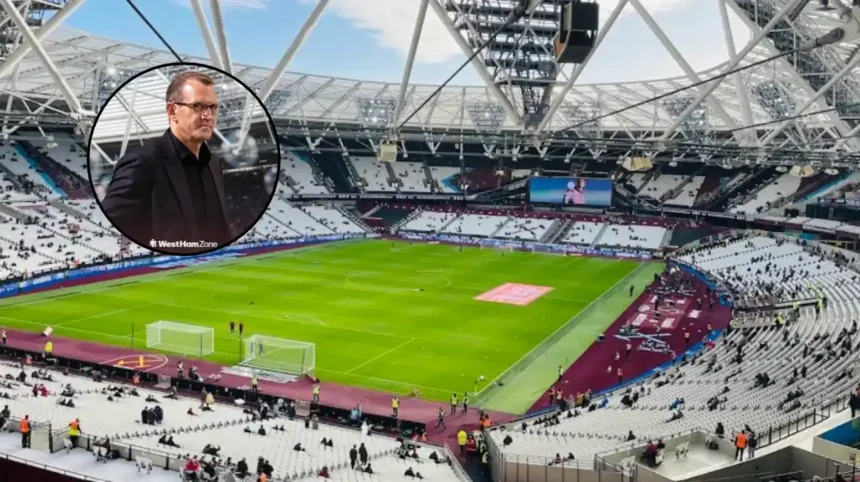
West Ham United (East London Times) August 12, 2026 — West Ham United Football Club remain a central figure in ongoing discussions regarding the future commercial usage of London Stadium, following a new planning submission aimed at reducing significant public losses. The Greater London Authority (GLA), which holds complete ownership of the venue through its subsidiary structures, has formally requested permission from Newham Council to increase the maximum number of musical concerts held at the arena each year from 10 to 24. While the governing authority views the expansion as an essential step toward offsetting an annual operational deficit of approximately £19 million, the 99-year tenancy contract secured by West Ham United in 2013 grants the Premier League side priority usage rights, establishing a potential hurdle for the proposed operational schedule.
- Key Points
- Why Is the Greater London Authority Seeking Planning Changes at London Stadium?
- How Does West Ham United’s 99-Year Lease Agreement Impact the Venue?
- What Challenges Exist in Balancing Football Fixtures and Major Concerts?
- Background of the London Stadium Ownership and Tenancy Structure
- Prediction: How This Development May Affect the Relevant Parties
Why Is the Greater London Authority Seeking Planning Changes at London Stadium?
The initiative to modify the event limits at London Stadium stems directly from long-standing financial challenges associated with maintaining the Stratford venue. Since converting the former Olympic venue into a multi-purpose arena, public authorities have managed substantial recurring expenses required to host both professional football matches and large-scale entertainment events.
Under the ownership structure, the GLA bears full financial responsibility for the stadium’s operational costs. Recent financial disclosures indicate that the venue records annual net losses in the region of £19 million. In an attempt to address this shortfall and lessen the financial strain placed on public taxpayers, local authority leaders identified the expansion of non-sporting events as a primary avenue for revenue growth.
In early August, a formal application was submitted to Newham Council—the local planning authority for the borough—requesting a modification to the venue’s existing planning consent. Under current regulations, the stadium is capped at hosting 10 major musical concerts per calendar year. The new proposal seeks to extend this threshold to 24 annual events, enabling the venue to secure additional major touring acts during the summer months and designated mid-season windows.
The operational strategy relies on the high demand for large-capacity venues within London. By hosting more international artists and commercial performances, venue operators aim to capture significantly higher venue-hire fees, catering receipts, and associated commercial income, which would contribute directly to reducing the public subsidy currently required to maintain the site.
How Does West Ham United’s 99-Year Lease Agreement Impact the Venue?
While the GLA retains full ownership of London Stadium, West Ham United operate under a highly comprehensive tenancy contract signed in 2013. The landmark 99-year deal secured the football club’s status as the primary sporting tenant following the conclusion of the 2012 Olympic Games, but the terms of the agreement place specific legal obligations on the property owners.
Under the current financial terms of the lease, West Ham United pay a base rent of £2.5 million per year. This rental figure was structured with provisions relating to competition status, including adjustments in the event of relegation from the top flight. However, the operational responsibilities linked to matchdays remain largely under the ownership’s remit.
The tenancy agreement specifies that the stadium owners are responsible for key operational expenditures, including:
- Matchday Security: Comprehensive stewarding and crowd control operations for all home fixtures.
- Event Safety Arrangements: Compliance with municipal safety certifications, emergency services coordination, and ticketing perimeter control.
- Pitch Maintenance: Turf installation, routine groundkeeping, and specialized restoration required between sporting fixtures and external events.
Crucially, the contract guarantees West Ham United priority access to the stadium during the domestic football season, which typically runs from August through May. Consequently, any proposed expansion of concert dates must strictly avoid conflicting with the club’s fixture commitments, stadium setup timelines, and pitch recovery periods. Because major music productions require several days for stage construction, teardown, and turf reconditioning, expanding the concert calendar to 24 events per year presents complex scheduling challenges that require agreement between the venue management and the football club.
What Challenges Exist in Balancing Football Fixtures and Major Concerts?
The practical execution of hosting 24 major concerts alongside a professional football calendar involves significant logistical coordination. Modern stadium pitches require extensive care to maintain elite playing surfaces required for professional sport. The installation of temporary flooring and heavy staging equipment during music events poses a risk of turf degradation, particularly if the gap between a concert and a scheduled football match is minimal.
Furthermore, the physical transition of London Stadium from a football configuration to a concert layout demands considerable labor and time. The facility features retrievable seating systems designed to bring spectators closer to the pitch for football matches. Moving these seating sections to accommodate large concert stages or athletics track layouts incurs substantial operational costs and limits the window available for event hosting.
Because West Ham United hold contractual priority for their fixture schedule, the GLA and venue operators must ensure that concert promoters are granted dates that do not disrupt training, domestic matches, or potential European competition schedules. As a result, the club maintains considerable influence over how and when the stadium can be utilized for non-sporting activities.
Background of the London Stadium Ownership and Tenancy Structure
London Stadium was originally constructed as the central venue for the London 2012 Olympic and Paralympic Games, located within the Queen Elizabeth Olympic Park in Stratford. Following the conclusion of the Games, public stakeholders sought a long-term commercial legacy for the facility to prevent it from becoming an underutilized asset.
In 2013, following a competitive bidding process, West Ham United were selected as the anchor tenant. The club officially relocated from their historic home, the Boleyn Ground in Upton Park, at the start of the 2016–17 football season. The transformation of the stadium from an athletics venue into a multi-use arena involved extensive public expenditure, with overall conversion costs rising significantly above initial estimates.
To oversee the asset, E20 Stadium LLP was formed as a joint venture, which subsequently came under the full ownership of LLDC (London Legacy Development Corporation), an entity operating under the Mayor of London and the GLA. Over the past decade, public discussions have frequently focused on the operational costs borne by taxpayers to maintain the venue’s multi-use capabilities.
Previous attempts to enhance revenue have included hosting international sporting events—such as Major League Baseball series and international athletics competitions—alongside high-profile music concerts by global artists. However, fixed annual maintenance costs, combined with the contractual terms of matchday operations, have resulted in persistent net losses, leading to the current planning application submitted to Newham Council.
Prediction: How This Development May Affect the Relevant Parties
The proposed increase in London Stadium concert permits is likely to have distinct financial and operational consequences for the primary stakeholders involved.
For West Ham United Football Club
West Ham United are expected to leverage their priority status to ensure their sporting performance and matchday experiences are uncompromised. The club may require guarantees regarding pitch quality and transition timelines before agreeing to expanded summer or mid-season event schedules. If the increased concert schedule leads to pitch wear or fixture friction, negotiations between the club and the GLA could become complex. However, if managed effectively, a more commercially viable stadium could lead to collaborative opportunities for enhanced matchday amenities and infrastructure upgrades over time.
For the Greater London Authority and Taxpayers
If Newham Council approves the planning application to permit up to 24 concerts per year, the GLA could see a substantial reduction in the stadium’s annual £19 million deficit. Additional concert revenue would provide a direct offset to operational costs, lowering the overall financial burden on public funds. Conversely, if the application is rejected or heavily restricted due to local residential concerns or scheduling conflicts, public authorities will remain under pressure to identify alternative cost-saving measures or revenue streams.
For Newham Residents and the Local Economy
For residents of Stratford and the broader borough of Newham, an increase in large-scale events brings mixed implications. Local retail, hospitality, and public transport sectors stand to benefit from increased visitor footfall and consumer spending generated by 14 additional annual concert dates. However, local residents may raise concerns during the council’s planning review regarding noise levels, crowd control, traffic management, and environmental impact during peak event periods.