
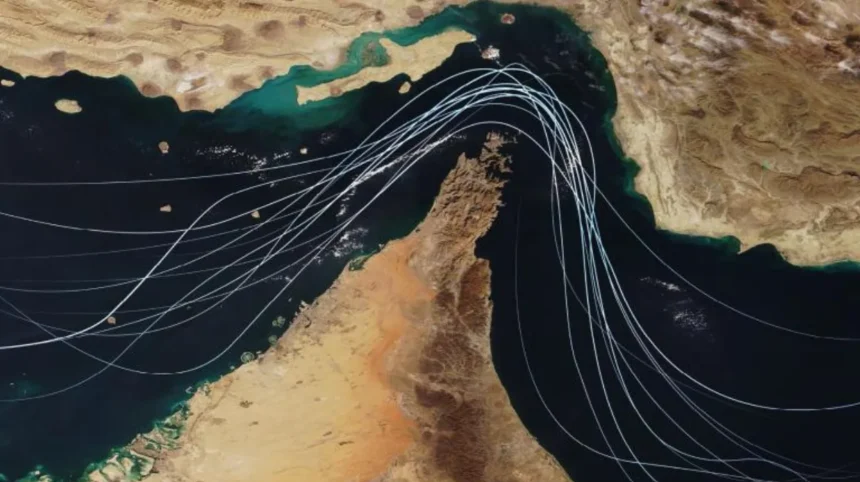
In an increasingly interconnected world, global energy stability is no longer shaped by individual countries alone, but by key strategic locations that influence international trade flows. Among the most important of these is the Strait of Hormuz, a narrow but critical maritime passage connecting the Arabian Gulf with the Gulf of Oman.
Despite its small geographical size, the Strait of Hormuz plays a disproportionately large role in global energy security. A significant share of the world’s oil and liquefied natural gas passes through this route daily, making it one of the most important energy transit points in the world.
Because of this strategic importance, even periods of political tension in the wider region can have immediate effects on global markets. Energy prices are particularly sensitive to uncertainty, and any concerns about potential disruptions can lead to fluctuations in oil and gas prices worldwide.
These fluctuations do not remain isolated. They can influence transportation costs, production expenses, and inflation levels across multiple economies, including both developed and developing nations. As a result, energy security has become a central issue in global economic planning.
At the same time, the situation highlights how deeply interconnected modern economies have become. A development in one region can quickly ripple across continents, affecting supply chains, industries, and consumers on a global scale.
In response to these challenges, there is a growing focus among policymakers and experts on strengthening energy resilience. This includes diversifying energy sources, improving supply chain security, and increasing investment in renewable energy as part of long-term sustainability strategies.
The Strait of Hormuz therefore represents more than just a maritime route—it is a symbol of global interdependence in the energy sector. Its stability remains essential not only for regional economies but for maintaining balance in the wider international energy system.
As the global landscape continues to evolve, understanding the relationship between geography, energy, and economic stability becomes increasingly important for shaping informed and forward-looking policies.