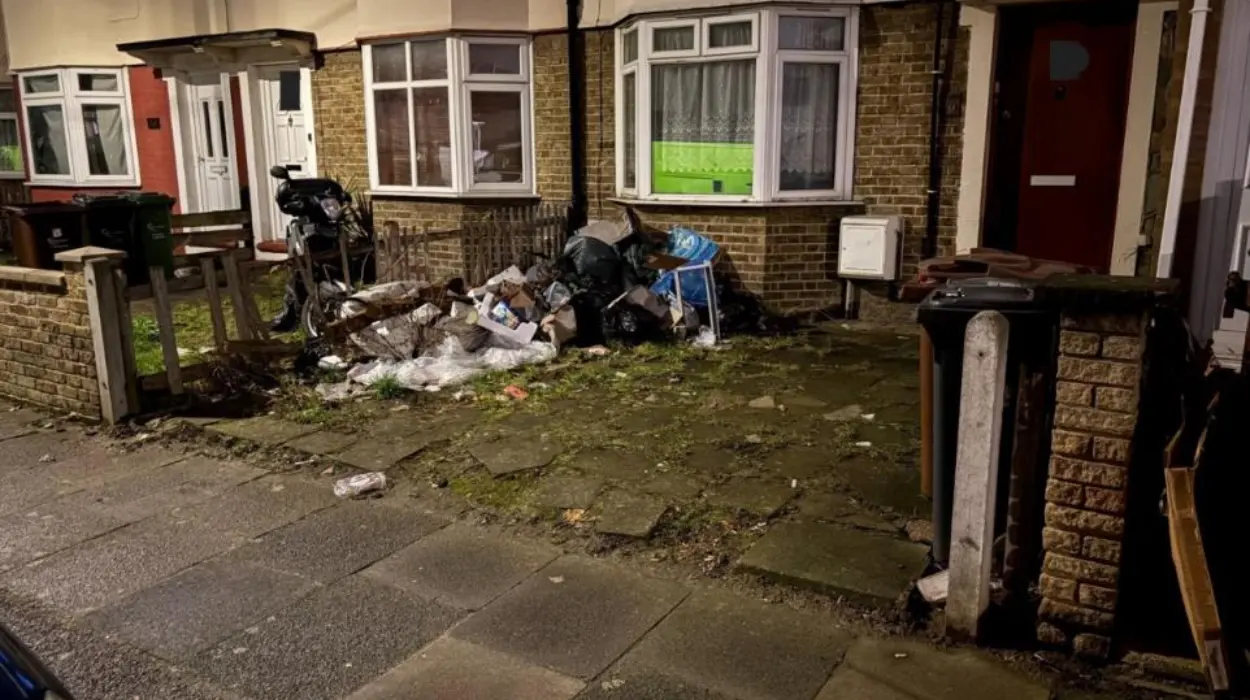
- A woman in Barking has been fined £1,000 by the London Borough of Barking and Dagenham Council for maintaining an ‘eyesore’ front garden cluttered with rubbish, broken furniture, overgrown weeds and discarded items.
- Council enforcement officers issued a Community Protection Notice (CPN) after multiple neighbour complaints about the garden attracting vermin, posing health hazards and lowering the street’s aesthetic standards.
- The resident, who remains unnamed in reports, failed to comply with initial abatement notices requiring her to clear the garden within 21 days, leading to the fixed penalty notice.
- Officers described the garden as a “ticking time bomb for rats” and a blight on the neighbourhood, with photos showing piles of black bags, mattresses and plant overgrowth.
- The council emphasises its zero-tolerance approach to environmental issues under anti-social behaviour powers, with similar fines issued across the borough for fly-tipping and neglect.
- Neighbours welcomed the action, stating it had become a “dumping ground” affecting property values and community pride.
- The woman can pay the fine to avoid court, where penalties could rise to £2,500 plus costs; non-payment risks prosecution.
- This case highlights rising council enforcement amid budget pressures, with over 200 similar notices served in Barking and Dagenham last year.
A Barking woman faces a £1,000 fine after council officers cracked down on her front garden, branded an ‘eyesore’ overflowing with rubbish and weeds following repeated neighbour complaints about anti-social neglect in the residential street.
- Why was the woman fined for her front garden?
- What powers does the council have to enforce garden clearances?
- How have neighbours reacted to the enforcement action?
- What are the consequences if the fine remains unpaid?
- Is this part of a broader council crackdown?
- What support does the council offer to avoid fines?
- How common are garden eyesore fines in the UK?
- Could the woman appeal the notice?
Why was the woman fined for her front garden?
As reported by the Barking and Dagenham Post, council enforcement teams investigated after residents in the Ripple Road area flagged the property as a persistent nuisance. The garden reportedly featured stacks of black bin bags, broken white goods, mattresses, shattered plant pots and knee-high weeds, creating what officers called a “health and safety hazard” and vermin magnet. Neighbours told the Post that the clutter had accumulated over months, with one anonymous resident stating: “It’s been an absolute disgrace – rats everywhere and it smells awful.”
According to the council spokesperson quoted in the article, initial warnings were ignored, prompting a formal Community Protection Notice under the Anti-social Behaviour, Crime and Policing Act 2014. This required clearance within 21 days, but non-compliance led to the £1,000 fixed penalty notice issued last week. The Post notes photos released by the council show the extent of the disarray, justifying the “eyesore” label amid efforts to uphold community standards.
What powers does the council have to enforce garden clearances?
The Barking and Dagenham Post explains that Community Protection Notices empower local authorities to address unreasonable behaviour impacting quality of life, including property neglect. Cllr Darren Rodwell, leader of the council, stated: “We won’t tolerate gardens that become dumping grounds – they breed rats, lower morale and hit property values.” Officers can seize items, impose remedial works and prosecute if fines go unpaid, with courts able to levy unlimited fines for ongoing breaches.
As detailed in the report, this follows over 200 CPNs issued borough-wide last year for similar issues like fly-tipping and overgrown gardens. The council’s environmental health team prioritises high-complaint sites, using drone surveillance and resident tip-offs. Rodwell emphasised prevention, noting free bulky waste collections are available to avoid such escalations.
How have neighbours reacted to the enforcement action?
Residents interviewed by the Barking and Dagenham Post expressed relief at the council’s intervention. One neighbour said: “We’ve been reporting this for ages – it’s finally being sorted, thank goodness.” Another highlighted fears for children playing nearby, calling the garden a “ticking time bomb for disease”. The street, described as otherwise tidy, had seen the property become a focal point for frustration, with some considering withholding rent in shared blocks.
The Post reports community support for tougher measures, linking the case to wider pride campaigns like “Love Your Neighbourhood”. No statements from the fined woman were available, but locals hope for swift clearance to restore harmony.
What are the consequences if the fine remains unpaid?
Per the Barking and Dagenham Post, the £1,000 fixed penalty offers an out-of-court resolution; payment discharges liability. Failure triggers prosecution at magistrates’ court, where fines can reach £2,500 for individuals, plus council costs and potential criminal records. Repeat offenders face closure orders or direct council-led clearances billed to owners.
Council figures cited show 80% compliance with CPN fines, but persistent cases lead to asset seizures. The article warns that amid cost-of-living pressures, enforcement targets landlords too if tenants neglect properties.
Is this part of a broader council crackdown?
As outlined by the Post, Barking and Dagenham Council has intensified anti-eyesore drives since 2023, serving 250+ notices amid rising complaints post-pandemic. Targets include rear gardens visible from streets, with partnerships alongside housing associations. Cllr Ahmed Ali, portfolio holder for environment, noted: “Neglected spaces drag everyone down – we’re acting decisively.”
Similar actions hit Goresbrook and Thames wards hardest, per data. Free garden waste services aim to preempt issues, but fines fund enforcement.
What support does the council offer to avoid fines?
The Barking and Dagenham Post highlights preventive measures like twice-weekly bulky waste pickups and weed clearance teams. Residents can book via app, with no limit on loads. Community clean-ups and advice clinics target vulnerable households. Rodwell urged: “Use our services before we have to fine.”
How common are garden eyesore fines in the UK?
While specific to Barking, the Post contextualises nationally: councils issued 15,000+ CPNs in 2024 per government stats. Hotspots include east London boroughs grappling urban density. Critics question overreach, but supporters see vital public health tools.
Could the woman appeal the notice?
The article states appeals go via magistrates within 21 days, proving no “unreasonable behaviour”. Evidence like medical notes or disputes over photos possible, but success low without clearance proof.