Key Points
- A 100-tonne fatberg has been discovered in the Whitechapel area of East London.
- The fatberg measures around 100 metres (328ft) long and is believed to weigh as much as 100 tonnes.
- Thames Water identified the blockage deep within the capital’s Victorian-era sewer network.
- The massive congealed mass of fats, oils, grease, and wipes has been dubbed the “grandchild” of the 2017 Whitechapel fatberg.
- Extraction work is expected to take several weeks.
- Thames Water has warned Londoners to be mindful of what they pour down sinks and flush down toilets, especially over the festive period.
- Tim Davies, Head of Waste Operations for North London at Thames Water, called the discovery “a stark reminder” of public habits around fat disposal.
- The company spends tens of millions each year clearing similar blockages.
- Environmental groups have renewed calls for better public awareness and stricter packaging warnings on “flushable” wipes.
- The discovery revives memories of the 2017 Whitechapel fatberg, a 130-tonne mass partly exhibited at the Museum of London.
What exactly was discovered beneath Whitechapel?
According to a report by MyLondon published on 21 December 2025, engineers from Thames Water discovered the obstruction while conducting routine sewer inspections in East London. The mass is estimated to weigh around 100 tonnes and extend more than 100 metres underground.
- Key Points
- What exactly was discovered beneath Whitechapel?
- How does this compare to the 2017 Whitechapel fatberg?
- How long will removal take and what does it involve?
- Why do fatbergs form and why are they dangerous?
- What is Thames Water urging the public to do?
- How severe is the fatberg problem across London and the UK?
- How is this affecting the environment and costs to customers?
- What lessons were learned from the 2017 fatberg?
- What are experts proposing to prevent future fatbergs?
- How long until the Whitechapel sewer is fully cleared?
As reported by Ella Bennett of MyLondon, a Thames Water spokesperson said the fatberg “was discovered coating the walls of a key drainage tunnel in Whitechapel” and comprises a hardened mixture of fat, oil, grease, and non-biodegradable items such as wet wipes and nappies.
How does this compare to the 2017 Whitechapel fatberg?
As highlighted by BBC News, the newly found fatberg is smaller but still formidable compared to the 2017 Whitechapel fatberg, which weighed around 130 tonnes and stretched over 250 metres (820ft). That earlier behemoth made global headlines and even saw a preserved sample displayed at the Museum of London.
Tom Edwards of BBC London noted that this latest occurrence has revived discussion about urban waste habits and the limitations of ageing Victorian sewer systems struggling to cope with modern waste.
How long will removal take and what does it involve?
In a statement quoted by Sky News reporter Sadiya Chowdhury, Tim Davies, Head of Waste Operations for North London at Thames Water, warned that the extraction process would be lengthy and challenging, possibly taking “weeks to complete.”
Davies explained:
“This latest fatberg shows exactly what happens when fats, oils, and wipes go down our drains – they don’t disappear; they build up and cause serious damage. The cost of clearing blockages and repairing sewers runs into tens of millions of pounds every year, and that money ultimately comes from our customers.”
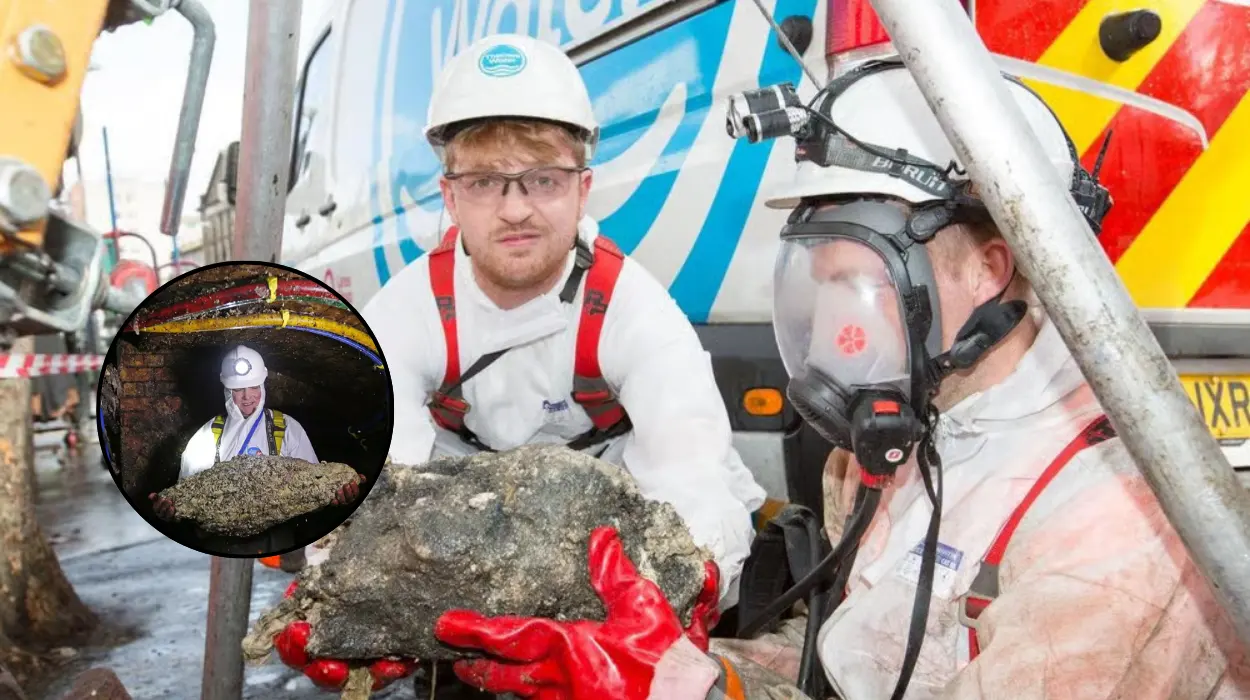
According to The Guardian environmental correspondent Sandra Laville, Thames Water crews use a combination of high-powered water jets and manual shovelling to break down such deposits, which are then transported for disposal at waste treatment facilities. Workers have been operating under difficult, confined conditions deep below street level.
Why do fatbergs form and why are they dangerous?
Fatbergs form when cooking oils, fats, and grease – often poured down kitchen sinks – mix with other materials such as wet wipes, sanitary products, and nappies. When these materials congeal in cold pipes, they stick to the sewer walls and gradually grow into solid, rock-like formations.
As environmental scientist Dr. Bethany Rigby explained to The Telegraph,
“A single household flushing wipes or disposing of oils may not notice the effect, but when thousands do it daily, the result is catastrophic for shared drainage systems. The fat solidifies on contact with cold water, creating a concrete-like crust that can take months to remove.”
Such blockages restrict sewage flow and can cause untreated wastewater to back up into homes, streets, and rivers. The Environment Agency estimates that thousands of pollution incidents annually in the UK are caused by sewer blockages linked to fat and wipe accumulation.
What is Thames Water urging the public to do?
Thames Water has renewed its “Bin it, don’t block it” campaign to coincide with the festive season, when cooking fats are most commonly poured down drains.
As Tim Davies explained to ITV News:
“We know Christmas is a time when families are cooking more, but please – let leftover fats and oils cool, scrape them into the bin, and don’t wash them down the sink. Wipes, no matter what the labels say, should go in the bin too.”
The company spends more than £18 million every year clearing over 75,000 blockages from its sewer network across London and the Thames Valley.
How severe is the fatberg problem across London and the UK?
According to The Guardian, fatbergs have become a recurring problem in British cities including Birmingham, Liverpool, and Cardiff. In 2019, a 64-metre fatberg found under Sidmouth in Devon weighed an estimated 42 tonnes, while another in Kingston upon Thames back in 2013 weighed 15 tonnes.
A 2024 report by Water UK, which represents the major water and sewerage companies, revealed that non-biodegradable wipes constituted approximately 93% of material found in sewer blockages. Despite repeated industry warnings, many wipes labelled as “flushable” do not disintegrate quickly enough to prevent clogs.
How is this affecting the environment and costs to customers?
Environmental campaigners warn that the cost of tackling fatbergs is ultimately borne by consumers. According to The Guardian’s Sandra Laville, Thames Water has stated that millions of pounds in repairs and cleanup operations are funded through customer water bills.
The issue also poses threats to local waterways. When sewage backups caused by blockages spill into rivers, they release harmful bacteria and contribute to pollution incidents. Friends of the Earth campaigner Jamie Peters told BBC News:
“These fatbergs are not just a nuisance for engineers – they’re environmental disasters waiting to happen. Each one symbolises a modern failure of design, consumer behaviour, and corporate accountability.”
What lessons were learned from the 2017 fatberg?
When Thames Water uncovered the massive 130-tonne Whitechapel fatberg in 2017, it served as a wake-up call for urban sanitation. Part of the original mass was carefully extracted, preserved, and displayed at the Museum of London, where it drew thousands of visitors.
Museum curator Vyki Sparkes told The Independent:
“The fatberg became an unexpected symbol of 21st-century consumer waste. It’s disgusting yet fascinating – a mirror to our throwaway culture.”
Following that discovery, Thames Water launched awareness campaigns and improved monitoring technology using CCTV surveys throughout London’s sewers. Yet, as the 2025 discovery shows, the problem persists nearly a decade later.
What are experts proposing to prevent future fatbergs?
According to The Evening Standard, industry experts are calling for clearer labelling standards on consumer products such as wet wipes. While some brands have begun marketing “fine-to-flush” certified wipes – meeting standards developed by Water UK – campaigners argue that non-compliant wipes remain widely sold.
Environmental engineer Professor Richard Ashley told The Guardian:
“We need legislation requiring all so-called flushable products to meet genuine disintegration standards. Otherwise, we’ll keep finding these monstrous fatbergs year after year.”
Water companies also continue urging households and restaurants to collect fat separately. The British Takeaway Campaign has called on local councils to provide better grease management solutions for small food outlets.
How long until the Whitechapel sewer is fully cleared?
In its latest statement, Thames Water confirmed that sewer teams working around the clock hope to clear the blockage “within several weeks,” weather permitting. Each removed section of the fatberg must be broken up, lifted manually or pumped out, and transported to a waste facility.
As Sky News reported, progress has been slow but steady. Engineers are expected to conclude the operation before mid-January 2026, after which the affected sewer pipes will undergo structural inspection and maintenance.