Key Points:
- Archival photographs from 1982 show Romford’s bustling town centre on Christmas Eve.
- The images have been preserved and shared by Havering Libraries.
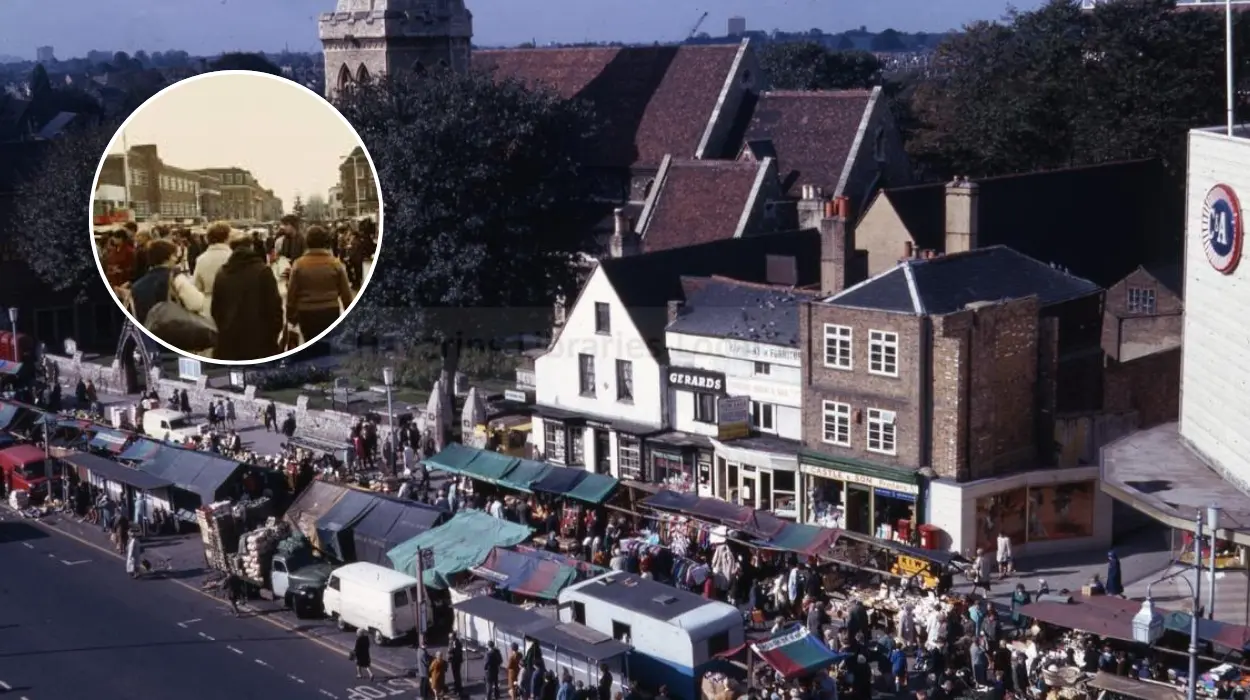
- Shoppers thronged Market Place and The Liberty Shopping Centre, carrying bags and even prams filled with last-minute gifts.
- Prominent stores like Debenhams and Keddies—now both closed—were major shopping destinations.
- Decorations included tinsel, Christmas trees, and festive lights strung across the concourse.
- The photographs capture the enduring festive spirit of Romford and nostalgia for its retail heritage.
- Both department stores have since become symbols of Britain’s changing high streets.
What do the archival photos from Havering Libraries reveal about Christmas Eve 1982 in Romford?
The images, first made available by Havering Libraries’ local history archives, depict a Christmas Eve alive with shoppers, market stalls, and festive decorations. Groups of families and friends wandered through Market Place, some holding shopping bags, while one particularly resourceful shopper converted a child’s pram into an impromptu trolley.
- Key Points:
- What do the archival photos from Havering Libraries reveal about Christmas Eve 1982 in Romford?
- Which stores were central to Romford’s festive shopping scene?
- How did festive decorations transform the Liberty and Market Place?
- Were Romford’s festive crowds part of a larger British tradition?
- What do the photos tell us about the town’s social atmosphere?
- How did the closure of Debenhams and Keddies mark the end of an era?
- Why do these 1982 photos continue to resonate with residents today?
- What is Romford’s high street legacy after four decades?
As reported by Ellena Cruse of the Romford Recorder, the photos are both heart-warming and relatable, showing that even forty years ago, Romford residents were engaged in the same last-minute dash modern Britons know too well. “The pictures provide some comfort,” noted Cruse,
“that it’s nice to know you’re not alone as you set out to find gifts right up to the last second.”
Which stores were central to Romford’s festive shopping scene?
Among the most striking details in the images is the glowing Debenhams department store, one of Romford’s historic retail landmarks. According to Havering Libraries, Debenhams had opened its Romford branch in 1973, roughly nine years before these photos were taken. It stood proudly at the edge of the Liberty Centre and became synonymous with Romford’s shopping identity for nearly half a century.
In the photographs, decorations of tinsel and Christmas trees adorned the concourse. The upper branches of a large festive tree rise above the market tents in one frame, symbolising the town’s communal sense of occasion.
Further up Market Place, the long-closed Keddies department store also made an appearance. As chronicled by local historians via Havering Libraries’ archives, Keddies—a popular Essex chain—opened its Romford outlet in the late 1950s. With its flagship in Southend, Keddies was known for selling a vast range of goods, from penny trinkets to home furnishings, fashion, and electrical items.
How did festive decorations transform the Liberty and Market Place?
The Liberty Shopping Centre, then a newer addition to Romford’s commercial core, shimmered with bright fairy lights and miniature Christmas trees above the Marks & Spencer storefront. The nostalgic imagery, described by former shoppers in later interviews with The Havering Daily, reflected “a town that celebrated the magic of Christmas with community warmth.”
Retail historian Tony Copeland, writing for EssexLive, has pointed out that Romford’s decorations in the early 1980s captured
“the golden era of British town-centre retail—when physical stores, rather than virtual baskets, defined Christmas shopping.”
Were Romford’s festive crowds part of a larger British tradition?
Yes. Archival trends suggest Romford’s festive crowds were not unique. In cities across Britain, the early 1980s saw spikes in foot traffic around Christmas Eve as people rushed to complete shopping before the holidays. A 1982 Evening Standard report noted that late-night high-street openings in nearby towns like Ilford, Barking, and Chelmsford mirrored Romford’s lively scenes.
Romford, then part of the London Borough of Havering, drew large crowds from Essex and East London thanks to its extensive retail scene—one that would later face decline as suburban shopping malls and online sales emerged.
What do the photos tell us about the town’s social atmosphere?
Beyond commerce, the pictures reveal Romford’s sense of community. The market stalls were dotted with families, couples, and groups of friends. One image shows children gazing at poinsettia plants while adults chat under strings of tinsel. The town’s main Christmas tree, positioned toward South Street, serves as the visual focal point.
As reported by Havering Libraries, poinsettia plants were especially popular that year, aligning with broader 1980s trends in floral and home decor. The cheerful expressions captured in the photos reflect not just the joy of the season but also a striking resilience amid the economic uncertainty of the early Thatcher years—a time when many towns relied heavily on their markets and department stores.
How did the closure of Debenhams and Keddies mark the end of an era?
Both Debenhams and Keddies later became synonymous with the decline of Britain’s traditional department store model. Debenhams closed its Romford branch in 2021, nearly half a century after its opening, as part of a national shutdown of its high-street operations.
Keddies, however, had already closed decades earlier. According to archive reporting by Christopher Smith in the Southend Echo, the Essex-based chain went into administration in 1996, and its Romford site was soon repurposed. Their absence left significant gaps in local retail identity.
Former Romford resident Linda Matthews, interviewed by the Romford Recorder in 2022, reminisced:
“We didn’t just shop in Keddies or Debenhams. We met friends there, we worked there, and we grew up around them. Christmas wasn’t the same once those windows went dark.”
Why do these 1982 photos continue to resonate with residents today?
The emotional pull of these images lies in their blend of nostalgia and continuity. Despite technological and retail changes, the heart of Romford’s festive activity—bustling crowds, community warmth, and that annual rush for gifts—has barely shifted.
As Havering Libraries wrote in their official post accompanying the photos,
“The pictures remind us that while shops, fashions, and buildings change, the spirit of Romford at Christmas stays much the same.”
Local historian James Ellwood, speaking to Essex Chronicle, echoed this sentiment:
“In those photographs, you see not just shopping habits but social patterns—people talking face-to-face, children exploring markets, and the sheer joy of shared celebration. That’s something timeless.”
What is Romford’s high street legacy after four decades?
Today, The Liberty Centre remains one of Havering’s busiest retail hubs, though transformed by modern brands and online integration. The old Debenhams site has been redeveloped, while Market Place continues to host seasonal fairs and local traders.
Romford Borough Council has since invested in preserving the town’s retail heritage through exhibits, including the Havering Museum’s ‘Romford at Christmas’ display, featuring artefacts, photographs, and oral histories connected to the 1982 images.
Retail analysts, like Sarah Cranston of the Retail Gazette, argue Romford’s story is typical of mid-sized English towns:
“There’s a rhythm to the British high street—booms and downturns—but nostalgia plays a critical role in community memory. Those old Christmas photos don’t just show markets; they show belonging.”