Barking and Dagenham Council (formally the London Borough of Barking and Dagenham Council) is the local authority for a 17‑ward borough in East London, north of the Thames. Created in 1965 under the London Government Act 1963, it replaced the former municipal borough councils of Barking and Dagenham and has operated as a single unitary-style borough authority ever since.
- The Borough’s East London Roots
- How Barking and Dagenham Council Was Formed
- Powers, Functions and Everyday Services
- Political Control and Leadership
- Where the Council is Based
- Demographics: A Young and Diverse East London Borough
- Deprivation, Opportunity and Regeneration
- Housing, Planning and Growth
- Education and Young People
- Health, Social Care and Community Wellbeing
- Environment, Waste and Climate Action
- Working with London-wide and Regional Bodies
- Community Voice and Local Democracy
- Why Barking and Dagenham Council Matters to East London
The council has 51 elected councillors and has been under continuous Labour majority control since its inception, shaping a distinct political and policy identity in East London. From its headquarters at Barking Town Hall, it oversees a wide range of “most purpose” powers including education, housing, social services, planning, waste and most local roads.
The Borough’s East London Roots
The modern borough brings together two historically distinct areas: Barking, with roots as an urban district and municipal borough, and Dagenham, which evolved from rural parish to major inter‑war housing suburb. Barking Town Local Government District was created in 1882, became an urban district in 1894 and was incorporated as a municipal borough in 1931, reflecting its growing urban character.
Dagenham, by contrast, was a rural parish within Romford Rural District until its transformation into an urban district in 1926 and a municipal borough by 1938, driven largely by the development of the Becontree estate and associated industry. Under the London Government Act 1963, these two boroughs were merged to form the London Borough of Barking in 1965, with the name formally changed to the London Borough of Barking and Dagenham on 1 January 1980 to better reflect both communities.
How Barking and Dagenham Council Was Formed
The council first met as a “shadow authority” following elections in 1964, working alongside the outgoing Barking and Dagenham authorities before taking full powers on 1 April 1965. Initially, it operated as a lower‑tier authority beneath the Greater London Council (GLC), which provided wide‑area services such as fire, ambulance, refuse disposal and strategic planning.
As an outer London borough, Barking and Dagenham has been a local education authority since 1965, responsible for state schools and education services in the area. When the GLC was abolished in 1986, many of its functions transferred directly to London boroughs or to newly created joint bodies, significantly expanding the council’s responsibilities for services such as waste disposal and highways.
Powers, Functions and Everyday Services
Within the English local government system, Barking and Dagenham Council is a “most purpose” authority, meaning it holds a wide range of powers rather than being narrowly specialised. It sets local planning policy aligned with Greater London Authority (GLA) and national frameworks and is responsible for deciding the vast majority of planning applications in the borough.
Key responsibilities of the council include:
- Setting and collecting council tax and business rates (as the billing authority), while also collecting precepts for the GLA.
- Managing council housing and working with housing associations and developers on affordable homes.
- Running schools and education services as the local education authority.
- Providing social services, including children’s services and adult social care.
- Overseeing libraries, parks, leisure facilities, and cultural services.
- Managing waste collection and disposal, local traffic management, most roads and environmental health.
Since the creation of the GLA in 2000, some powers over strategic transport and planning have been shared or coordinated at city-wide level, but Barking and Dagenham Council remains the primary decision-maker for local day‑to‑day services.
Political Control and Leadership
Barking and Dagenham Council has been under Labour control since 1965, making it one of the most consistently Labour‑run boroughs in London. The council operates with a Leader and Cabinet model, where the political Leader of the Council and a team of cabinet members drive policy across key portfolios such as housing, regeneration, children’s services and finance.
As of 2024–2025, the council’s political leadership includes a Labour Leader and a ceremonial Mayor, with 51 councillors representing wards across the borough. Mayoral and leadership roles are supported by a Chief Executive and senior officer management team, who are responsible for implementing policy decisions and managing council staff and services.
Where the Council is Based
The council is headquartered at Barking Town Hall, located in Town Square, Barking (IG11 7LU), a purpose‑built civic building completed in 1958 for the former Barking Borough Council. This central location acts as the focal point for full council meetings, committee sessions and key civic events.
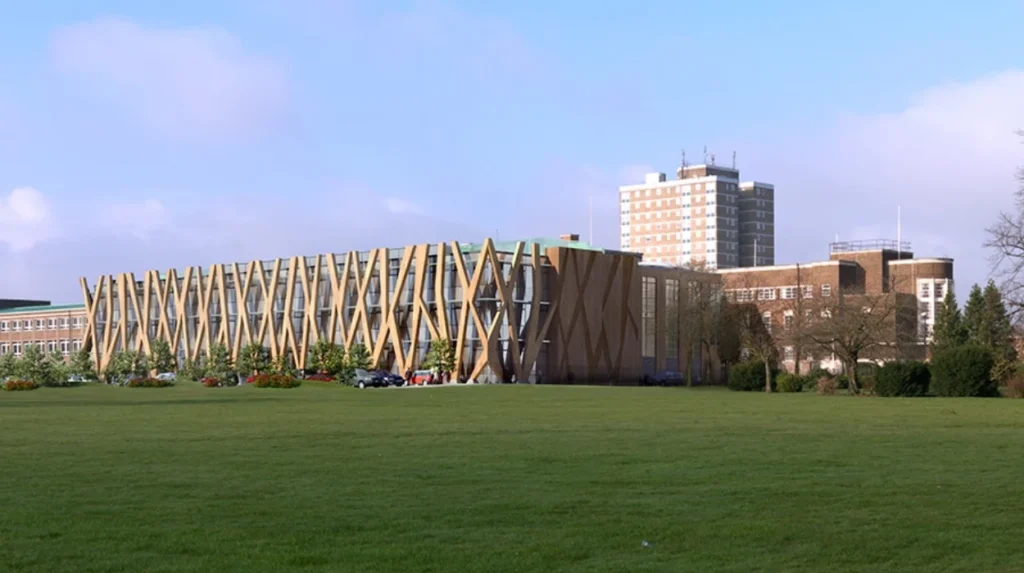
Historically, the council also operated from the Dagenham Civic Centre at Becontree Heath, a landmark building constructed in 1936 for the old Dagenham Borough Council. After consolidating services at Barking Town Hall, the Civic Centre was vacated by the council in 2017 and converted into a campus of CU London (Coventry University), highlighting the changing use of civic buildings in the borough.
Demographics: A Young and Diverse East London Borough
Barking and Dagenham is one of the youngest and most ethnically diverse boroughs in England, with a particularly high proportion of children and young people. Data shows that around 31% of the population is aged under 20, significantly higher than the London average of about 24%, and some wards such as Barking Riverside and Gascoigne have even higher shares of under‑20s.
The borough has experienced rapid demographic change over recent decades, with a sharp decline in the proportion of White British residents and growth in Black, Asian and other minority communities. In 2021, White British residents made up roughly 31% of the population, with significant Bangladeshi (around 10%), Pakistani (about 7%) and Black African (about 16%) communities, all above London averages. This diversity strongly shapes the council’s priorities around education, housing, community cohesion and equalities.
Deprivation, Opportunity and Regeneration
Barking and Dagenham is regularly ranked among the most deprived local authorities in England, with one 2024 analysis placing it as the fifth most deprived out of 317. High levels of deprivation intersect with issues like lower incomes, health inequalities, and housing need, making social and economic regeneration a central council priority.
At the same time, the borough’s location in East London, availability of land and relatively affordable housing compared with inner London create significant opportunities for growth. Large‑scale regeneration projects, particularly in areas such as Barking Riverside and central Barking, aim to deliver new homes, community facilities, transport links and employment opportunities, reshaping the local economy for future generations.
Housing, Planning and Growth
As the housing and planning authority, Barking and Dagenham Council plays a central role in shaping where and how new homes, workplaces and services are built. The council owns and manages a substantial stock of council housing and works with housing associations and private developers to deliver additional affordable and market homes.
Planning policies are designed to complement the London Plan and national guidance, with a focus on sustainable growth, design quality, and infrastructure provision. Strategic developments such as Barking Riverside are not just residential schemes but also include schools, health services, parks and improved transport connections, helping to integrate new communities into the wider borough.
Education and Young People
Barking and Dagenham’s status as a local education authority, combined with its youthful population profile, makes education a major area of council focus. The council is responsible for coordinating school places, supporting school improvement, safeguarding, special educational needs and disabilities (SEND) services, and a range of early years and youth services.
With more than three in ten residents under 20, the demand for school places, youth provision and skills opportunities is particularly high, requiring careful long‑term planning. Initiatives linked to regeneration, further education and higher education – including the reuse of the Dagenham Civic Centre as a CU London campus – are part of a broader strategy to expand local learning and training pathways.
Health, Social Care and Community Wellbeing
Like other London boroughs, Barking and Dagenham Council is responsible for adult social care, children’s social services and public health functions, working closely with the NHS and voluntary organisations. The borough’s relatively young population coexists with pockets of poor health outcomes and disability, requiring targeted support for both older residents and families facing complex challenges.
Public health work includes promoting healthier lifestyles, tackling inequalities, and responding to local health data such as Census 2021 findings on ageing, housing and wellbeing. Social care teams support vulnerable adults, carers, and children at risk, while community services and voluntary groups play a vital role in early help and neighbourhood‑level support.
Environment, Waste and Climate Action
Environmental services are a visible part of everyday life in Barking and Dagenham, covering waste collection, recycling, street cleaning and environmental health. The council is part of joint committees such as the East London Waste Authority, reflecting the need for cross‑borough cooperation on major waste and environmental infrastructure.
Alongside basic environmental services, the council is increasingly involved in climate action, sustainable transport and green space management, aligning local policies with London‑wide and national climate goals. Regeneration projects offer opportunities to integrate low‑carbon design, active travel routes and flood resilience measures, particularly given the borough’s riverside location and legacy of industry.
Working with London-wide and Regional Bodies
Barking and Dagenham Council does not operate in isolation; it works closely with the Greater London Authority, Transport for London and pan‑London groupings such as London Councils. Joint committees and partnerships – including the East London Waste Authority, Thames Chase Joint Committee and Thames Gateway London Partnership – allow the borough to influence and benefit from wider regional strategies.
This multi‑layered governance means that decisions about transport, strategic planning, policing and economic development are shared across different tiers, while the council retains responsibility for local delivery. For residents and businesses, this makes Barking and Dagenham Council the first point of contact for most services, even when projects are supported by regional or national funding.
Community Voice and Local Democracy
Local democracy sits at the heart of the council’s work, with residents electing councillors every four years via a plurality (first‑past‑the‑post) voting system. Council meetings, public consultations and scrutiny processes provide channels for residents and stakeholders to influence policy on issues such as regeneration, budgeting and service changes.
Barking and Dagenham’s history as a working‑class, industrial and now highly diverse borough means community engagement is crucial to building trust and legitimacy. Voluntary sector organisations, faith groups, tenants’ associations and youth forums all play roles in shaping debates on housing, safety, education and public space, helping the council to refine and deliver its priorities.
Why Barking and Dagenham Council Matters to East London
Barking and Dagenham occupies a strategic position in East London’s ongoing transformation, balancing deep social challenges with major opportunities for growth and renewal. Through its extensive powers over housing, education, planning and social care, the council is a key driver of change both for existing communities and for new residents drawn by regeneration and relatively affordable homes.
For East Londoners, understanding how Barking and Dagenham Council works – from its historic roots and political control to its modern services and partnerships – is essential for getting involved, accessing support and shaping the borough’s future. Whether engaging in consultations, contacting councillors, or participating in local initiatives, residents and businesses have multiple avenues to influence decisions that affect daily life across this dynamic East London borough.