Key Points
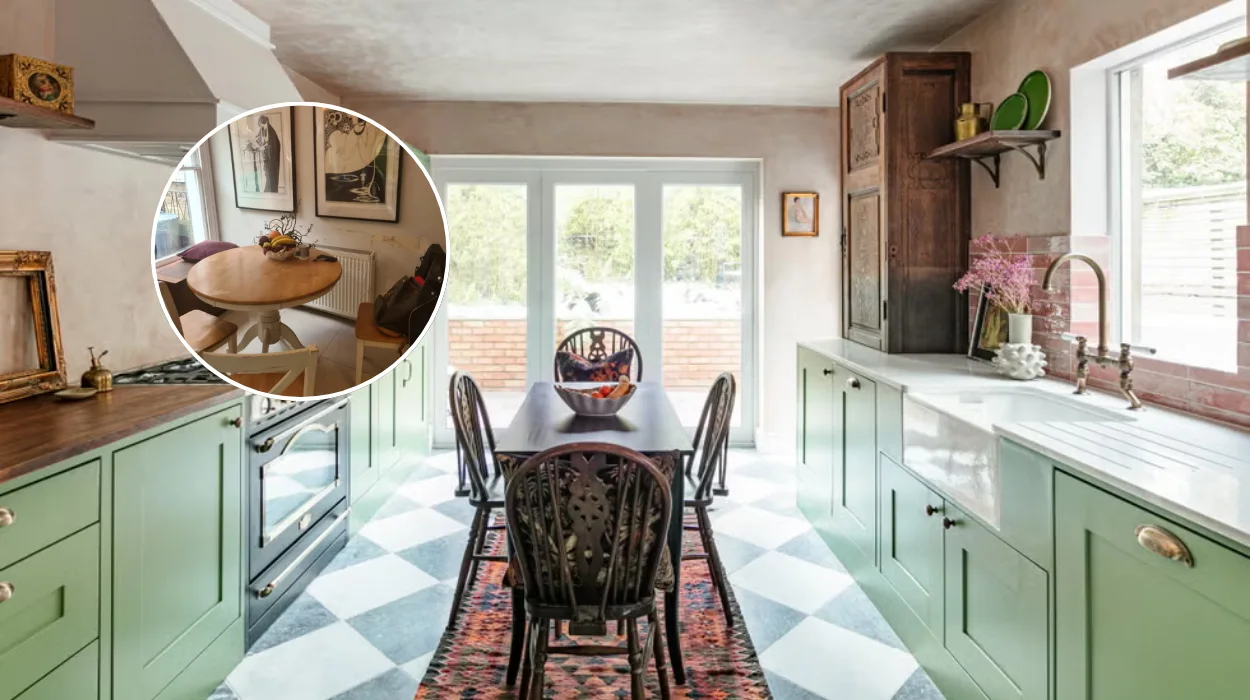
- Interior designer Zoe Willis reimagined a Hackney period apartment kitchen for a fashion designer and performer duo.
- The original kitchen was functional yet lacked warmth, personality, and artistic energy.
- Reclaimed school desks, bespoke joinery, and glossy pink wall tiles are among the standout features.
- The design champions sustainability, craftsmanship, and eclectic detail, balancing old and new elements.
- The renovation project reflects the client’s creative spirit and love for reclaimed materials.
- The story was first reported by Lisa Joyner for House Beautiful UK, featuring exclusive commentary from designer Zoe Willis.
How did the transformation of the Hackney kitchen come about?
As Lisa Joyner wrote for House Beautiful UK, the kitchen belonged to a fashion designer and performer who shared a period apartment in Hackney. Despite the property’s period features, the kitchen lacked the vitality and creativity that characterised the owners’ professional and personal lives.
- Key Points
- How did the transformation of the Hackney kitchen come about?
- What were the main design challenges faced during renovation?
- Which design elements define the new aesthetic?
- Why did Zoe Willis prioritise reclaimed and sustainable materials?
- How does the design reflect the owners’ artistic lifestyle?
- How did colour play a role in transforming the space?
- What can homeowners learn from this transformation?
- How has the design been received?
- What’s next for Zoe Willis Design?
Zoe Willis explained in her interview with House Beautiful:
“The original kitchen didn’t reflect the creative energy of its owners – a fashion designer and performer duo. It was functional but lacked soul, warmth, and a personal touch. They wanted a kitchen that felt authentic to their artistic style and worked equally well for cooking and entertaining.”
According to Willis, the brief centred on creating a space that “told a story” and embodied the lived-in vibrancy of its artistic inhabitants. Sustainability and tactility were also key principles guiding the design.
What were the main design challenges faced during renovation?
Transforming a small, utilitarian space into a dynamic, personality-filled kitchen posed a creative balancing act. The challenge, as Willis told House Beautiful, was to introduce texture and colour without overwhelming the room or compromising its functionality.
She explained:
“The space had to be both beautiful and practical. The clients love to entertain, so the kitchen needed to perform technically while looking visually striking. Achieving harmony between those expectations was the biggest challenge.”
The designer also noted the limitations of working within London’s period architecture—where space planning and light management demanded thoughtful solutions. Willis emphasised that sympathetic material choices allowed her to integrate vibrant new finishes while maintaining a sense of architectural continuity.
Which design elements define the new aesthetic?
At the heart of the redesign are the reclaimed school desks, reimagined as striking bespoke countertops and shelving. As featured in House Beautiful UK, these upcycled elements bring an authentic aged patina, celebrating craftsmanship and sustainability. The reuse of timber from mid-century school furniture adds both historical narrative and tactile warmth.
Complementing these salvaged materials are Hoxton pink gloss porcelain wall tiles – supplied by Mandarin Stone – which introduce a playful, contemporary contrast. Their reflective finish enhances natural light and visually expands the compact space.
Other design highlights include:
- Bespoke cabinetry with clean modern lines, offset by using vintage brass handles.
- Open shelving, crafted to display ceramics and glassware collected by the owners.
- Natural stone worktops that echo the textures of reclaimed timber.
- Soft lighting layers, mixing task lights and warm ambient tones for depth.
Zoe Willis mentioned that these choices were always anchored in personal connection:
“Every material in the room had to mean something — nothing was purely decorative.”
Why did Zoe Willis prioritise reclaimed and sustainable materials?
Sustainability was a cornerstone of the kitchen’s creative direction. As noted by House Beautiful, Willis frequently works with reclaimed and locally sourced materials in her projects to reduce waste and add individuality. She believes imperfections in such elements bring “life” to interiors, contrasting with overly polished new builds.
“In projects like this,” she told House Beautiful,
“reclaimed materials not only add character but also serve an environmental function. They tell stories—marks, grain, and texture all speak of history that enriches the space.”
The use of school desks—once functional everyday items repurposed into high-end design pieces—encapsulates her ethos: blending practicality, nostalgia, and sustainability.
How does the design reflect the owners’ artistic lifestyle?
As Zoe Willis shared, the clients’ professions — one a fashion designer, the other a performer — heavily influenced the kitchen’s expressive identity. The space acts as a visual extension of their professional creativity, with bold colour choices and textured layers comparable to an artist’s studio.
She added:
“The design needed to feel fearless but balanced. We treated it like curating a wardrobe: different textures and tones, but each piece contributing to a cohesive whole.”
This philosophy aligns with House Beautiful’s observation that the new kitchen “balances old and new, raw and refined” — mirroring the clients’ dual passions for fashion’s material experimentation and performance art’s energy.
How did colour play a role in transforming the space?
Colour was central to the room’s emotional transformation. As Willis explained to House Beautiful, the pink gloss wall tiles became the “unexpected hero” of the design, infusing brightness and charm while complementing the warm brown of reclaimed timber.
She noted:
“The pink adds vibrancy without clashing with older materials. It feels joyful, and that mood was essential to the overall design’s success.”
This balance between expressive modern colour and reclaimed earthy warmth allows the kitchen to feel both grounded and uplifting — a trait often missing in new-build conversions.
What can homeowners learn from this transformation?
The project demonstrates how small urban kitchens can be both practical and poetic when designed around personal narrative and considered materiality. As reported by House Beautiful UK, the Hackney renovation is a testament to reimagining overlooked materials and celebrating imperfection as beauty.
For homeowners considering similar transformations, Willis recommends starting with emotional connection rather than trend:
“If you build around what feels authentic — colours you love, materials that inspire you — the result will always feel timeless and genuine.”
Design experts cited by House Beautiful also highlight the growing appeal of reclaimed surfaces and coloured tiles in 2026 kitchen trend forecasts, noting how such combinations offer warmth and individuality in modern homes.
How has the design been received?
The project, first featured on House Beautiful UK’s digital platform, received widespread praise from readers and the design community alike. Social media users on Instagram and Pinterest have shared images of the transformation, lauding its bold use of recycled materials and playful juxtaposition of tones.
Industry observers have described it as “a striking lesson in upcycled luxury,” blending historic craftsmanship with contemporary energy — a quintessentially London aesthetic.
What’s next for Zoe Willis Design?
Zoe Willis continues to expand her portfolio across residential and commercial spaces with a focus on reclaimed, tactile design. Her firm, Zoe Willis Design Studio, based in London, is developing several new projects centred on sustainability-driven interiors. She told House Beautiful that storytelling through materials remains her guiding principle:
“Design is personal. It’s about emotion as much as function — and when those align, that’s when spaces come alive.”