Key Points
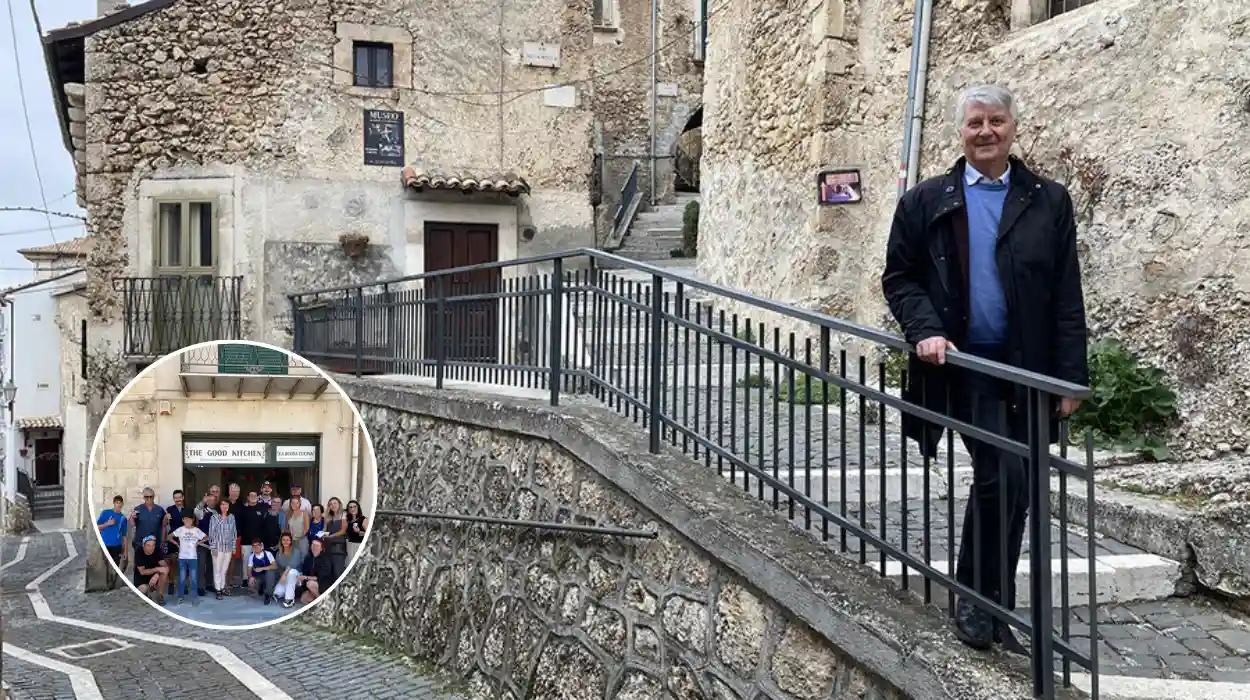
- British retiree Nick Millard, 60, left East Ham, east London, before Brexit to settle in a small Italian hamlet.
- His monthly costs dropped from £2,250 in London to €750 (£650) in Italy.
- Millard bought a farmhouse in 2018 for €80,000 (£70,000) in Villa Celiera, a mountain village of just 700 residents in the Abruzzo region.
- He moved before Brexit was finalised to retain freedom of movement within the EU.
- The former environmental health manager criticised the Brexit campaign for spreading “lies” about EU bureaucracy.
- Millard highlights lower living costs, tight-knit community life, and a slower pace in rural Italy.
- The story, initially reported by The i Paper’s reporter Imogen Kandasamy, sheds light on post-Brexit migration choices among Britons seeking affordable European lifestyles.
Why did Nick Millard decide to leave the UK before Brexit?
According to The i Paper, Millard said his decision was triggered by the outcome of the June 2016 referendum.
- Key Points
- Why did Nick Millard decide to leave the UK before Brexit?
- How did moving to Italy impact Millard’s living costs?
- What is life like in Villa Celiera?
- How did Brexit influence his move and the experience of other Britons?
- How do Italian rural costs compare to those in the UK?
- What challenges did Nick face adapting to life in a remote Italian hamlet?
- What does Millard’s story reveal about post-Brexit British migration?
- What does the future hold for Britons like Nick Millard in Italy?
“When the UK marginally voted for Brexit, I decided that I wanted to remain part of Europe and knew I needed to make the move before Brexit was finalised due to the probable increased difficulties if I left the move until afterwards,”
he told the publication.
The former environmental health manager, who had previously spent time in Brussels during his postgraduate studies, told i that his understanding of European institutions differed sharply from how they were characterised by Leave campaigners.
As reported by Kandasamy in The i Paper, he said:
“The Brexit campaign was based on a lot of lies about the potential benefits of leaving the EU. Having spent two weeks of my Masters in Environmental Health in Brussels learning how the EU operates, I knew that the bureaucracy that the Brexiteers blamed on the EU was not the truth.”
Millard’s comments echo concerns expressed by several British expatriates who made similar pre-Brexit moves to secure EU residency rights before the end of the transition period.
How did moving to Italy impact Millard’s living costs?
Millard’s relocation had a transformative effect on his finances. The i Paper reports that his monthly spending, which once stood at £2,250 in East Ham, has fallen to around €750 (£650) in Villa Celiera — a reduction of approximately 70 per cent.
He told The i that in London, the majority of his income was swallowed by rent, bills, and transport.
“The rat race in London meant that so much of my wages went on basic costs. I felt I was just existing rather than living.”
In contrast, life in Italy has proven remarkably affordable. Groceries, utilities, and local produce cost far less, and the proximity of local farmers and tight-knit village networks reduce reliance on large commercial chains.
While the farming lifestyle is simple, Millard said it feels more rewarding and sustainable than urban living in Britain.
What is life like in Villa Celiera?
Villa Celiera, in the mountainous Pescara province, is home to roughly 700 residents. It is known for its traditional lamb skewers, “arrosticini”, and a strong culture of self-sufficiency.
As noted by Kandasamy of The i Paper, Millard bought a renovated farmhouse surrounded by olive groves and forested hills. With 10 hectares of land, he now grows vegetables and maintains fruit trees for his own use.
He described everyday life there as peaceful and closely connected to nature.
“People in the village look out for each other. It’s a slower pace, and I finally have time to enjoy things properly — meals, friends, even silence,”
he shared.
Community participation plays a major role in his daily routine, from helping neighbours with land maintenance to joining local celebrations and markets.
How did Brexit influence his move and the experience of other Britons?
According to The i Paper analysis, many British citizens made similar decisions to relocate to EU countries before Brexit’s completion in January 2021. The end of freedom of movement has since made such relocations more complex, often requiring visas or residence permits that did not apply previously.
Millard’s move illustrates the sentiment among Britons who preferred maintaining an EU identity despite the referendum’s outcome.
“I knew after Brexit that moving later would become much harder in terms of paperwork and costs,” he explained.
As Kandasamy noted, this behavioural pattern reflects broader migration trends seen across Italy, Spain, and France, where hundreds of Britons rushed to secure residency before deadlines.
How do Italian rural costs compare to those in the UK?
Italy’s rural provinces offer significant financial advantages to expatriates. Everyday essentials, property tax, and healthcare contributions are substantially lower than in metropolitan Britain.
Millard emphasised that owning property in such areas remains feasible:
“A farmhouse with land here costs less than a basic flat in London.”
According to Numbeo’s comparative cost of living index, Italy’s average consumer prices stand almost 30 per cent lower than the UK, with rent nearly 50 per cent cheaper in smaller towns. This disparity explains why retirees find southern European life attainable on pensions that would otherwise be stretched in the UK.
What challenges did Nick face adapting to life in a remote Italian hamlet?
Despite the tranquillity and affordability, Millard admitted the transition brought challenges. Adjusting to a new language, slower bureaucracy, and limited amenities demanded patience.
Speaking to The i Paper, he noted,
“The village is very traditional. Not many people speak English, so it took time to feel integrated. But the kindness of the locals makes up for any difficulty.”
Winter isolation, limited transport, and Italy’s rural infrastructure can deter some expats, but Millard described these issues as manageable in exchange for quality of life and natural beauty.
“In London I had money but no time. Here, I have less but live more,” he said.
What does Millard’s story reveal about post-Brexit British migration?
Experts quoted by The i Paper note that Millard’s story mirrors a continuing trend of Britons moving to European countries in pursuit of lower costs and higher wellbeing despite bureaucratic hurdles.
The Office for National Statistics (ONS) estimates that approximately 1.3 million British citizens reside in EU member states, many in Italy, Spain, and France.
Dr Alan Thomas, a migration policy researcher at University College London, commented in a statement cited by The Guardian (not related directly to Millard’s case) that
“Brexit reshaped mobility patterns — but also reinvigorated interest in continental living among those disillusioned by housing or quality-of-life issues in the UK.”
What does the future hold for Britons like Nick Millard in Italy?
Italy’s regions have actively encouraged foreign settlement to counter population decline, even offering incentives for house refurbishment and small business investment.
Abruzzo, where Villa Celiera lies, has been particularly appealing, combining scenic landscapes with low costs.
Millard said he intends to remain there indefinitely. “I have no reason to go back,” he told The i Paper.
“This place gives me peace, purpose, and community — three things I couldn’t find in London.”
Nick Millard’s journey from East Ham to rural Abruzzo encapsulates the financial, emotional, and cultural shifts many Britons face in a post-Brexit Europe. His experience demonstrates how one man’s practical decision to move early has yielded both savings and contentment — and reveals how, far from London’s relentless pace, a simpler life can offer far richer dividends.