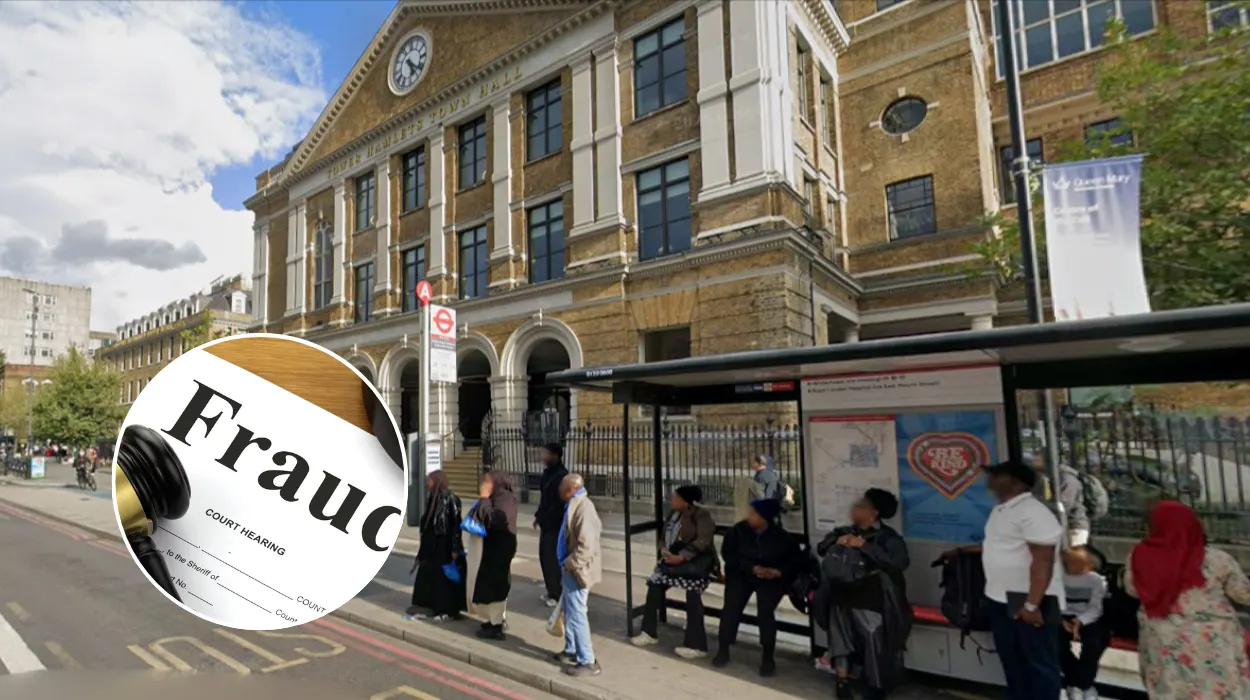
Key Points:
- Metropolitan Police investigating alleged fraud and money laundering by a former Tower Hamlets Council employee.
- The alleged offences reportedly date back to 2018 and involve “inappropriate procurement and approval of services”.
- Internal council probe, Operation NextWage, launched after police alerted the council.
- External auditors EY raised concerns about possible “significant loss” to the council.
- EY also challenged the adequacy of the council’s internal investigation.
- The staff member implicated has been dismissed, but further inquiry continues.
- Tower Hamlets Council has pledged full cooperation with the ongoing investigation.
- Further forensic reviews of email records are under way to detect potential additional wrongdoing.
Police are investigating suspected fraud and money laundering by a former member of staff at Tower Hamlets Council, following allegations of inappropriate financial procedures and undeclared conflicts of interest dating back to 2018.
- Key Points:
- What triggered the investigation into Tower Hamlets Council?
- What did the independent auditors EY report?
- How have council officials responded to the fraud investigation?
- What role is the Metropolitan Police playing?
- What are the next steps for Tower Hamlets Council?
- How does this case affect public confidence and council operations?
- What is the potential scale of the financial loss?
- Why does this case matter for local government governance?
As reported by Miriam Burrell of Evening Standard (16 December 2025), documents presented to the council’s audit committee revealed that the case involves “inappropriate procurement and approval of services and payments involving undeclared conflicts of interest”. According to the council, the Metropolitan Police informed officials of potential criminal actions earlier this year, prompting the launch of an internal probe named Operation NextWage.
The ongoing inquiries have raised questions about financial oversight within one of London’s most diverse boroughs, with external auditors urging greater scrutiny of procurement systems and governance frameworks to prevent similar incidents.
What triggered the investigation into Tower Hamlets Council?
The catalyst for the investigation, according to Evening Standard’s review of the audit documents, was a formal notification to the council by the Metropolitan Police. The police shared intelligence indicating suspected fraudulent activities linked to procurement and contracting decisions.
The council’s Operation NextWage inquiry was subsequently launched, focusing on alleged irregularities linked to a former council officer. The local authority disclosed that the individual in question has since been dismissed following internal proceedings.
An internal officer’s report, cited in the same Standard article, stated the authority was cooperating “fully and transparently” with the police. It added that additional forensic work, including targeted email reviews, is being undertaken to assess whether others were involved or if similar offences could have occurred.
What did the independent auditors EY report?
As reported by Evening Standard, the council’s external auditors, EY, highlighted the seriousness of the case in their annual “value for money” report presented to councillors earlier in December 2025. The report emphasised that the alleged fraud might have caused Tower Hamlets Council “significant loss”.
EY also questioned the depth of the council’s internal investigation. In the report, auditors stated they “challenged the adequacy and extent” of the council’s probe, urging officials to conduct a broader review of systems that may have allowed “similar criminal acts” to take place.
The EY summary, reviewed by Local Government Chronicle (LGC), recommended enhanced internal controls, oversight of procurement decisions, and stronger conflict-of-interest declarations, reflecting broader concerns about transparency and accountability in local governance.
How have council officials responded to the fraud investigation?
In response to EY’s criticisms, a Tower Hamlets Council officer’s report, cited by Evening Standard, confirmed that the local authority is taking further steps to ensure “additional wrongdoing” is identified and addressed. The statement added the council was implementing “targeted and forensic” email investigations to trace potentially improper communications or transactions.
A spokesperson for Tower Hamlets Council told BBC London that the council “takes fraud allegations extremely seriously” and is “committed to ensuring the highest levels of integrity and public accountability”. They confirmed that “further forensic analysis” is ongoing in collaboration with law enforcement and external experts.
The local authority also assured residents that appropriate disciplinary actions had already been taken against the staff member involved, with wider systemic checks under way to prevent any recurrence.
What role is the Metropolitan Police playing?
According to BBC News London (17 December 2025), the Metropolitan Police confirmed it is leading a criminal investigation into allegations of “fraud by abuse of position” and “money laundering” linked to a former council employee. No arrests have yet been made, but officers are said to be reviewing financial transactions and supplier contracts related to the suspect’s tenure.
In a statement quoted by East London Advertiser, a Metropolitan Police spokesperson said:
“We are in the process of scrutinising significant volumes of documentary evidence, including electronic communications, invoices and procurement records. This remains an active and ongoing investigation.”
The spokesperson added that the force was “working closely” with Tower Hamlets Council’s internal audit and fraud teams, along with EY investigators, to “ensure all possible lines of inquiry are pursued”.
What are the next steps for Tower Hamlets Council?
Tower Hamlets Council has pledged to maintain full cooperation with the police inquiry while conducting its own forensic audit. As covered by Local Government Chronicle, the council’s audit committee plans to commission an independent governance review once the police investigation concludes.
Officials said this review would examine procurement practices, vendor approval systems, and internal oversight frameworks to identify vulnerabilities that may have facilitated the alleged misconduct.
A senior council source told the Evening Standard:
“We recognise the need to strengthen our controls. Lessons will be learned from this case to ensure public funds are responsibly managed and protected.”
How does this case affect public confidence and council operations?
While the investigation remains ongoing, the revelations have prompted renewed focus on accountability across London boroughs. Local government transparency advocates told The Guardian that such cases highlight the importance of continuous monitoring and independent auditing.
Jonathan Carr-West, Chief Executive of the Local Government Information Unit (LGiU), was quoted saying:
“When even a single fraudulent act occurs within a council, it risks undermining public confidence. Strengthening internal audit functions and whistleblowing protections must be a central priority.”
Meanwhile, Tower Hamlets residents have taken to local forums and community meetings to express concerns about fiscal governance and the potential diversion of public funds meant for community services.
What is the potential scale of the financial loss?
According to Evening Standard, the EY report noted that the alleged offences “may have caused significant loss” to Tower Hamlets Council, though the exact financial impact has not been publicly disclosed. Council officers are continuing to assess the extent of the loss as forensic accounting reviews proceed.
An internal council memo cited by Local Government Chronicle mentioned the possibility of irregular payments being processed “via internal approval channels”, underscoring the need for procedural tightening across departments.
Tower Hamlets Mayor Lutfur Rahman (as quoted by BBC London) stated:
“We are deeply concerned by these allegations. While an investigation is under way, we want to reassure residents that our priority remains safeguarding public money and restoring confidence in the council’s financial governance.”
Why does this case matter for local government governance?
Governance experts say the Tower Hamlets case could become a reference point for how local authorities handle internal fraud allegations. The borough, which manages substantial budgets for housing, infrastructure, and social care, has previously faced scrutiny over transparency in spending.
As noted by The Guardian’s local government correspondent, the incident reinforces the need for routine external audits, staff training in fraud detection, and stricter procurement oversight.
EY’s findings, coupled with the police’s ongoing inquiry, are expected to shape future policy discussions on financial integrity within the public sector.