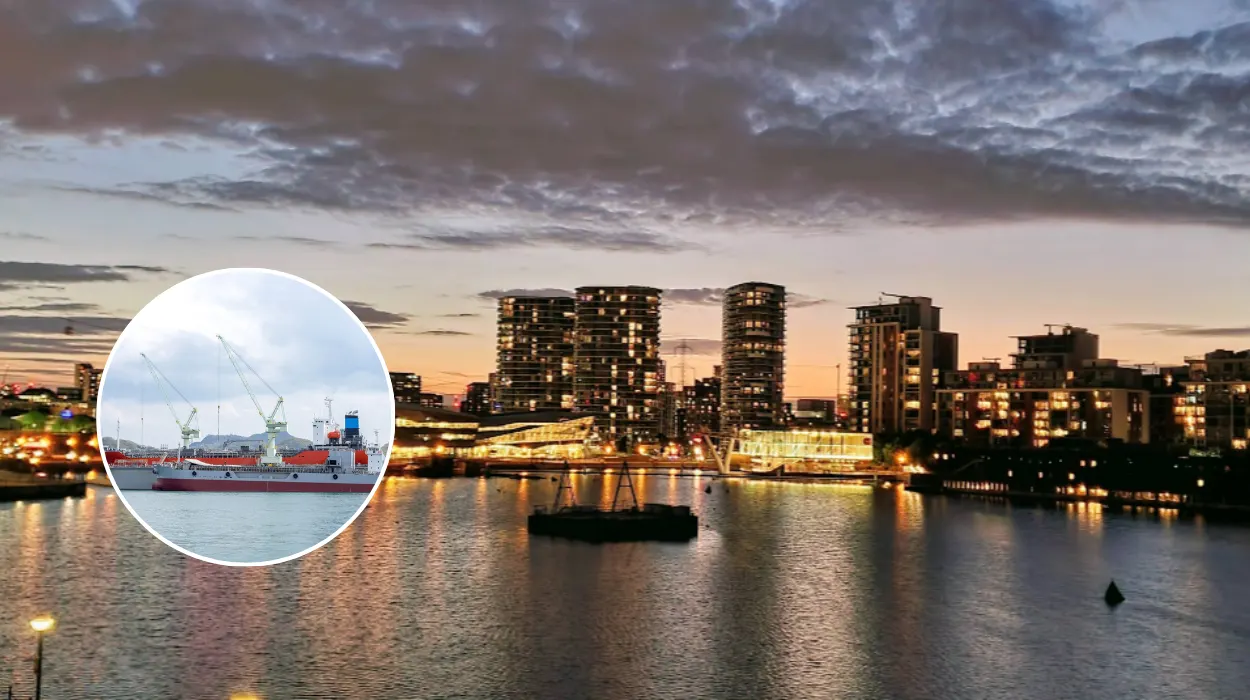
Key Points:
- The Greater London Authority (GLA) says a shipyard at the Royal Docks remains a priority despite new plans to relocate Smithfield and Billingsgate markets there.
- Smithfield and Billingsgate markets are set to move to Albert Island in Newham, East London.
- Newham Council has already approved regeneration plans for the area—including the first Thames shipyard in over a century.
- The relocation of the markets means the approved development plan must be amended.
- The GLA and City of London Corporation are working together to coordinate changes.
- Newham Mayor Rokhsana Fiaz described the development as a “momentous” step for the borough, estimating £750m of investment and thousands of jobs.
- A new developer could be appointed for the revised scheme.
- The shipyard, education centre, leisure marina, community facilities, and housing remain core features of the Albert Island plan.
The Greater London Authority (GLA) has reaffirmed its commitment to building a shipyard at the Royal Docks in east London, even as plans move forward to relocate two of the capital’s biggest wholesale food markets to the same site. The move raises questions about how the shipyard and markets will coexist and what amendments will be needed to previously approved regeneration plans for the area.
- Key Points:
- Why is the Royal Docks regeneration plan being revisited?
- What did City Hall say about the shipyard’s future?
- What are the economic implications for Newham?
- Will the approved shipyard design still go ahead?
- How will the market relocation work?
- What happens next?
- Why does this project matter to East London?
Why is the Royal Docks regeneration plan being revisited?
As reported by BBC News, the City of London Corporation and the GLA recently announced that Smithfield and Billingsgate markets—both major wholesale centres—will move to Albert Island, located at the eastern end of the Royal Docks in Newham.
However, this area already has approved plans for a significant redevelopment project. The project, which gained Newham Council approval in March 2023, includes what would be the first shipyard built on the River Thames in more than 100 years, alongside a leisure marina, educational facilities, community amenities, shops, and 16 new homes.
These plans were originally led by London and Regional, a real estate firm that won the tender to redevelop the island in 2018. Notably, the approved design does not include provisions for wholesale food markets, meaning changes will be required to accommodate the new relocation proposal.
What did City Hall say about the shipyard’s future?
According to a spokesperson for the Greater London Authority, quoted by the Local Democracy Reporting Service (LDRS), “The boatyard remains a priority for the GLA and the Port of London Authority (PLA). Discussions are ongoing about how the boatyard can be built alongside the markets.”
The spokesperson also acknowledged that “the markets proposal will require some amendment to the current permission, but the main principles—comprehensive redevelopment, employment use, and regeneration—remain valid.”
In essence, the GLA has confirmed a balancing act between maintaining the long-promised shipyard and accommodating the economic potential of moving two major markets to the same space.
What are the economic implications for Newham?
At a Newham Council meeting held earlier this week, borough mayor Rokhsana Fiaz described the decision as a “momentous week for our borough,” adding that it marks “the culmination of seven years of hard work” between council officers, the GLA, and regeneration partners.
As reported by BBC London, Mayor Fiaz said the combined development could inject £750 million into the local economy and create more than 2,200 jobs across Newham. She also emphasised that the regeneration would bring forward “state-of-the-art industrial spaces,” aligning with the borough’s long-term economic strategy for innovation, skills, and enterprise growth along the waterfront.
The GLA further stated that these discussions have been “handled by officers in the Royal Docks team, as is normal on such projects, with full transparency and updates provided to Mayor Fiaz and Newham Council.”
Will the approved shipyard design still go ahead?
While changes to the layout appear inevitable, the region’s five-year regeneration plan, published by the Greater London Authority and Newham Council in March 2024, still lists the shipyard and industrial infrastructure as key elements of Albert Island’s transformation. The plan describes the project as “bringing forward state-of-the-art industrial spaces to support London’s maritime and logistics future.”
The same document also mentions that the shipyard will be “delivered by the Port of London Authority” in partnership with developers, ensuring that Thames-based shipbuilding remains part of London’s industrial revival.
However, because Smithfield and Billingsgate markets require substantial space and logistical facilities, the approved blueprints for the regeneration project must now be reshaped to integrate both the maritime and commercial components. Once design changes are finalised, a new planning submission will be put forward to Newham Council for review.
How will the market relocation work?
As detailed by the City of London Corporation, which operates both Smithfield and Billingsgate markets, Albert Island—owned by the GLA—was identified as a strategic site due to its accessibility, riverfront logistics potential, and capacity for large-scale redevelopment.
City Hall has signalled that a new developer may be brought in to manage these revised plans, reflecting the scale and complexity of accommodating two markets alongside industrial and civic uses.
The GLA and City of London Corporation say the proposal aligns with London’s broader ambition to modernise its food supply infrastructure while supporting industrial sustainability within the Royal Docks Enterprise Zone.
What happens next?
The coming months are expected to bring detailed negotiations between the GLA, Newham Council, the Port of London Authority, and the City of London Corporation. These will likely centre on how to preserve the vision for the shipyard while meeting the commercial and logistical needs of the relocated markets.
Planning officers have confirmed that once the revised proposal is ready, it will undergo formal public consultation followed by a planning committee decision at Newham Council.
The Greater London Authority maintains that “the comprehensive redevelopment of Albert Island to provide employment, industrial and community benefits remains fully on track.”
Why does this project matter to East London?
Albert Island’s redevelopment is part of the Royal Docks regeneration, a cornerstone of East London’s sustainable growth strategy. The area, formerly a hub for shipping and manufacturing, has been undergoing major transformation since the early 2000s.
By combining modern industry—such as a potential shipyard—with large-scale markets and education facilities, the new plans promise to revive the Royal Docks’ historic role as an economic gateway for London.
According to City Hall’s planning documents, the development will “deliver a dynamic mixed-use quarter that combines maritime industry, logistics, and commercial trade,” while providing long-term employment and training opportunities for local residents.