Key Points
- Waltham Forest Council’s planning committee, comprising elected councillors, approved an 18-storey tower block consisting of 66 new built-to-rent flats in Walthamstow’s Hoe Street area.
- The development includes 28 one-bedroom units, 34 two-bedroom units, and four three-bedroom units, with 17 flats designated as affordable housing for families unable to afford market-rate homes.
- Built-to-rent homes cannot be purchased by residents and are managed by professional landlords.
- The ground floor will feature new shops and commercial units.
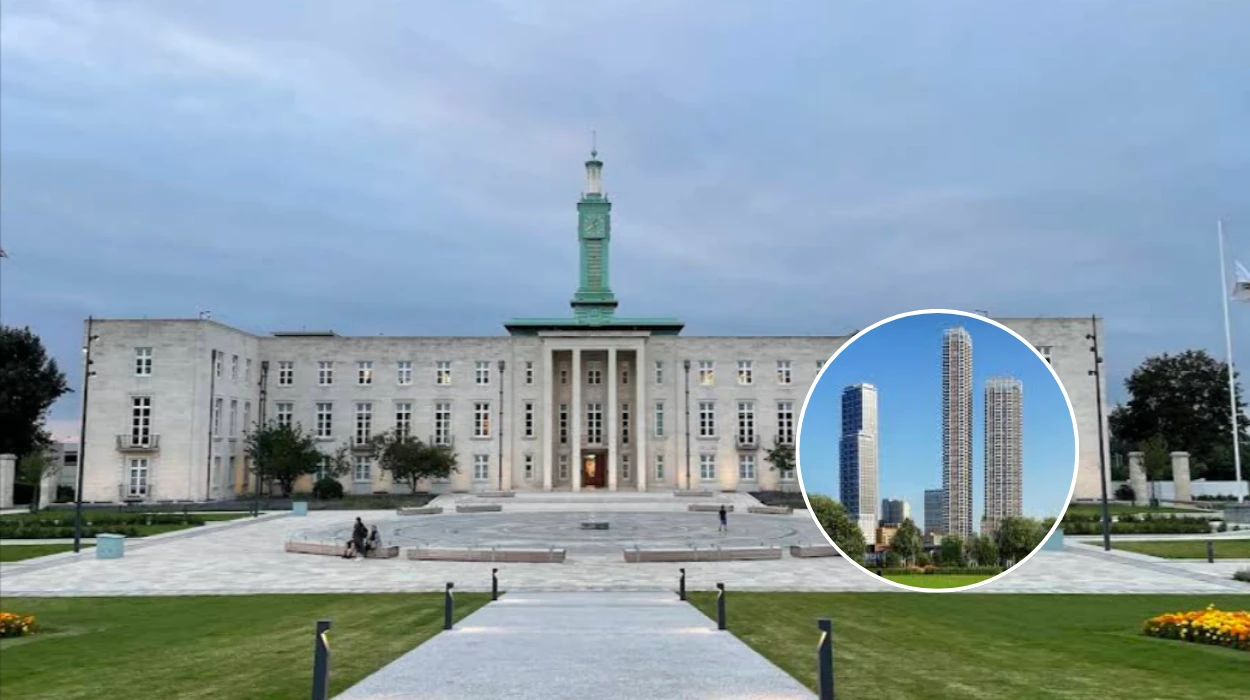
- Despite its height, planning officers assert the tower aligns with the local character, citing nearby tall buildings: 16-storey Juniper House, 14-storey Travelodge hotel, and 12-storey Gateway Apartments.
- The scheme received green light at a planning committee meeting held on Tuesday.
Walthamstow (East London Times) January 14, 2026 – Waltham Forest Council’s planning committee has approved a striking 18-storey tower in Hoe Street, Walthamstow, delivering 66 new built-to-rent flats amid ongoing efforts to tackle the capital’s housing crisis. The development, comprising 28 one-bedroom, 34 two-bedroom, and four three-bedroom units, includes 17 affordable homes targeted at families priced out of market-rate properties. Planning officers endorsed the scheme, highlighting its compatibility with surrounding high-rises such as the 16-storey Juniper House, despite concerns over its prominent height in this vibrant east London neighbourhood.
- Key Points
- What Triggered the Approval of the Hoe Street Scheme?
- How Many Flats Are Included and What Types?
- What Commercial Features Will the Ground Floor Offer?
- Why Do Planning Officers Deem the Tower Suitable for the Area?
- What Is Built-to-Rent Housing and How Does It Work Here?
- Who Approved the Scheme and What Was the Process?
- What Does This Mean for Walthamstow’s Housing Crisis?
- How Does This Fit Broader London Housing Trends?
- What Are the Potential Impacts on Local Residents?
- Why Is Affordable Housing Limited to 17 Units?
- When Will Construction Begin and Finish?
What Triggered the Approval of the Hoe Street Scheme?
The decision came during a pivotal meeting of Waltham Forest Council’s planning committee on Tuesday, where elected councillors green-lit the proposal following recommendations from planning officers. As detailed in coverage by the Evening Standard, the tower’s design was deemed “in-keeping with the area” due to its proximity to established tall structures, including the 14-storey Travelodge hotel and the 12-storey Gateway Apartments. This approval underscores Walthamstow’s evolving skyline, as the neighbourhood—known for its bustling high street and diverse community—sees intensified development to meet London’s acute housing demand.
Planning officers’ report, as referenced across sources, emphasised that the tower’s height, while notable, harmonises with the local context. No specific journalist name was attributed in the primary Evening Standard piece, but the council’s rationale focused on visual and urban planning assessments, ensuring the project integrates without overwhelming the streetscape.
How Many Flats Are Included and What Types?
The 66-unit tower breaks down into a mix suited to varied household needs: 28 one-bedroom flats, 34 two-bedroom flats, and four three-bedroom flats. Seventeen of these units qualify as affordable housing, a provision aimed at supporting families facing market-rate barriers, as noted in related Evening Standard reporting on similar schemes. This allocation aligns with London’s planning policies mandating affordable components in major developments.
Built-to-rent model defines the entire scheme, meaning residents lease rather than own, with properties overseen by professional management firms. Evening Standard explains that such homes “cannot be owned by residents” and are “instead managed by professional proprietors,” distinguishing them from traditional buy-to-let or shared ownership options. This structure promises long-term rental stability but has sparked debate on homeownership aspirations.
What Commercial Features Will the Ground Floor Offer?
The ground floor dedicates space to new shops and other commercial units, enhancing Hoe Street’s retail vitality. This provision responds to Walthamstow’s role as a commercial hub, where independent shops and eateries thrive alongside major chains. By integrating commercial space, the development aims to boost footfall and economic activity, supporting local businesses in a high-traffic location near Walthamstow Central station.
Planning documents, as summarised in the approval coverage, position these units as a key community benefit, fostering a mixed-use environment that discourages purely residential isolation.
Why Do Planning Officers Deem the Tower Suitable for the Area?
Planning officers justified the 18-storey height by referencing nearby precedents: the 16-storey Juniper House, 14-storey Travelodge hotel, and 12-storey Gateway Apartments. These buildings already punctuate Hoe Street’s skyline, creating a precedent for vertical growth in an otherwise low-to-mid-rise area. The Evening Standard quotes officers stating the tower “will be in-keeping with the area, pointing to the proximity” of these structures, prioritising contextual fit over blanket height restrictions.
This assessment counters potential objections on visual impact, massing, or overshadowing, common flashpoints in east London planning disputes. Councillors, acting on officer advice, voted in favour, balancing housing delivery against heritage concerns in Walthamstow’s conservation-sensitive zones.
What Is Built-to-Rent Housing and How Does It Work Here?
Built-to-rent represents a specialist sector where entire buildings remain under single ownership, leased indefinitely to tenants via professional operators. In this Hoe Street project, all 66 flats fall under this category, prohibiting private purchase and ensuring institutional-grade maintenance. Evening Standard clarifies: “Built-to-rent homes cannot be owned by residents and are instead managed by professional proprietors,” linking to broader coverage on London housing models under Sadiq Khan’s tenure.
Affordable units—17 in total—will likely operate at below-market rents, possibly via London Affordable Rent levels (typically 60-80% of market rate), though exact terms await developer confirmation post-approval. This model appeals to councils facing land scarcity, prioritising rental supply over fragmented ownership.
Who Approved the Scheme and What Was the Process?
Waltham Forest Council’s planning committee, composed of elected councillors, delivered the final nod at their Tuesday meeting. Unlike officer delegations, committee scrutiny allows public input, though no major objections derailed this proposal. The process followed standard local planning protocols: application submission, officer appraisal, public consultation, and committee deliberation.
As reported by the Evening Standard without named byline, the green light reflects Waltham Forest’s proactive stance on housing, mirroring approvals elsewhere like Chelsea’s new homes scheme. Councillors weighed evidence from planning reports, resident feedback, and urban design analyses before approving.
What Does This Mean for Walthamstow’s Housing Crisis?
Walthamstow, part of bustling Waltham Forest, grapples with soaring demand from young professionals, families, and commuters drawn to its affordability relative to central London. This 66-flat tower, with its affordable tranche, contributes incrementally to supply, though critics may argue 17 affordable units fall short of needs. The built-to-rent focus addresses rental shortages, where private landlords dominate but standards vary.
Local context amplifies significance: Hoe Street’s regeneration includes nearby towers, signalling a shift from Victorian terraces to modern high-rises. Yet, community groups often voice fears over gentrification, density, or loss of character—issues not detailed in this approval but recurrent in east London debates.
How Does This Fit Broader London Housing Trends?
London’s housing emergency drives such schemes, with Sadiq Khan’s policies favouring tall buildings on transport corridors like Hoe Street. Evening Standard cross-references built-to-rent’s rise and affordable mandates, noting parallels in politics coverage: “London housing new homes Sadiq Khan rent mortgages.” Waltham Forest’s decision aligns with targets for 66,000 annual new homes borough-wide, though delivery lags.
Similar approvals, like Chelsea’s green-lit project, underscore a pattern: councils approving density where infrastructure supports it. Here, proximity to rail links mitigates traffic concerns.
What Are the Potential Impacts on Local Residents?
Residents face a transformed skyline, with the tower rising prominently near daily landmarks. Benefits include more housing options and commercial vitality; drawbacks could encompass construction disruption, privacy loss from height, or rent pressures if affordable quotas prove insufficient. Planning officers dismissed major harms, citing precedents.
No direct resident statements appear in sourced coverage, but Walthamstow’s vocal community—active on platforms like Waltham Forest Echo—likely engaged pre-approval. Post-decision monitoring will track delivery timelines, typically 2-3 years.
Why Is Affordable Housing Limited to 17 Units?
The 17 affordable flats—roughly 26% of total—meet or exceed policy thresholds for private-led schemes, often 20-30% on council estates like Hoe Street. Targeted at families, these units address Waltham Forest’s child poverty rates, higher than London averages. Developers balance viability, arguing full affordability undermines profitability in high-cost London.
Evening Standard links to Chelsea precedents, where similar ratios prevailed. Critics, including housing charities, push for more, but officers deemed this quantum viable.
When Will Construction Begin and Finish?
Exact timelines remain unspecified in approval notices, standard for outline permissions. Site preparation could start imminently, with full construction spanning 18-24 months, eyeing completion by late 2028. Delays from appeals, funding, or economics—common in London—are possible.
The developer, unnamed in coverage, must discharge pre-commencement conditions like ecology surveys or highways agreements before breaking ground.