Key Points
- Twenty-five wrongdoing cases were upheld against Havering Council in the 2024/25 period by the Local Government Ombudsman (LGO), as noted in council documents reviewed by the Overview and Scrutiny Board.
- Essex’s Police, Fire and Crime Commissioner Roger Hirst warned that Government plans to merge the 43 police forces in England and Wales into 12 to 15 larger regional “mega forces” could seriously weaken neighbourhood policing.
- The proposed reforms aim to streamline services and improve access to specialist resources but would abolish the role of police and crime commissioners, transferring responsibilities to newly elected regional mayors.
- Roger Hirst stated: “We support change that genuinely improves policing for the public, but changes on this scale must be fully funded and must not weaken local accountability or neighbourhood policing”.
- Hirst criticised the Government for not fully funding last year’s police pay settlement and for axing antisocial behaviour hotspot funding, which he says helped reduce antisocial behaviour incidents in Essex by more than two thirds since 2016.
- Essex Police has received funding for only 16 of the 39 neighbourhood officers required under new national standards.
- More than 100 police staff jobs are set to go despite the council tax share funding Essex Police rising by almost 6 per cent from April.
- Hirst noted that Essex residents have repeatedly backed higher council tax to sustain police numbers, adding: “Local people have been clear they want more visible, accessible policing. Together we have delivered that. Essex Police is now the biggest and strongest it has ever been”.
- Under merged forces, resources could be pulled towards larger cities or high-crime areas, potentially leaving towns like Southend with fewer officers, slower response times for lower-level crime, and reduced influence over priorities such as the seafront night-time economy and town centre disorder.
- Hirst added: “Any change to policing must build on what works locally, not put it at risk”.
- Southend councillor Martin Terry, who leads on community safety, expressed concerns: “I am worried about the expansion of police forces because years ago we lost the Southend borough police force and I think that was a negative thing”.
- Terry stressed: “The bigger it gets, the more you lose the local contact” and highlighted Southend’s unique pressures, especially during summer when the seafront requires event-scale management, saying: “You need that local feel. Every town is different”.
- The Local Government and Social Care Ombudsman contacted Havering Council on 120 occasions regarding complaints in 2024/25, with 88 proceeding to formal investigation.
- Havering Council’s Housing Ombudsman report for 2023/24 (relevant to ongoing trends) showed a maladministration rate of 78%, with 100% compliance on remedies and £5,815 paid in remedies.
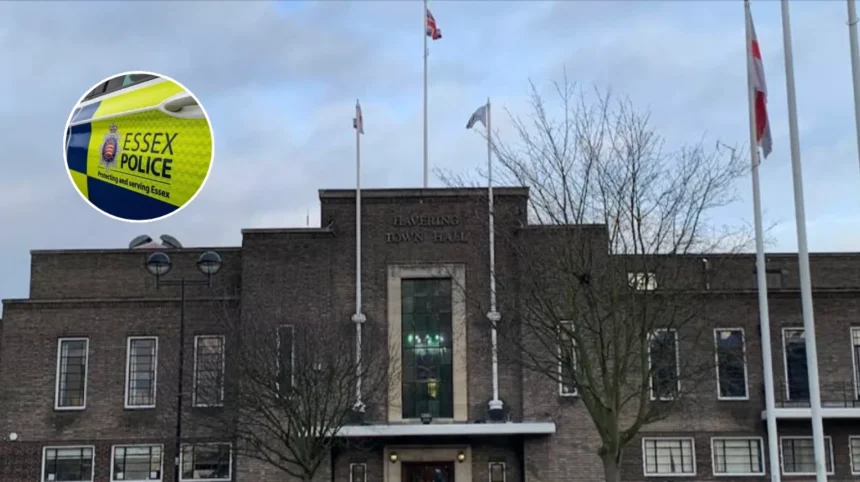
Thurrock, Essex (East London Times) February 6, 2026 – Havering Council faced significant scrutiny in 2024/25 as the Local Government Ombudsman upheld 25 cases of wrongdoing, while Essex’s Police, Fire and Crime Commissioner Roger Hirst issued stark warnings about Government plans that could undermine local policing in areas like Southend. These developments highlight ongoing challenges in local governance and public safety amid broader national reforms. The upheld complaints underscore persistent issues in council services, as detailed in official scrutiny reports.
- Key Points
- What are the details of Havering Council’s upheld wrongdoing cases?
- Why is Essex’s PCC warning about police mergers?
- How has Government funding impacted Essex Police?
- What risks do merged forces pose to towns like Southend?
- How does this fit into national policing reforms?
- What steps is Havering Council taking post-complaints?
- Broader Implications for Local Governance and Safety
What are the details of Havering Council’s upheld wrongdoing cases?
The Overview and Scrutiny Board report for Havering Council reveals that during 2024/25, the Ombudsman contacted the council on 120 occasions regarding complaints, with 88 advancing to formal investigation and 25 ultimately upheld. This figure points to systemic issues in areas such as housing, council tax, and service delivery, though specific case details remain outlined in council documents rather than public summaries. As reported in Havering Council’s own governance papers, these upheld findings necessitate service improvements to restore public trust.
Havering’s Housing Ombudsman Annual Report for 2024 to 2025 emphasises complaint volumes, response times, and trends, noting the council manages 9,364 properties and 8,778 tenants, completing 31,918 responsive repairs in the period. For the prior year 2023/24, the maladministration rate stood at 78%, slightly above national averages for similar councils, with lower rates in service failure (6% less) and no-maladministration findings (3% less). The council achieved 100% compliance with Ombudsman recommendations, paying £5,815 in financial remedies within three months.
Why is Essex’s PCC warning about police mergers?
Roger Hirst, Essex’s Police, Fire and Crime Commissioner, cautioned that proposals to consolidate England and Wales’ 43 forces into 12 to 15 mega forces risk distancing decision-making from communities like Southend. The reforms, intended to streamline services and enhance specialist resource access, would eliminate police and crime commissioners’ roles, shifting them to regional mayors. Hirst remarked:
“We support change that genuinely improves policing for the public, but changes on this scale must be fully funded and must not weaken local accountability or neighbourhood policing”.
In his Police and Crime Plan, Hirst highlights Essex Police’s growth to its strongest state ever, with crime down 6% and antisocial behaviour (ASB) reduced by 38% last year—70% lower since 2016—thanks to targeted hotspot patrols. Murder and burglary have dropped over 40%, with plans for further 40% crime reduction via prevention, early intervention, and technology like live facial recognition.
How has Government funding impacted Essex Police?
Hirst criticised the Government for incomplete funding of last year’s police pay settlement and eliminating ASB hotspot funding, which contributed to Essex’s two-thirds ASB drop since 2016. Essex Police secured funding for just 16 of 39 required neighbourhood officers under national standards. Despite this, over 100 police staff jobs face cuts, even as council tax for policing rises nearly 6% from April—supported by residents to maintain numbers.
Hirst stated:
“Local people have been clear they want more visible, accessible policing. Together we have delivered that. Essex Police is now the biggest and strongest it has ever been”.
His plan commits to sufficient resources for neighbourhood crime like burglary, car theft, drug dealing, and shoplifting, partnering with local authorities.
What risks do merged forces pose to towns like Southend?
Under regional forces, Hirst warned resources might shift to big cities or high-crime zones, leaving Southend with fewer officers, delayed responses to minor crimes, and less say in priorities like seafront night-time economy and town centre disorder. He emphasised:
“Any change to policing must build on what works locally, not put it at risk”.
Southend councillor Martin Terry, community safety lead, echoed this:
“I am worried about the expansion of police forces because years ago we lost the Southend borough police force and I think that was a negative thing. The bigger it gets, the more you lose the local contact”.
Terry highlighted summer seafront demands needing “event scale management,” insisting: “You need that local feel. Every town is different”.
How does this fit into national policing reforms?
Broader context from BBC reporting shows policing’s biggest reform in two centuries, with some chiefs welcoming mergers post-cuts. Gloucestershire’s temporary Chief Constable Maggie Blyth called it positive for “unsustainable” situations, stressing local neighbourhood policing preservation as “crime will not respect borders by 2026”. Wiltshire’s Philip Wilkinson supports changes for efficiencies like standardised systems but worries resources may divert from local policing. A Home Office review will shape force structures by summer.
Hirst’s vision aligns with data-driven hotspot policing and AI for courts, using crime harm scores for effective allocation. Essex’s plan focuses on safer streets via CCTV, lighting, and protecting vulnerable people from offenders and drug gangs.
What steps is Havering Council taking post-complaints?
Havering Council’s reports stress continuous improvement in complaint handling, transparency, and responsiveness. The 2024/25 housing report outlines planned 2025/26 steps, building on 100% Ombudsman compliance. Fraud examples investigated include social housing subletting, council tax discounts, business rates relief, insurance claims, direct payments misuse, and Blue Badge abuse.
As per the Overview and Scrutiny Board, the 25 upheld cases from 88 investigations out of 120 contacts demand rigorous review. Council documents commit to efficient processes for 9,364 properties amid high repair volumes.
Broader Implications for Local Governance and Safety
These events intertwine council accountability with policing futures. Havering’s 25 upheld cases signal service gaps, potentially eroding resident confidence. Simultaneously, Hirst’s alerts frame national reforms as threats to Essex’s gains—905 extra officers, falling crime—risking reversal without local focus. Terry’s Southend perspective underscores diverse town needs.
Government plans promise efficiencies but spark fears of diluted accountability, as seen in varied chief reactions. Residents’ council tax support shows appetite for strong local services, yet funding shortfalls loom. Hirst’s data-backed successes—ASB down 70%, prevention emphasis—advocate preserving what works.
In Thurrock and wider Essex, these stories demand scrutiny. Councils must address Ombudsman findings transparently, while leaders like Hirst push for funded, community-rooted reforms. As 2026 unfolds, balancing national scale with local touch remains pivotal for safer communities.