Key Points
- A road traffic collision occurred on Commercial Road in Tower Hamlets, east London, prompting an emergency response.
- Paramedics from the London Ambulance Service were called at 5.24pm on Thursday, February 5, 2026, following reports of the incident.
- An ambulance crew and a paramedic in a fast-response car attended the scene in the E1 area.
- A male patient received treatment on-site before being transported to a major trauma centre as a priority.
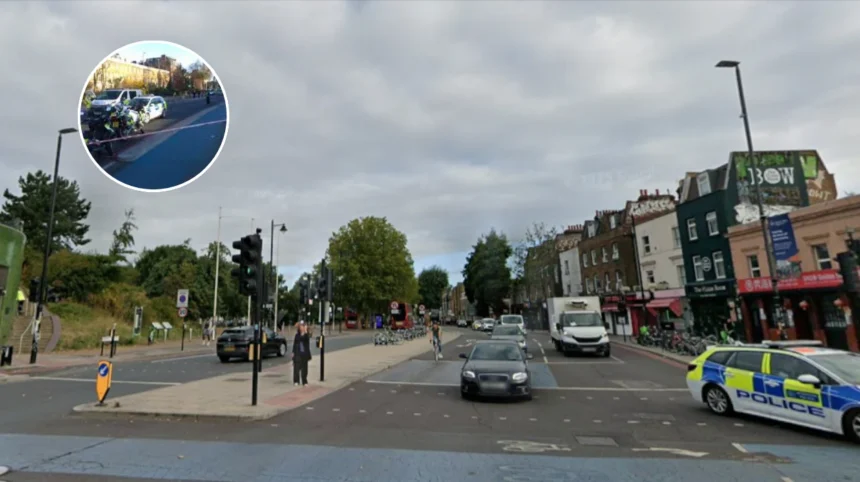
- The eastbound A13 Commercial Road was closed between Jubilee Street and Exmouth Street during the incident.
- Bus routes 15, 115, and 135 faced diversions due to the road closure.
- A spokesperson for the London Ambulance Service confirmed the details of the response and patient care.
Tower Hamlets (East London Times) February 6, 2026 – A man was rushed to hospital following a serious road traffic collision on Commercial Road in east London yesterday evening, leading to a partial closure of the busy A13 route and diversions for several bus services. Emergency services responded swiftly to the scene near Jubilee Street, treating the patient on-site before prioritising his transfer to a major trauma centre. The incident, reported at 5.24pm on February 5, disrupted traffic in the heart of Tower Hamlets.
- Key Points
- What Happened on Commercial Road?
- How Did Emergency Services Respond?
- Why Was the A13 Commercial Road Closed?
- Which Bus Routes Were Affected?
- What Do We Know About the Patient’s Condition?
- Who Else Was Involved in the Incident?
- When Did the Incident Unfold?
- Where Exactly Did the Crash Occur?
- What Is the Role of the London Ambulance Service?
- Has There Been Police Involvement?
- How Does This Fit into Tower Hamlets Road Safety Trends?
- What Happens Next in the Investigation?
- Community Impact and Local Reactions
- Broader Context of London Road Collisions
What Happened on Commercial Road?
The collision took place on the eastbound section of the A13 Commercial Road, a major thoroughfare in Tower Hamlets. Paramedics were alerted at precisely 5.24pm on Thursday, February 5, 2026, after initial reports of the incident reached emergency operators. An ambulance crew, supported by a paramedic in a fast-response car, arrived promptly to manage the situation.
The patient, identified only as a man in official statements, received immediate medical attention at the scene. He was stabilised by the attending paramedics before being conveyed to hospital under priority status, indicating the severity of his injuries. No further details on his condition have been released as of this reporting.
How Did Emergency Services Respond?
As reported by the London Ambulance Service spokesperson in their official statement,
“We were called at 5.24pm yesterday (5 February) to reports of a road traffic collision in Commercial Road, E1.”
The spokesperson continued,
“We sent an ambulance crew and a paramedic in a fast response car.”
This rapid deployment underscores the service’s protocol for urban road incidents.
The same spokesperson elaborated,
“We treated a patient at the scene and took him to a major trauma centre as a priority.”
This prioritisation reflects standard procedures for potentially life-threatening cases, ensuring the man received advanced care without delay. Tower Hamlets emergency responders coordinated seamlessly, minimising further risks to other road users.
Why Was the A13 Commercial Road Closed?
The eastbound carriageway of the A13 Commercial Road was fully closed from Jubilee Street to Exmouth Street to facilitate safe access for paramedics and secure the crash site. This stretch, known for heavy commuter traffic, saw immediate disruptions as authorities implemented the closure during the evening rush hour.
The decision prioritised public safety, allowing unrestricted movement for emergency vehicles while investigators assessed the scene. Reopening timelines were not specified in initial reports, but such closures in Tower Hamlets typically last until hazards are cleared and preliminary examinations conclude.
Which Bus Routes Were Affected?
Public transport faced significant knock-on effects from the incident. Bus routes 15, 115, and 135 – vital lifelines for east London residents – were diverted to avoid the closure zone. These diversions likely extended journey times for passengers heading towards central London or local destinations.
Operators such as Transport for London (TfL) would have issued real-time alerts via apps and station notices, advising commuters to seek alternative routes. The impact highlights the vulnerability of Tower Hamlets’ road network to single incidents, given its reliance on key arterial roads like Commercial Road.
What Do We Know About the Patient’s Condition?
Details on the man’s identity, age, or specific injuries remain undisclosed, respecting patient confidentiality and ongoing medical protocols. The London Ambulance Service’s description of him as a priority case to a major trauma centre suggests potentially critical injuries, possibly including head, spinal, or internal trauma common in high-impact collisions.
As reported by the London Ambulance Service spokesperson, the patient was “treated a patient at the scene,” implying on-site interventions such as bleeding control, immobilisation, or oxygen administration. Updates on his status are awaited from hospital authorities, with no further statements issued at the time of publication.
Who Else Was Involved in the Incident?
Initial reports do not specify additional casualties, vehicles involved, or the exact circumstances precipitating the crash – whether it involved multiple cars, a pedestrian, or other factors. Police presence is inferred from standard procedure for A13 incidents, though no Metropolitan Police statement has been quoted in available coverage.
Witness accounts, if any, have yet to surface publicly. Tower Hamlets residents and drivers passing through the E1 postcode may hold key details, and authorities often appeal for dashcam footage in such cases to reconstruct events.
When Did the Incident Unfold?
The timeline is precise: reports surfaced at 5.24pm on February 5, 2026, placing the collision amid peak evening traffic. Paramedics’ attendance and on-scene treatment likely spanned 30-60 minutes, aligning with the duration of the road closure. Full clearance would have followed patient transport, restoring normal flow thereafter.
This timing exacerbated disruptions, coinciding with workers commuting from the City financial district through Tower Hamlets towards Essex and beyond.
Where Exactly Did the Crash Occur?
Commercial Road, part of the A13, runs through the densely populated E1 area of Tower Hamlets, flanked by residential towers, shops, and eateries. The closure spanned Jubilee Street to Exmouth Street, a roughly 0.5-mile segment near Whitechapel and Stepney borders. This location’s proximity to major landmarks like the Royal London Hospital amplifies its newsworthiness.
The site’s urban density – with narrow lanes and high pedestrian volumes – contributes to frequent incidents, making it a focal point for local traffic safety campaigns.
What Is the Role of the London Ambulance Service?
The London Ambulance Service (LAS) operates as London’s primary emergency medical provider, responding to over 1 million calls annually. In this case, their deployment of an ambulance crew plus a fast-response paramedic exemplifies efficient triage for road traffic collisions (RTCs).
LAS protocols mandate scene treatment before hospital transfer, especially for trauma cases. Their statement, as quoted earlier, provides the sole authoritative account thus far, emphasising factual response details without speculation.
Has There Been Police Involvement?
While not explicitly detailed in LAS reports, the scale of the closure implies Metropolitan Police Traffic Management oversight. Tower Hamlets Police typically secure RTC scenes, investigate causes, and notify next-of-kin if applicable. A formal police log entry for the A13 incident would be accessible via Freedom of Information requests.
No arrests or charges have been mentioned, suggesting the inquiry remains at an early stage.
How Does This Fit into Tower Hamlets Road Safety Trends?
Tower Hamlets records hundreds of RTCs yearly, with Commercial Road featuring prominently due to its A13 status. Recent years have seen calls for better signage, speed enforcement, and cycle lane protections amid rising e-bike and delivery scooter usage.
This incident adds to concerns over evening peak-hour safety, potentially prompting TfL reviews of junction designs at Jubilee and Exmouth Streets.
What Happens Next in the Investigation?
Authorities will likely analyse vehicle data, CCTV from nearby businesses and TfL cameras, and witness testimonies. The driver’s details, if charged, would emerge post-forensic examination. Coronial involvement follows if outcomes prove fatal, though current information points to survival with treatment.
TfL may issue a formal disruption summary, while LAS could release aggregated RTC statistics including this event.
Community Impact and Local Reactions
Residents near Commercial Road expressed frustration over diversions on social media, with some noting delays exceeding an hour. Local councillors have yet to comment officially, but Tower Hamlets Council monitors such events for infrastructure implications.
Commuters on routes 15, 115, and 135 shared experiences of rerouting via Ratcliffe Highway or Cable Street, underscoring the incident’s ripple effects.
Broader Context of London Road Collisions
London sees thousands of RTCs annually, with east London boroughs like Tower Hamlets overrepresented due to population density. The LAS’s priority transfer to a major trauma centre – likely the Royal London – aligns with Vision Zero initiatives aiming to eliminate road deaths by 2041.
This event serves as a reminder of urban driving hazards, from HGVs to distracted motorists.