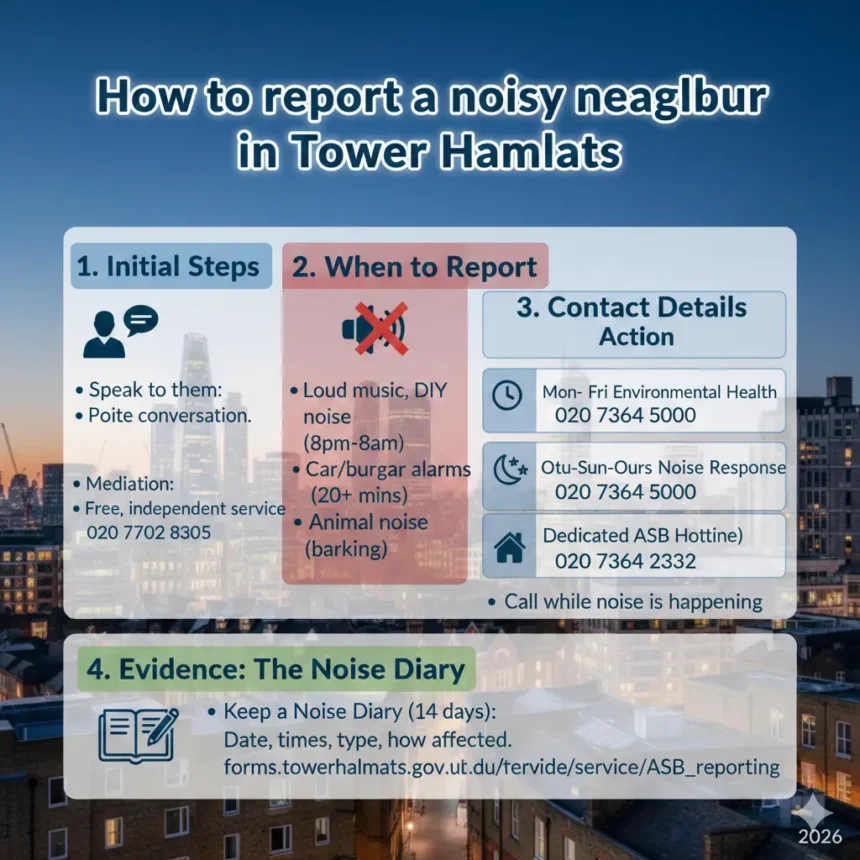
To report a noisy neighbour in Tower Hamlets, first try speaking to them politely if safe, then contact Tower Hamlets Council’s Environmental Protection Team via their online form or phone during office hours (9am-5pm weekdays). For out-of-hours noise, use the emergency response service Thursday to Sunday evenings. Keep a noise diary as evidence to support your complaint.
Why Noise Matters to East London Residents
Noise from neighbours disrupts sleep, work, and daily life for many in dense areas like Tower Hamlets, Newham, Hackney, Waltham Forest, Redbridge, and Barking & Dagenham. Local residents often face music, shouting, or parties late at night, leading to stress and health issues in these vibrant East London communities.
Councils in East London, including Tower Hamlets Council and Newham Council, handle thousands of such complaints yearly, showing how common this problem is. Resolving it quickly restores peace and helps maintain good neighbourly relations across these boroughs.

Step-by-Step Actions to Solve the Problem
Start by assessing if the noise qualifies as a statutory nuisance under UK law, such as loud music or banging that unreasonably interferes with home use.
- Step 1: Attempt informal resolution. If you feel comfortable, approach your neighbour calmly during a quiet moment. Explain the impact politely—many issues resolve here without escalation.
- Step 2: Keep a detailed noise diary. Note dates, times, duration, noise type, and effects on you. Record for at least two weeks; this evidence is crucial for council action.
- Step 3: Report to the council. Use Tower Hamlets Council’s online noise report form for ongoing issues or call during hours. For immediate out-of-hours disturbances, contact the noise response service.
- Step 4: Cooperate with investigations. Provide diary sheets and allow officer access to your home for noise assessments.
- Step 5: Follow up if needed. If no resolution, request updates or escalate per council guidance.
These steps apply similarly in Newham Council or Hackney areas, ensuring local residents get consistent support.
Which Council Service Handles It
In Tower Hamlets, the Environmental Protection Team within the Environment and Waste department manages noise complaints. They investigate under the Environmental Protection Act 1990 to determine if a statutory nuisance exists.
For council tenants, Tower Hamlets Enforcement Officers may respond first to live incidents. Neighbouring boroughs like Waltham Forest or Redbridge use their own environmental health teams, but processes mirror Tower Hamlets closely.
East London councils prioritise reactive services, relying on resident reports for evidence.
Information or Documents Needed
Prepare these essentials before reporting to Tower Hamlets Council or other East London councils:
- Your full address and contact details.
- Neighbour’s address (if known).
- Completed noise diary with specifics: exact times (e.g., 11pm-2am), noise description (e.g., bass-heavy music), and personal impact (e.g., unable to sleep).
- Any photos, videos, or recordings as supporting evidence—avoid using them as primary proof.
No formal documents like ID are required initially, but accurate details speed up the process for local residents.
Expected Response Time
Tower Hamlets Council sends a letter and diary sheets promptly after an initial report, often within days. For proactive visits or sound monitoring, expect action within weeks if diaries show a pattern.
Out-of-hours service responds to urgent calls Thursday-Sunday (8pm-3.30am), aiming for quick attendance. Cases close after 28 days without follow-up communication or evidence.
In Newham Council or Barking & Dagenham, timelines are similar, with advisory letters issued first.
What to Do if Follow-Up is Required
If initial council action like a warning letter fails, return completed diary sheets to prompt officer visits. Request noise monitoring equipment if disturbances are irregular.
Escalate by contacting the team again or your ward councillor for priority in Tower Hamlets. Multiple complaints from local residents strengthen cases.
Persist with evidence; prosecution follows repeated breaches of abatement notices.
Rights and Responsibilities Under UK Rules
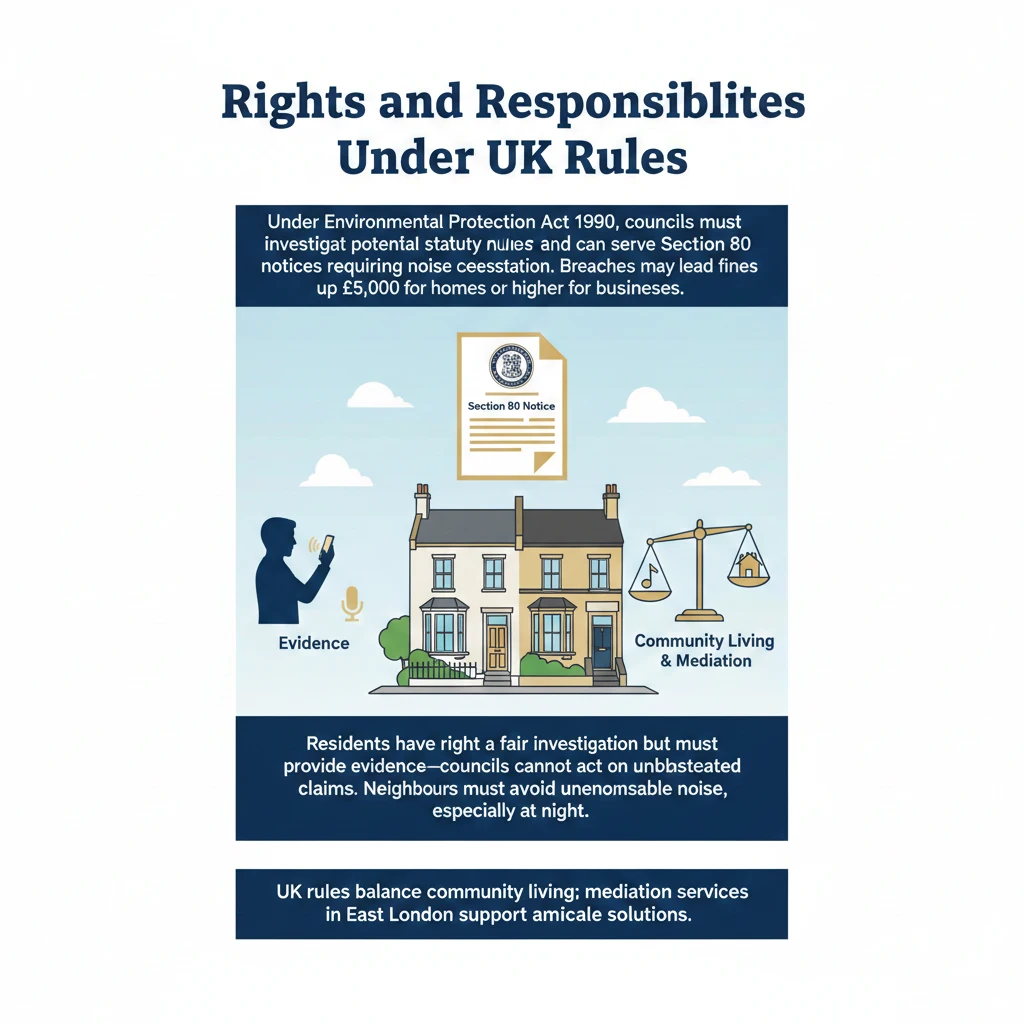
Under the Environmental Protection Act 1990, councils must investigate potential statutory nuisances and can serve Section 80 notices requiring noise cessation. Breaches may lead to fines up to £5,000 for homes or higher for businesses.
Residents have the right to a fair investigation but must provide evidence—councils cannot act on unsubstantiated claims. Neighbours must avoid unreasonable noise, especially at night.
UK rules balance community living; mediation services in East London support amicable solutions.
Practical Tips to Avoid the Problem in Future
Prevent escalation with these habits for East London living:
Choose soundproofing like heavy curtains or rugs to reduce transmitted noise.
Communicate early and kindly to build rapport with neighbours.
Join local good neighbour schemes via Tower Hamlets Council for dispute mediation.
Time your own activities considerately, respecting quiet hours (typically 11pm-7am).
Report patterns early to councils like Hackney or Redbridge before they worsen.
These steps foster harmony in Tower Hamlets and nearby boroughs.