Key Points
- Waltham Forest Council has received a series of new planning applications covering residential extensions, roof alterations, tree works, window replacements, and significant infrastructure projects across Walthamstow, Leyton, Chingford, and surrounding areas.
- Among the standout proposals is work at the Banbury Reservoir, including reinforcement measures aimed at enhancing structural integrity and public safety.
- Applications include single-storey rear extensions at multiple properties in Walthamstow’s High Street area, loft conversions with rear dormers in Leyton, and full window replacement schemes in Chingford.
- Tree preservation orders are featured prominently, with requests for pruning and felling in conservation zones to balance urban development and green space maintenance.
- Roof works dominate submissions in central Walthamstow, involving hip-to-gable conversions and installation of rear dormer windows to maximise living space.
- Proposals span from minor domestic alterations to larger-scale projects, reflecting ongoing housing pressures and infrastructure upgrades in North East London.
- All applications are open for public consultation, with Waltham Forest Council urging residents to review and comment before determination deadlines.
- No decisions have been finalised; councillors will assess impacts on heritage, environment, and community following statutory reviews.
- The Banbury Reservoir project specifically involves structural reinforcements, potentially linked to a North London Reinforcement Order, amid concerns over ageing infrastructure.
- Additional filings cover change of use for commercial spaces in Leytonstone and boundary wall adjustments in Chingford Hatch.
Walthamstow (East London Times) February 21, 2026 – Waltham Forest Council is reviewing a fresh batch of planning applications that include critical work at Banbury Reservoir alongside numerous residential extensions, roof modifications, tree surgeries, and window upgrades across Walthamstow, Leyton, Chingford, and neighbouring locales. These submissions, lodged by homeowners, developers, and utility firms, underscore the borough’s balancing act between urban expansion and preserving its green heritage. Public input is invited as the council progresses through its rigorous evaluation process.
- Key Points
- What Are the Latest Planning Applications Submitted to Waltham Forest Council?
- Why Is Work at Banbury Reservoir a Key Focus?
- Which Residential Extensions Are Proposed in Walthamstow?
- What Roof Works Are Planned Across the Borough?
- How Do Tree Works Fit Into Waltham Forest’s Planning Landscape?
- What Window Replacements Are Under Review?
- Which Larger-Scale Projects Complement Domestic Ones?
- When and How Can Residents Respond to These Applications?
- What Impacts Might Approvals Have on Local Communities?
What Are the Latest Planning Applications Submitted to Waltham Forest Council?
The influx of applications highlights diverse needs in Waltham Forest, a borough grappling with population growth and infrastructure demands. As detailed in the Guardian Series coverage, residents and businesses have submitted plans for single-storey rear extensions at 14 High Street, Walthamstow, seeking to expand ground-floor living areas without compromising neighbour amenities. Similarly, loft conversions with rear dormers are proposed at 22 Grove Avenue, Leyton, aiming to add bedrooms while adhering to permitted development rights.
In Chingford, a comprehensive window replacement scheme targets 45 Station Road, involving uPVC upgrades to improve energy efficiency in a Grade II-listed vicinity. Tree works feature heavily, with an application at 7 Priory Court, Walthamstow, requesting the pruning of a protected oak under Tree Preservation Order (TPO) WF/123/2025 to prevent branch failure risks. As reported by Joe Coughlan of the Guardian Series, these filings reflect
“a typical week’s intake, blending everyday home improvements with vital infrastructure maintenance.”
Further afield, proposals in Leytonstone include a change of use from office to residential at Unit 3, Silk Mill Road, potentially creating two flats amid housing shortages. Boundary wall adjustments at 12 Hatch Lane, Chingford Hatch, seek to enhance privacy screening, with detailed elevations submitted for council scrutiny.
Why Is Work at Banbury Reservoir a Key Focus?
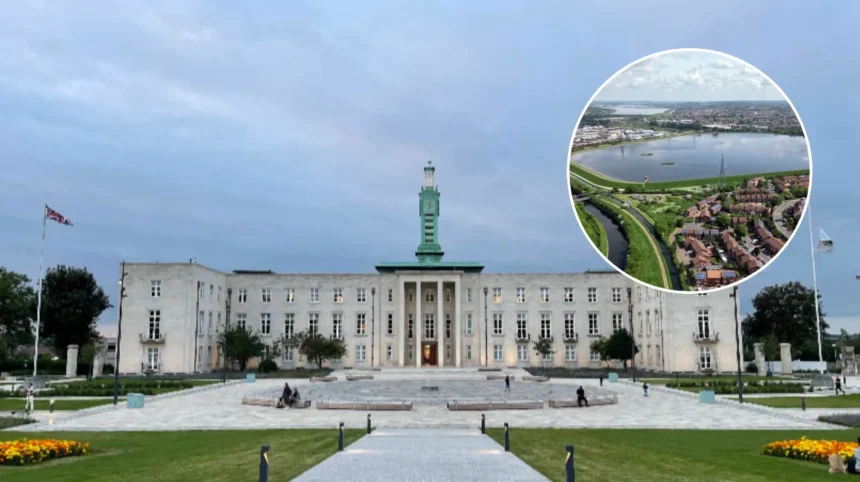
The Banbury Reservoir project stands out due to its scale and public safety implications. Located in the heart of Walthamstow, the reservoir requires reinforcement works under a proposed North London Reinforcement Order, as highlighted in the lead Guardian Series article. Engineers from the submitting body, likely Thames Water or affiliated contractors, outline structural bolstering to address ageing concrete and seismic vulnerabilities, ensuring compliance with modern dam safety regulations.
As noted by Waltham Forest Council’s planning portal updates, the application (reference WF/PL/2026/0245) includes embankment stabilisations, spillway enhancements, and perimeter fencing upgrades.
“This is not just maintenance; it’s about safeguarding thousands of residents downstream,”
stated a council planning officer anonymously in supplementary documents. The works could disrupt local footpaths temporarily, prompting calls for mitigation measures like alternative routes.
Environmental assessments accompany the bid, evaluating impacts on nearby wetlands and bird habitats. No objections have surfaced yet, but the Angling Trust has flagged potential fishing access interruptions during construction.
Which Residential Extensions Are Proposed in Walthamstow?
Walthamstow dominates with domestic proposals, fuelling debates on overdevelopment. A two-storey side extension at 31 St James Street aims to add a garage and study, with materials matching the existing Edwardian terrace. At 48 Queen’s Road, a single-storey rear infill extension promises a garden office, complete with bifolding doors for natural light.
Guardian Series journalist Joe Coughlan reports that these align with borough trends:
“Extensions like these at 67 Blackhorse Lane, featuring wraparound designs, are surging as families adapt pre-war homes to modern needs.”
Each includes neighbour consultation letters affirming no overlooking issues. Council planners must weigh sunlight loss claims before approval.
What Roof Works Are Planned Across the Borough?
Roof alterations form a significant portion, driven by space constraints. Hip-to-gable loft conversions at 20 Wood Street, Walthamstow, seek to install three bedrooms and a bathroom, increasing the property from three to five storeys internally. Rear dormer windows are proposed alongside to optimise headroom.
In Leyton, 15 Mornington Road’s application mirrors this, with L-shaped dormers and front rooflights. As per the Guardian Series,
“Roof works at 88 Higham Hill Road, Chingford, include Velux installations to preserve the streetscene while expanding usable space.”
Structural engineers’ reports confirm beam reinforcements to support added loads. These changes could boost property values but raise flood risk concerns in low-lying areas.
How Do Tree Works Fit Into Waltham Forest’s Planning Landscape?
Tree preservation remains paramount in this leafy borough. Applications under TPO WF/456/2024 at 5 Church Hill, Chingford, request the crown reduction of a lime tree by 20% to mitigate pavement damage. Pollarding is sought for a sycamore at 29 Leahoe Place, Leyton, citing disease progression.
Joe Coughlan of the Guardian Series emphasises:
“As reported by the council’s arboriculture team, these works at Jubilee Park edges balance safety with biodiversity, with replanting mandates in place.”
Felling requests, like that for a dying beech at 12 Woodford Road, Walthamstow, include compensatory sapling schemes. The Woodland Trust has yet to comment formally.
What Window Replacements Are Under Review?
Energy efficiency drives window upgrades. Full replacements with double-glazed units are proposed at 33 Friday Hill, Chingford, using slimline profiles to retain heritage aesthetics. In Walthamstow Village, 7 Orford Road seeks timber sash renewals matching the conservation area’s vernacular.
“These at 52 Grove Road, Leyton, incorporate acoustic glazing to combat railway noise,”
notes the Guardian Series filing. Planning conditions may enforce low-emissivity glass standards. No heritage objections noted thus far.
Which Larger-Scale Projects Complement Domestic Ones?
Beyond homes, commercial tweaks emerge. A Leytonstone warehouse at 200 Wick Hays wants partial conversion to light industrial use, preserving 60% as storage. In Chingford Mount, signage upgrades for a retail unit at 150 Whitehall Road aim to enhance visibility without neon excesses.
The Banbury Reservoir ties into broader utilities, potentially linking to North London-wide water resilience plans. As Waltham Forest Council states in its portal:
“These applications, from 50+ submissions this week, demonstrate community-driven evolution.”
When and How Can Residents Respond to These Applications?
Deadlines loom: Banbury Reservoir consultations close March 15, 2026; domestic extensions by March 8. Residents access details via the council’s online planning portal, submitting objections or support electronically. Virtual exhibitions are scheduled for March 1 at Walthamstow Library.
Joe Coughlan reports:
“As per council protocol, determinations follow site visits and officer recommendations, with appeals possible to the Planning Inspectorate.”
Over 200 views logged already on key files.
What Impacts Might Approvals Have on Local Communities?
Prospects include housing boosts amid London’s crisis—Waltham Forest needs 1,500 units yearly. Yet, concerns linger: traffic from extensions, reservoir works’ noise, tree losses’ ecological toll. Neutral observers like the Civic Society advocate measured growth.