Systemic damp and mould in council properties represent a persistent challenge for tenants across the UK, particularly in areas like East London where older housing stock exacerbates the issue. These problems often stem from structural deficiencies rather than tenant lifestyle, demanding structured reporting to enforce repairs under current laws. This guide provides a comprehensive, step-by-step approach tailored for council tenants seeking resolution.
- Understanding Damp and Mould in Council Housing
- Health Risks of Prolonged Exposure
- Identifying Systemic Damp Versus Lifestyle Issues
- Initial Steps to Report the Problem
- Documenting Evidence Effectively
- Escalating to Formal Council Complaints
- Engaging Environmental Health Officers
- Awaab’s Law and Your Legal Rights
- Specific Guidance for East London Tenants
- Pursuing Compensation for Neglect
- Preventing Recurrence After Repairs
- Long-Term Solutions and Advocacy
Understanding Damp and Mould in Council Housing
Damp and mould thrive in council properties due to factors like poor insulation, leaking roofs, and inadequate ventilation, creating environments that endanger resident health. In social housing, these issues affect thousands of homes, with government research highlighting their prevalence among large providers. Unlike superficial condensation, systemic damp involves rising or penetrating moisture from building defects, leading to black mould growth that permeates walls and ceilings.
The Housing Health and Safety Rating System (HHSRS) classifies damp as a key hazard, scoring properties based on moisture sources, spread, and vulnerability of occupants such as children or the elderly. Councils must address Category 1 hazards—those posing serious risks—promptly, as failure can result in legal enforcement. In East London boroughs like Tower Hamlets and Newham, local policies align with national standards, emphasizing proactive root-cause investigations over tenant blame.
Health Risks of Prolonged Exposure
Exposure to damp and mould triggers respiratory issues, allergies, and worsened asthma, with children and vulnerable individuals facing heightened dangers. Government guidance details how spores from mould inhalation can lead to chronic conditions, as evidenced in cases like the tragic death of Awaab Ishak, which spurred legislative change. Tenants often report exacerbated symptoms during winter, when cold surfaces promote condensation on top of underlying defects.
Councils recognize these risks under HHSRS assessments, prioritizing properties where mould affects sleeping areas or impacts those with pre-existing health conditions. Studies link systemic damp to increased NHS visits, underscoring the urgency for tenants to document personal health impacts alongside property evidence. Ignoring these signs not only harms well-being but strengthens cases for compensation later.
Identifying Systemic Damp Versus Lifestyle Issues
Distinguishing systemic damp requires examining patterns like persistent patches on external walls or floors, indicating penetrating or rising moisture rather than temporary condensation. Tenants should note recurring mould despite ventilation efforts, such as using extractor fans or drying clothes outdoors, pointing to structural failures like faulty gutters or bridged damp-proof courses.
Professional signs include salt deposits on walls from rising damp or water stains on ceilings from roof leaks, which landlords cannot dismiss as tenant fault. In council surveys, officers use tools like moisture meters to confirm causes, rejecting superficial fixes like painting over mould. East London tenants benefit from local expertise, where borough inspectors differentiate issues per BS 6576 standards for diagnosis.
Initial Steps to Report the Problem
Begin by notifying your council housing officer via their official portal, phone, or app, providing a detailed description, photos, and your tenancy reference. Most East London councils, including Hackney and Newham, offer online forms for swift logging, generating a reference number for tracking. Request an urgent inspection if health is affected, citing vulnerability factors like young children or disabilities.
Keep records of all communications, including dates and responses, as this builds evidence for escalation. Councils commit to prioritizing based on severity, with Awaab’s Law mandating 24-hour responses for emergencies since its 2025 expansion. Follow up within 48 hours if no acknowledgment arrives, politely referencing your initial report.

Documenting Evidence Effectively
Comprehensive evidence transforms complaints into enforceable cases, starting with high-resolution, timestamped photos of all affected areas, showing progression over time. Complement visuals with a daily log linking mould to daily life, such as bedroom exposure, and include GP notes for health correlations. Moisture meter readings from affordable hire devices or independent surveyors add credibility, specifying damp types per industry standards.
Chronological records of council interactions, including repair requests and delays, prove systemic neglect. In East London, tenants have succeeded by submitting surveyor reports aligning with HHSRS criteria, prompting faster action from borough environmental health teams. Avoid self-diagnosis; focus on observable facts to counter any tenant-lifestyle defenses.
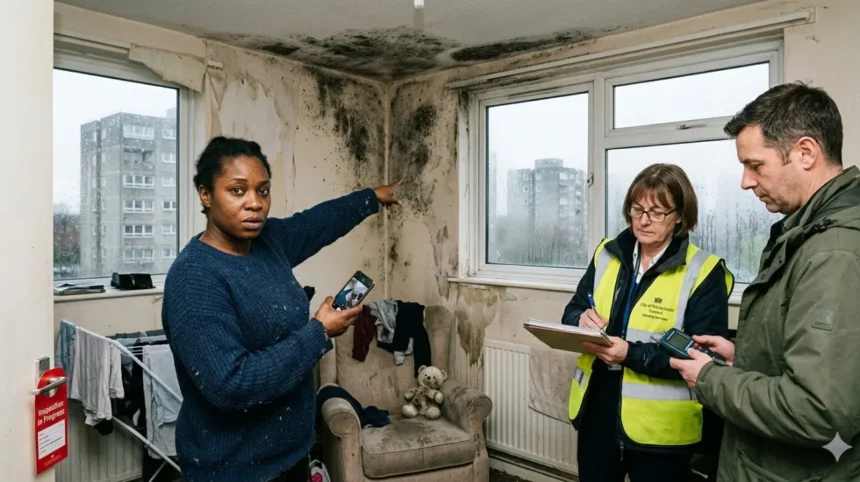
This image illustrates typical systemic mould patterns in a council flat, with black growth concentrated in corners and behind furniture, highlighting the need for professional assessment.
Escalating to Formal Council Complaints
If initial reports yield no action within expected timelines—typically 5-10 days for inspections—submit a formal stage-one complaint through your council’s process, available on their websites. Detail previous efforts, evidence, and impacts, requesting HHSRS evaluation. East London councils like Tower Hamlets have dedicated damp policies informed by ombudsman reports, promising root-cause fixes over symptom treatment.
Stage-two complaints follow if unresolved, involving senior officers and potential independent review. Government oversight via the Regulator of Social Housing pressures compliance, especially post-2023 findings on widespread issues. Persistence here often triggers mandatory improvements like cavity wall insulation.
Engaging Environmental Health Officers
Contact your local council’s environmental health department when repairs stall, as they wield HHSRS powers to inspect and issue improvement notices with 21-56 day deadlines. Provide your evidence dossier; officers assess likelihood and severity of harm, scoring higher for persistent, multi-room damp affecting vulnerable tenants. In London boroughs, this step commonly results in enforcement, with failures leading to council-led repairs billed to landlords.
Awaab’s Law enforces timelines: 24 hours for emergencies, 10 days for significant hazards, making EH involvement pivotal for urgency. Track via reference numbers, and request updates; non-compliance escalates to fines or prosecution.
Awaab’s Law and Your Legal Rights
Awaab’s Law, effective from late 2025, compels social landlords including councils to investigate and remediate damp within fixed periods, ending blame-shifting excuses. Named after a toddler whose death exposed systemic failures, it covers emergency and significant mould cases, with expansions planned for 2026. Tenants gain automatic rights to enforcement, bolstering EH referrals.
This legislation aligns with HHSRS, mandating specialist interventions for root causes like poor ventilation or insulation. East London councils integrate it into policies, ensuring vulnerable households receive priority, and violations invite ombudsman scrutiny.
Specific Guidance for East London Tenants
East London boroughs face acute challenges from Victorian-era stock, but tailored reporting yields results. In Tower Hamlets, use the council’s damp policy portal for logged complaints, expecting 48-hour high-priority visits. Newham and Hackney provide online trackers, with EH teams scoring per HHSRS for swift notices.
Local successes include multi-tenant campaigns highlighting systemic block-wide issues, prompting borough-wide upgrades. Contact specifics: Tower Hamlets at [email protected]; Newham via their repairs app. Align reports with London-wide standards for maximum impact.

Depicting a Hackney council estate inspection, this shows officers using HHSRS tools on mouldy walls, a common sight in East London responses.
Pursuing Compensation for Neglect
Compensation claims arise from health impacts, damaged belongings, or uninhabitable conditions, often via disrepair solicitors on no-win-no-fee bases. Quantify losses: medical costs, replacement items, or rent rebates for unfitness, with evidence securing awards up to thousands. Post-repair claims succeed using your documentation trail.
Councils settle many pre-court under pressure from EH notices or ombudsman rulings. In London, precedents award for prolonged exposure, emphasizing early logging. Consult Shelter for free advice before proceeding.
Preventing Recurrence After Repairs
Post-fix, demand six-week follow-ups to verify no regrowth, insisting on ventilation upgrades like positive input systems if needed. Councils must monitor under policies, with tenants logging any returns immediately. Adopt habits like gap-maintained furniture, but hold landlords accountable for ongoing efficacy.
Systemic prevention involves council-wide audits, as per government recommendations for specialist contractors. East London tenants can join resident panels to advocate for block improvements.
Long-Term Solutions and Advocacy
Addressing systemic damp borough-wide requires tenant unions pushing for stock upgrades, funded via government grants. Organizations like Shelter and the Housing Ombudsman offer templates and support, amplifying individual voices. In East London, community reports have driven insulation retrofits in estates.
Stay informed on 2026 Awaab’s expansions covering more hazards. Collective action via local forums ensures sustained accountability, turning personal struggles into policy wins.