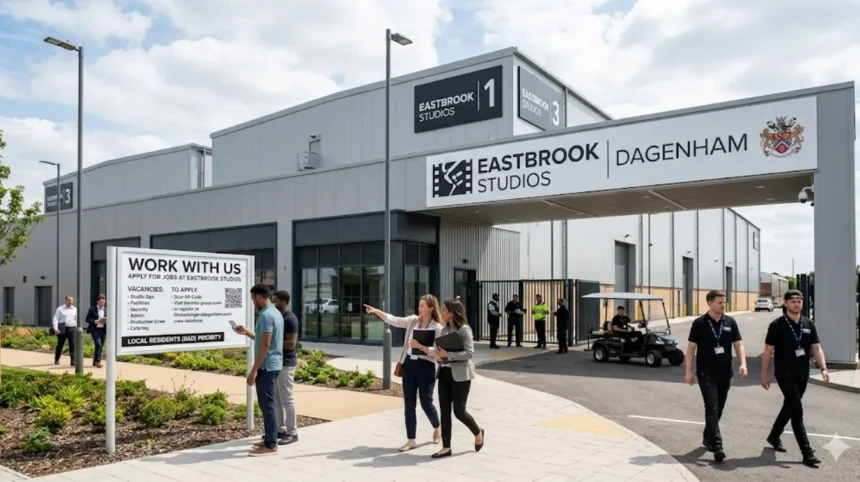
Dagenham’s new film studio development is part of a wider effort to expand London’s screen industry and create local employment, including opportunities for people living in Barking and Dagenham and nearby boroughs. The most useful way to approach it is to understand where jobs are likely to appear, what employers in film and TV usually look for, and how to prepare an application that matches the expectations of the sector.
- What the New Studios Mean for Job Seekers
- Where Jobs Are Likely to Be Posted
- Check Which Role Fits You
- Prepare a Strong CV
- Write a Tailored Cover Letter
- Use the Crew Database
- Build the Right Skills
- Look for Training Routes
- Apply Like a Local Candidate
- What Recruiters Expect
- Search Strategy That Works
- Final Application Checklist
What the New Studios Mean for Job Seekers
The new Dagenham studios are being developed on the former Sanofi site at Dagenham East, with the aim of creating one of London’s largest film studio sites and generating hundreds of jobs across construction, operations, production support, and creative roles. That matters because studio employment is not limited to directors, camera crews, or actors; it also includes facilities, security, cleaning, catering, transport, administration, engineering, post-production support, and set construction.
For local residents, the opportunity is especially important because the studio’s talent pipeline has been linked to East London recruitment and crew access schemes. In practical terms, that means the application process may involve more than simply responding to a single vacancy; it may also include registration on a crew database, local employment programmes, and contact with production or studio partners.
Where Jobs Are Likely to Be Posted
Before applying, it helps to know that film studio jobs are often advertised in several places at once rather than on one central careers page. Roles may appear on the studio operator’s own website, on local opportunity platforms, on industry recruitment pages, or on general job boards such as Indeed.
For Dagenham specifically, the local film employment ecosystem includes a crew database managed through Film Barking and Dagenham, where applicants can register their details for visibility to industry partners once approved. That database is especially relevant for people seeking on-set and crew work because it is designed as a searchable talent pool rather than a traditional vacancy list. If you are looking for entry routes, the Be First London “Made in Dagenham” project pages and local opportunity channels are also worth monitoring because they connect the studio development to community jobs and skills pathways.
Check Which Role Fits You
The best application starts with the right target. A new film studio will usually hire across a wide range of job families, and each one needs a different kind of CV and cover letter. If you are aiming for production jobs, the employer will care about credits, set experience, technical skills, and reliability. If you want facilities or operations work, they will look more closely at site experience, compliance, organisation, and shift readiness.
For example, an applicant for a runner or assistant role should emphasise adaptability, communication, timekeeping, and willingness to learn. Someone applying for studio facilities or technical support should highlight maintenance skills, health and safety awareness, equipment handling, and teamwork. ScreenSkills advises applicants to present a concise CV with a short personal introduction, key skills, work history, education, and any relevant licences or training.
Prepare a Strong CV
A film industry CV should be simple, focused, and easy to scan. ScreenSkills recommends keeping it to no more than two A4 pages and including your name, contact details, a brief personal introduction, your key skills, work history, and education or training. That structure works well for studio applications because recruiters often need to understand your suitability very quickly.
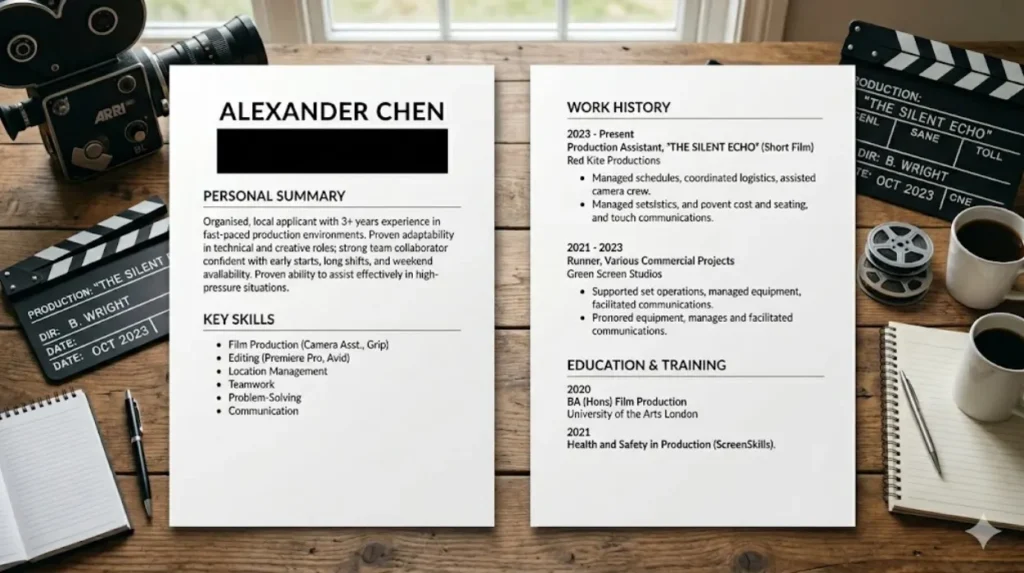
Your personal summary should not sound generic. Instead of writing that you are “hard-working and enthusiastic,” use a few precise lines that tell the employer what you actually bring. For instance, you might describe yourself as an organised local applicant with experience in fast-paced environments, confident working with teams, and available for early starts, long shifts, or weekend work if relevant. Keep the formatting clean and avoid large blocks of text, because many recruiters scan applications before reading them in full.
Write a Tailored Cover Letter
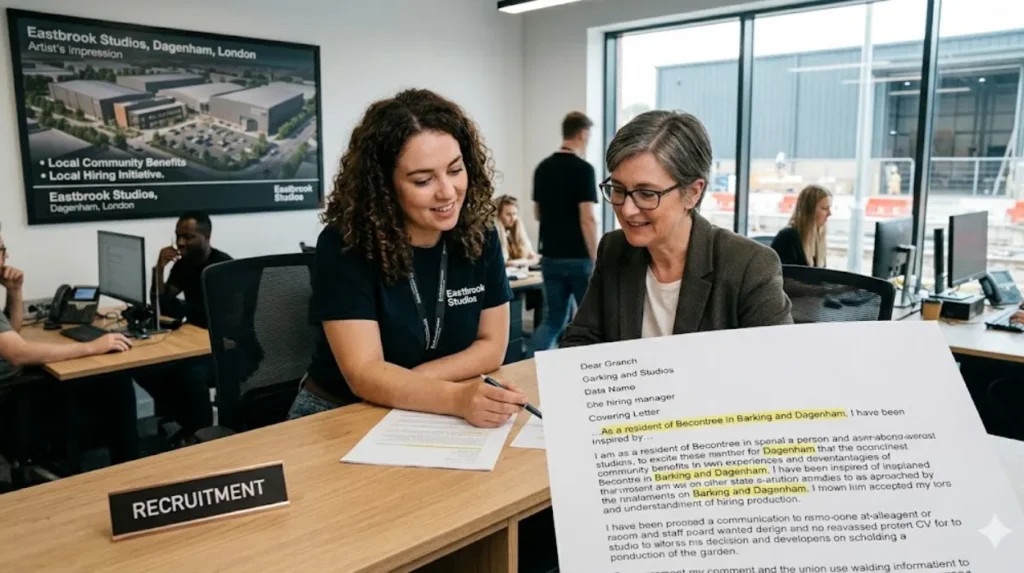
A good cover letter is usually the deciding factor when many applicants have similar experience. ScreenSkills recommends keeping it brief and structuring it in three parts: why you are writing, what makes you suitable, and a prompt for further contact. For Dagenham Film Studios, that means you should explain clearly whether you are applying for a posted vacancy, a crew database listing, or a speculative approach to the studio or its partners.
The strongest cover letters connect your background to the role. If you are applying for facilities work, mention operational reliability, safety awareness, and experience in busy sites. If you are applying for production support, mention organisation, communication, transport access, and ability to stay calm under pressure. If you are new to the sector, explain what transferable skills you have and why you want to build a long-term career in film and television.
Use the Crew Database
For many local applicants, registration on the crew database is likely to be one of the most useful steps. Film Barking and Dagenham’s database works as an approval-based system: you apply, enter your details, submit them for approval, and then your profile becomes searchable by industry partners. This is important because it creates visibility even when a specific vacancy is not open on a public job board.
The database also shows that eligibility rules may differ depending on your level of experience. It states that experienced crew applicants need a minimum of two industry film and TV credits, while early entrant applicants must be Barking and Dagenham residents, have completed a Make It Here training initiative, and have one industry credit of at least one day on set. If you fit one of these categories, making sure your details are accurate and up to date can improve your chances of being found by production teams.
Build the Right Skills
Film studio employers usually look for practical, dependable people who can work in a structured but often fast-moving environment. ScreenSkills advises applicants to demonstrate skills, experience, and any new ideas or insights they can bring, which is particularly relevant when studios recruit for mixed creative and operational roles. That means you do not need to be a filmmaker to work in a film studio, but you do need to show that you understand professional standards.
Useful skills include communication, punctuality, teamwork, problem-solving, health and safety awareness, and comfort with shift work. Depending on the role, you may also need software knowledge, driving ability, equipment handling, or specialist training. For some positions, being able to show previous work in hospitality, logistics, construction, facilities management, customer service, or media can help because these sectors develop transferable skills that are highly relevant to studios.
Look for Training Routes
If you do not yet have film credits, training and entry programmes can make a major difference. The Dagenham studio development has been linked to local skills-building and careers activity, which suggests that training pathways are likely to remain an important route into employment. In film and television, employers often value candidates who have completed recognised introductory training, safety courses, or work-readiness schemes because these show commitment and reduce onboarding time.
Local initiatives may also be especially useful for young people, career changers, and residents without direct screen industry experience. Keep an eye on community-facing project pages and local employment organisations connected to the studio development, because they often announce workshops, open days, or skills events before formal jobs are advertised. When those opportunities appear, they can be a practical bridge between interest and a first credit.
Apply Like a Local Candidate
If you live near Dagenham, mention that clearly in your application when it is relevant. Local recruitment matters in studio developments because employers often want staff who can commute reliably and support the project’s wider community benefits. That does not guarantee preference, but it can strengthen your case when you apply for roles that value availability, flexibility, and local knowledge.
It also helps to show that you understand the area and the project. A short note about your connection to Barking and Dagenham, your availability, or your interest in helping build the local screen industry can make your application feel more grounded. Just keep it professional and concise, since the main focus should always remain on your skills and suitability.
What Recruiters Expect
Recruiters at film studios usually want to see evidence that you can work safely, communicate clearly, and take instruction well. For crew and support roles, they may also expect you to understand the pace and pressure of production work, where schedules can change quickly and teamwork is essential. In local crew database systems, approval criteria may also require specific credits or training before your profile becomes searchable.
That means you should not treat the application as a formality. Double-check names, dates, contact details, and work history. Make sure your skills are specific rather than vague. If you have a driving licence, production credits, safety certificates, or technical training, include them prominently because they can make a real difference in a studio environment.
Search Strategy That Works
A smart job search combines several routes at once. Start with the studio’s official or project-linked employment channels, then move to local opportunities pages, recruitment sites, and the crew database if available. Add industry-wide sites and general job boards, because film studios often use external recruiters or partner companies to fill non-creative roles.
It is also worth preparing two versions of your application materials. One version should be tailored for crew or production-support roles, and another for facilities, operations, or admin work. That allows you to respond quickly when an opening appears, rather than rewriting everything from scratch each time.
Final Application Checklist
To apply successfully, make sure your CV is concise, your cover letter is tailored, and your contact details are correct. Register on the crew database if you are eligible, and monitor local project pages as well as general job boards for new roles.
If you are starting from scratch, focus on transferable skills, local availability, and any training or credits you can build through community programmes. If you already have film experience, make that easy to spot by listing credits, technical skills, and relevant licences near the top of your application. For Dagenham Film Studios, the best applicants will be the ones who combine professionalism, local awareness, and a clear understanding of how the screen industry actually hires.