Key points
- A group of former Labour councillors in Hackney quit the party in May 2024 and formed the Hackney Independent Socialist Collective (HISC), which now holds three seats on Hackney Council.
- HISC has forged a tactical electoral alliance with the Green Party for the May 2026 local elections, standing aside in certain wards to back a single “alternative left‑progressive” candidate against Labour and the far right.
- The Green‑Independent slate is campaigning explicitly to unseat Labour, which has dominated Hackney Council for nearly six decades and currently holds 44 of the borough’s seats.
- As reported by The Canary in a recent interview, HISC member Heather Mendick described the collaboration with the Greens as a model for “red‑green collaboration all across the country” that could spread beyond Hackney.
- HISC councillor Claudia Turbet‑Delof told The Canary that rising anti‑migrant rhetoric and Labour’s stance on Israel’s actions in Gaza—labelled by HISC as genocide—were key factors pushing her and others out of Labour.
- Labour’s national leadership has suspended several local Labour figures, including Turbet‑Delof, for backing ceasefire calls in Gaza, which HISC and Green members argue has “clarified” the party’s shift away from progressive values.
- The Green Party’s deputy leader, Zack Polanski, has publicly targeted Hackney as a potential London borough where the Greens could seize control, citing recent gains in Stoke Newington, Dalston and Hackney Wick.
- Under the pact, all Green and HISC candidates are expected to back Labour‑defying mayoral hopeful Garbett, deepening the attempt to build a unified left‑progressive bloc against Starmer‑era Labour.
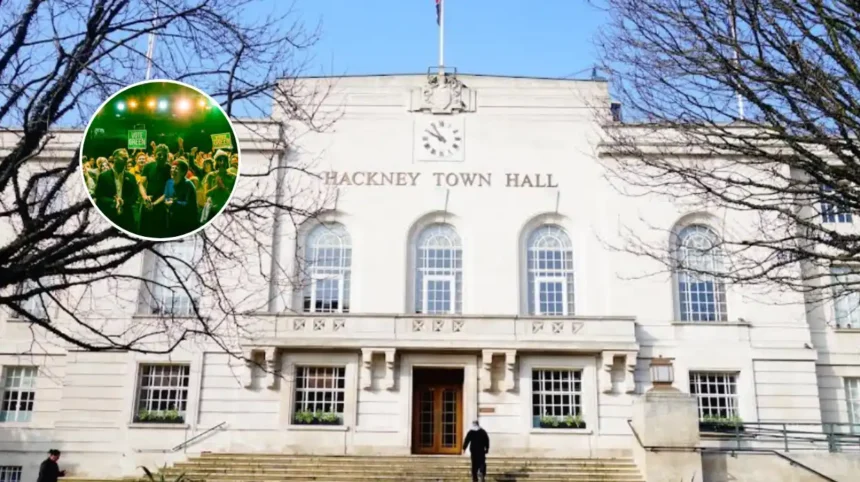
Hackney (East London Times) March 30, 2026 – A coalition of Green and Independent Socialist candidates is mounting an unprecedented challenge to Labour’s dominance of Hackney Council at May’s local elections, with supporters describing the alliance as “making history” in one of the party’s long‑standing London strongholds. As reported by The Canary in an interview with Hackney Independent Socialist Collective (HISC) members Heather Mendick and Claudia Turbet‑Delof, the bloc is explicitly framing its campaign as a national test case for how Greens and left‑wing independents can work together to defeat both Labour and far‑right forces on the doorstep.
- Key points
- What is the Green‑Independent alliance in Hackney?
- Why did some Labour councillors leave to form HISC?
- How does the electoral pact between Greens and Independents work?
- How strong is Labour in Hackney, and can it be challenged?
- What role does Gaza play in this local campaign?
- What are the HISC candidates and strategy in May 2026?
- How does this alliance fit into wider national politics?
Green Party deputy leader Zack Polanski has publicly identified Hackney as a potential target for Green takeover, noting that Labour currently holds 44 of the borough’s council seats and has run the council for all but seven years since 1965, underscoring the scale of the task. Yet, as Hackney Citizen’s coverage of the 2022 surge and the 2024 Stoke Newington by‑election explains, the Greens have already won a seat from Labour in the borough, giving the Green‑Independent slate something tangible to build on.
What is the Green‑Independent alliance in Hackney?
The Green‑Independent alliance grows out of several overlapping developments in Hackney’s local politics, including the formation of the Hackney Independent Socialist Collective in May 2024 by three former Labour councillors who quit the party. As reported by The Canary, these members argue that Keir Starmer has taken Labour “further and further right” and that internal party discipline, especially over Gaza and anti‑migrant rhetoric, made continuing with Labour untenable.
In interviews, Heather Mendick told The Canary that the HISC–Green collaboration “should be a model for red‑green collaboration all across the country”, stressing that the two groups share a clear agenda on housing, climate, and tenant rights. Mendick added that many of the HISC members have worked together for roughly a decade at grassroots level, and the collective simply formalised an existing network of activism rather than inventing something entirely new.
Why did some Labour councillors leave to form HISC?
Claudia Turbet‑Delof, who sits on Hackney Council as an HISC representative, told The Canary that an increase in “anti‑migrant rhetoric” from Keir Starmer’s leadership left her feeling she already had “one foot out” of Labour before the Gaza crisis intensified. She described the shift as “irreversible”, arguing that Labour’s national stance on migration and its approach to Israel’s conduct in Gaza alienated long‑standing progressive members.
Labour’s approach to Gaza became a breaking point, HISC sources say. As reported by The Canary, the Starmer‑led leadership suspended Turbet‑Delof and others for backing ceasefire calls, which they frame as disciplinary action against a left‑wing faction that refuses to toe the party line on a conflict that potential applicants at the International Court of Justice have described as genocide. In a statement cited by Hackney Independent Socialist material, HISC and Green members stress that Hackney’s Labour Council has repeatedly watered down motions for local divestment from companies profiting from that conflict, arguing this compounds disillusionment with the borough’s governing party.
How does the electoral pact between Greens and Independents work?
The Hackney Green Party and HISC have agreed on a tactical electoral pact for May’s local elections, under which they will stand aside for each other in certain wards to avoid splitting the left‑progressive vote and maximise the chance of defeating Labour and far‑right candidates. As Hackney Citizen explains, this arrangement has been used before in Hackney by‑elections, with Greens and HISC‑aligned independents agreeing not to run against one another in order to “give both parties the best chance of winning” and to strengthen opposition scrutiny at Town Hall.
Under the current pact, the two groups are running a combined “alternative left‑progressive” slate. Reporting by East London Times and other local outlets notes that, if successful, the arrangement could see a Green‑Independent ruling coalition or at least a significantly strengthened opposition bloc, depending on the number of seats won. The pact also includes backing Labour‑defying mayoral hopeful Garbett, with Green and HISC candidates signalling that they will support him in preference to the Labour‑nominated mayoral candidate, further consolidating the bloc’s anti‑Starmer message.
How strong is Labour in Hackney, and can it be challenged?
Labour’s position in Hackney remains formidable on paper. As Hackney Citizen notes, the party currently holds 44 council seats and has dominated the borough for all but seven years since 1965, making it one of Labour’s safest strongholds in London. Yet, recent trends suggest vulnerability: in 2022, the Green vote surged in wards such as Stoke Newington, Dalston and Hackney Wick, and in a 2024 by‑election the Greens seized the Stoke Newington ward seat from Labour, a symbolic loss in heartland territory.
Analysts and activists, including writing for Revolutionary Socialism in the 21st Century (RevSoc21), argue that the current political climate—shaped by Gaza, housing stress, and disillusionment with Labour’s national direction—creates a “historic opportunity” for a Green‑Independent coalition to unseat Labour in Hackney. As East London Times summarises, the Green‑Independent alliance is betting that repeated local gains and a sharpened anti‑far‑right, anti‑austerity narrative can break Labour’s entrenched grip on the borough.
What role does Gaza play in this local campaign?
Gaza has become a central reference point for the Green‑Independent bloc in Hackney. As reported by The Canary, HISC members explicitly describe Israel’s actions in Gaza as genocide, echoing international legal scrutiny and aligning with the Green Party’s own stance that Labour is complicit in the broader conflict. In a piece published by Zack Polanski and cited by RevSoc21, Green leadership argues that both the Conservative government and Labour bear responsibility for enabling war crimes through support for Israel’s military campaign.
Hackney’s HISC and Green groups have used council chambers to push for local divestment from companies profiting from the conflict. As reported on the HISC website, a joint motion for divestment was blocked by the Labour group, which instead agreed only to a delayed and weakened version that postpones formal acknowledgement of the genocide until at least January 2026. To HISC and Green campaigners, that vote illustrates why they see Labour’s current direction as incompatible with progressive values, and why they have chosen to build a separate electoral vehicle.
What are the HISC candidates and strategy in May 2026?
The Hackney Independent Socialist Collective plans to at least double its presence on the council in May’s elections, fielding three new candidates alongside its existing three councillors. As outlined in an interview with Hackney Citizen, Heather Mendick and Alana Heaney will stand in Homerton, while Sarah Byrne will contest London Fields, joining current HISC councillors Fliss Premru (Clissold Ward) and Claudia Turbet‑Delof with Penny Wrout (Victoria Ward).
Mendick told Hackney Citizen that HISC’s campaign is framed around a clear agenda for changing Hackney, including tackling the housing crisis, expanding social housing, and strengthening tenant protections. She said the collective hopes that, if successful, a Green Mayor and Green councillors could work alongside HISC to deliver a more participatory and left‑leaning model of local government than Labour currently offers.
How does this alliance fit into wider national politics?
The Hackney Green‑Independent alliance is being watched beyond the borough. As RevSoc21 points out, Hackney presents a rare instance where a Green‑Independent coalition could potentially dislodge Labour from a long‑held stronghold, and this experiment may be emulated elsewhere. The Canary’s interview with Mendick and Turbet‑Delof underscores that the duo view their work as part of a broader movement to rebuild a left that is not constrained by Labour’s national leadership choices.
Green Party strategist Zack Polanski, writing for national outlets, has argued that local campaigns like the one in Hackney are essential for demonstrating that a red‑green, anti‑war, anti‑austerity politics can win at the ballot box. For voters in Hackney, the May 2026 elections therefore amount to more than a routine local contest: they may signal whether a Green‑Independent bloc can “make history” by prising one of Labour’s most secure boroughs out of the party’s grasp.