
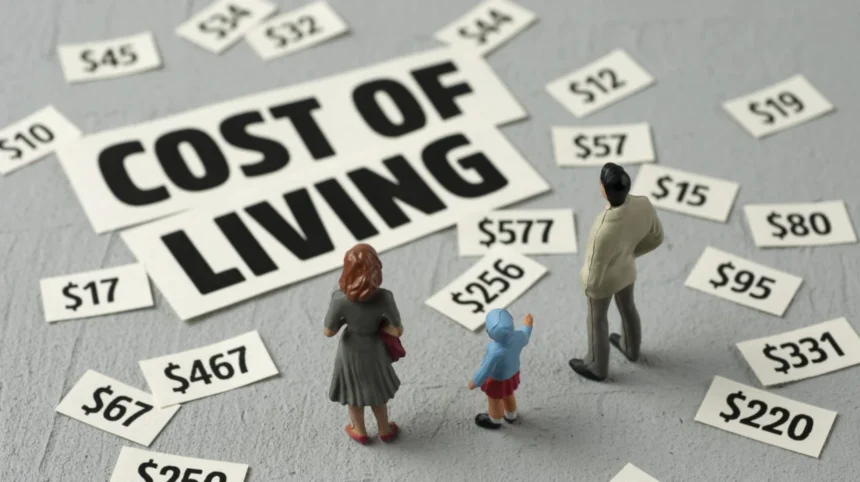
In recent years, inflation has quietly moved from being an economic indicator discussed in financial reports to a lived daily experience affecting millions of households. Across cities and communities, the cost of simply maintaining a normal life is steadily increasing, reshaping how people live, spend, and plan for the future.
According to the UK Office for National Statistics, inflation in the United Kingdom reached a peak of over 11% in 2022, the highest level in over four decades. Although it has since moderated, the impact of that surge continues to affect household budgets, savings, and spending behavior across the country.
While official statistics often focus on percentage changes and economic forecasts, the real impact of inflation is felt in everyday decisions. Families are adjusting grocery lists, delaying non-essential purchases, and carefully reconsidering even basic expenses. Slowly, what was once considered a standard way of living is becoming financially difficult to sustain.
Housing remains one of the most significant pressures. In many urban areas, particularly large cities like London, rental prices continue to rise faster than average income growth. For many individuals, housing is no longer just a basic necessity—it has become the largest financial responsibility they carry. This imbalance places long-term pressure on both young professionals and families striving for stability.
Food prices add another layer of concern. Supermarkets have become a daily reminder of rising costs, where even essential items now require careful budgeting. A weekly grocery shop that once felt manageable now demands constant planning and compromise. As a result, financial awareness has become a permanent part of everyday life.
Energy bills and transportation costs further intensify the situation. Heating a home or commuting to work is no longer a simple routine but a calculated decision influenced by rising expenses. These changes, while gradual, are significantly altering how people experience normal living conditions.
Beyond financial pressure, inflation is also reshaping social behavior. Many people are reducing outings, limiting leisure activities, and avoiding social events due to rising costs. This shift is not only economic but also emotional, contributing to a quieter form of social withdrawal in already busy urban environments.
The broader question is not only how inflation can be controlled, but how societies adapt to a new definition of affordability. What does “normal life” mean when basic living expenses continue to rise faster than incomes? And how long can this imbalance persist before it fundamentally changes expectations of everyday living?
Economists often describe inflation as a natural economic cycle influenced by global factors, supply chains, and market dynamics. However, for individuals facing daily financial pressure, these explanations offer little relief. The reality is immediate, personal, and ongoing.
Ultimately, inflation is no longer just about economic data or policy discussions. It is about choices, limitations, and the silent transformation of daily life. As costs continue to rise, societies are forced to confront a difficult question: how much of ordinary life is still truly accessible?