Key Points
- Havering London Borough Council remains under fragmented control, with no single party holding a majority after the 2022 election.
- The Havering Residents Association (HRA), supported by Labour, formed a coalition in 2022 and later moved to a minority administration, inheriting significant financial challenges.
- Conservative MP for Romford, Andrew Rosindell, and three Havering councillors have defected to Reform UK, fracturing the Tories’ hold on the borough.
- Reform UK leader Nigel Farage visited Romford Market alongside Rosindell, positioning Havering as a key target for the party in the 7 May 2026 local elections.
- Reform UK is campaigning on a pledge to take Havering out of Greater London and into Essex, with critics warning residents could lose their bus pass and face reduced police and fire cover.
- Former Conservative leader of Redbridge Council Keith Prince, now a Reform candidate, promises regeneration of Romford Market and council tax restraint despite budget pressures.
- Labour hopes to hold the balance of power again, with group leader Keith Darvill urging cross‑group agreement on a four‑year plan, including social housing priorities.
- Greens, Liberal Democrats and independents are fielding candidates, increasing choice for voters in a politically complex borough.
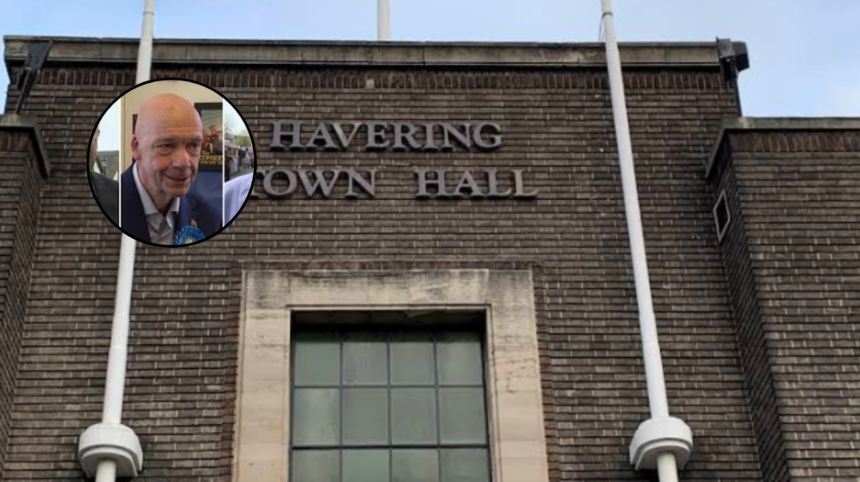
Havering (East London Times) April 22, 2026Havering – a historically “no‑overall‑control” borough in east London – has become a prime battleground for Reform UK as it seeks to break into mainstream local government after dramatic defections from the Conservative Party. The party’s national leader Nigel Farage visited Romford Market on 10 April 2026 alongside Romford MP Andrew Rosindell, turning the busy market into a stage for Reform’s pitch to take Havering out of London and into Essex.
- Key Points
- How did Reform UK rise to prominence in Havering?
- What is at stake in this election?
- What does Reform UK’s ‘Havering in Essex’ plan mean for residents?
- How are Reform candidates pitching themselves to Havering voters?
- What are Labour’s hopes for the balance of power?
- Are there other players reshaping the political map?
- Background to the latest political shake‑up in Havering
- Prediction: How this development could affect residents and local politics
How did Reform UK rise to prominence in Havering?
The groundwork for Reform’s push began with the 2022 Havering council election, when the Conservatives lost their majority, leaving the Havering Residents Association (HRA) and Labour to form a coalition.
Over the next two years, the Conservatives further weakened, with several councillors defecting: first to HRA and then, more recently, to Reform UK.
By early 2026, Reform UK had three councillors on Havering Council, all of them former Conservatives, while Andrew Rosindell, the Romford MP, also left the Conservative Party for Reform. Michael White, a Conservative candidate running in the borough, said people had voted for the Tories “in good faith” only to find themselves represented by a Reform MP and councillor, a development that he described as angering many residents.
As reported by BBC News, White added:
“People are very angry out there about what’s happened and I hope those people will stay with us.”
What is at stake in this election?
This year’s election on 7 May 2026 will decide all 55 council seats in Havering, following a boundary shake‑up that increased the total number of seats from 54 to 55.
The council is still grappling with inherited financial pressures, including service cuts and constraints on capital spending, which have shaped the rhetoric of almost every party in the race.
As documented by the BBC, Ray Morgon, leader of the Havering Residents Association, who is not standing again, acknowledged that more work is needed in the town centre despite improvements already made. He told broadcasters that littering – a concern frequently raised by voters – was
“often down to local people and people visiting the borough,”
and questioned why residents did not use the bins in the town centre instead of dropping waste on the floor.
What does Reform UK’s ‘Havering in Essex’ plan mean for residents?
Reform UK’s most eye‑catching proposal has been to remove Havering from the Greater London Authority and have it reclassified as part of Essex. Party leaders argue that giving Havering more autonomy and a separate backing from London‑wide bodies would allow them to tailor services to local priorities.
However, critics have warned of significant consequences for residents if Havering were taken out of London. As reported by BBC News, the proposal to take Havering out of London and into Essex would mean losing the Freedom Pass and other concessionary travel passes that currently cover all 32 London boroughs.
The article also noted that such a move could result in a reduction in police and fire services, as the Metropolitan Police and the London Fire Brigade provide coverage across all London boroughs. One BBC‑sourced quote summarised the concern:
“Reform are talking about taking Havering out of London and into Essex; well if that happens you lose your bus pass, quarter less police, two‑thirds less fire.”
Reform UK has not yet set out a detailed legislative or constitutional roadmap for such a change, but senior party figures have framed it as a long‑term objective if the party gains more power nationally and in local government.
How are Reform candidates pitching themselves to Havering voters?
Nigel Farage’s visit to Romford Market on 10 April 2026 was widely covered by local and national outlets, including the BBC, East London Times and The Havering Daily. Journalists described crowds gathering around the Reform leader and MP Andrew Rosindell, as they held a walkabout through the market stalls, speaking with traders, shoppers and residents.
Among the main Reform candidates in Havering is Keith Prince, a former Conservative and ex‑leader of Redbridge Council, who now stands for Reform UK in Havering. Prince promised significant improvements to Romford Market and described the council’s budget gap as an obstacle that could be managed with careful decision‑making.
As quoted by BBC News, Prince said:
“We will make a massive difference here and we will make sure that [Romford] market is regenerated and we’re looking to put more pride into Havering.”
He also argued that making tax cuts would be difficult, but pointed to his record as leader of Redbridge, where he claimed to be the only council leader to have presided over successive years of no council tax rise, saying:
“I know where to look for the money.”
What are Labour’s hopes for the balance of power?
Labour, which agreed a coalition with the HRA in 2022 before those arrangements unravelled in 2024, is campaigning on the expectation that it could again hold the balance of power after 7 May. In Harold Hill – an estate earmarked for regeneration – Labour group leader Keith Darvill told reporters that his party could once more become the decisive bloc in any post‑election arrangement.
As reported by BBC News, Darvill said:
“What it will mean is that groups will have to get together and agree a programme for the next four years and that will include, as far as we’re concerned, priority for social housing.”
He framed Labour’s position as one of stability, in contrast to the recent party shifts among Conservatives and the rise of Reform UK.
Labour’s strategy appears to pivot on presenting itself as a reliable partner for whatever combination of parties forms an administration, while emphasising concrete local issues such as housing, transport and estate regeneration.
Are there other players reshaping the political map?
The political landscape in Havering is not just a contest between Conservatives, Labour, the HRA and Reform UK. The Green Party and the Liberal Democrats are also fielding candidates, while a number of independents are running across wards.
This expanded field reflects both the borough’s long‑standing tradition of no‑overall‑control and a broader national trend of growing voter choice beyond the two main parties.
Local media outlets, including The Havering Daily and East London Times, have highlighted that the presence of multiple smaller parties and independents could further fragment the result, making coalitions and post‑election negotiations almost inevitable.
Background to the latest political shake‑up in Havering
Havering has long been a distinctive borough in London politics, not least because it has repeatedly defied the pattern of clear‑cut majorities seen elsewhere. In 2022, the Conservatives fell short of the 28 seats needed for a majority, opening the door for the Havering Residents Association to lead a coalition with Labour, later transitioning to a minority administration.
During that period, the council inherited a tight financial position, with pressures on frontline services, capital projects and town‑centre regeneration. It was against this backdrop that the Conservative Party’s local organisation began to fracture, with several councillors leaving the party for Reform UK and others joining the HRA.
The defection of Andrew Rosindell, the MP for Romford, to Reform UK added a national dimension to the local story, with the party using his profile to boost its campaign in the borough.
Romney Conservative Association headquarters, Margaret Thatcher House, has become a flashpoint in the fall‑out, as a row has emerged over who should be allowed to use the building after Rosindell’s defection.
Prediction: How this development could affect residents and local politics
If Reform UK gains seats on Havering Council on 7 May, it would represent a significant shift in the borough’s political balance, potentially altering the dynamics of negotiations in any future coalition. For residents, the most immediate impact would likely be on how housing, transport, policing and fire services are prioritised, particularly if the party attempts to push forward its “Havering out of London” agenda or focuses on local tax and spending decisions.