Key Points
- A pub in Harold Hill which closed in 2016 could be returning to use after a new premises licence application to sell alcohol has been submitted to Havering Council.
- The application is for The Morris Dancer in Melksham Close, Romford RM3 8QX, and has been lodged by applicant Omo Mase Limited.
- The Morris Dancer originally opened as a pub in 1955 and is understood to be the first public house on the Harold Hill estate.
- The building is an 18th‑century Grade II‑listed farmhouse, formerly known as New Hall or New Hall Farm.
- After the pub closed, the site was converted into an Indian restaurant called Sultan and a Chinese‑style outlet called Yang Red, both of which have since shut.
- The property was later adapted into accommodation for young people leaving care, although its current use in that role is not publicly confirmed.
- In November 2025 Havering Council issued a planning enforcement notice after the site was allegedly used as an unlicensed house in multiple occupation (HMO) without proper planning permission.
Harold Hill (East London Times) April 22, 2026Harold Hill – A former pub in Harold Hill that has stood largely dormant for around a decade could be on course to reopen as a licensed premises after a new application to sell alcohol has been submitted to Havering Council. The Morris Dancer, in Melksham Close, Romford RM3 8QX, closed as a public house in 2016 before being converted into other uses, including restaurants and later accommodation for young people leaving care.
- Key Points
- Why is the Morris Dancer a historic site in Harold Hill?
- What happened after the pub closed in 2016?
- What is the planning enforcement notice about?
- How does the new licence application fit with the site’s recent history?
- Could the Morris Dancer’s reopening affect Harold Hill’s community?
- Background of the particular development
- Prediction: How this development could affect Harold Hill residents and stakeholders
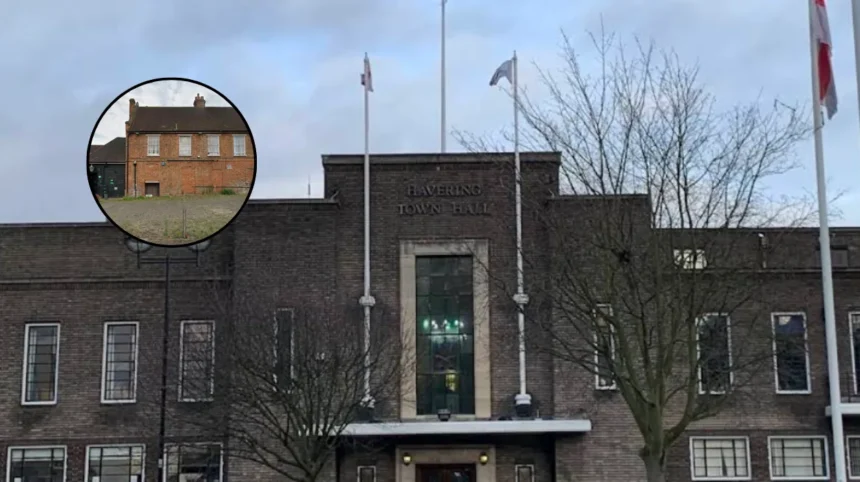
As reported by Havering Council’s licensing paperwork, Omo Mase Limited has applied for a premises licence “to permit the provision of … supply of alcohol” at The Morris Dancer, Melksham Close, Romford RM3 8QX. Under Section 17 of the Licensing Act 2003, the council has published a notice of the application, stating that full details can be inspected at the Town Hall, Main Road, Romford RM1 3BD during normal business hours.
Why is the Morris Dancer a historic site in Harold Hill?
The Morris Dancer holds a special place in Harold Hill’s local history and architecture. According to information shared by Havering Libraries, the building started life as a 15th‑ or 18th‑century farmhouse, locally known as New Hall (or New Hall Farm), before being converted for use as a pub in the mid‑20th century.
The pub opened in 1955 and is described in local records as the first pub on the Harold Hill estate, serving a rapidly growing post‑war housing estate.
The Friends of Havering’s Libraries Facebook group notes that the converted farmhouse was built largely of Kentish ragstone with a tiled roof, and that the original structure was listed as being of historical and architectural interest. CAMRA also records the building as an 18th‑century Grade II‑listed pub, originally a farmhouse, which was later converted into a Chinese/Thai restaurant after closure.
What happened after the pub closed in 2016?
The Morris Dancer ceased trading as a pub in 2016, with CAMRA listing it as “permanently closed” from 1 January 2016, later converted into a Chinese/Thai restaurant.
A separate local history post by Havering Libraries on the council’s Facebook page similarly notes that the pub closed as a public house in 2016, after several decades of operation.
Following the closure, the building was repurposed for commercial dining. As outlined in local coverage and historical accounts, the site became an Indian restaurant called Sultan and, later, a Chinese‑style outlet named Yang Red, both of which have since ceased operation.
The site’s next major use was as accommodation for young people leaving care. As reported by the Romford Recorder via its Facebook page, the former pub The Morris Dancer was transformed into accommodation for
“looked after children aged 16 and above”
in Harold Hill. Neither the council nor the current licence‑applicant has publicly confirmed whether that accommodation function is still active at time of writing.
What is the planning enforcement notice about?
In November 2025 Havering Council issued a planning enforcement notice relating to the Morris Dancer site. The council’s documents indicate that the property was being used as a house in multiple occupation (HMO) without the required planning permission, prompting the formal notice.
Recipients of the notice were ordered to stop using the premises as an HMO and to remove any debris, rubbish or other materials from the site.
Housing‑regulation guidance from local authorities notes that enforcement notices are legal documents which typically require owners to take specific remedial actions, and can be followed by prosecution or civil penalties if not complied with.
How does the new licence application fit with the site’s recent history?
The new premises‑licence application by Omo Mase Limited appears to mark a potential shift back towards a traditional pub‑style use, albeit under a different ownership structure than when the Morris Dancer originally opened in 1955.
The licensing notice does not specify whether the applicant intends an outright change of use from HMO or accommodation back to a pub, nor does it detail any linked planning‑permission application, but such change‑of‑use decisions would normally fall under the council’s planning department.
Under the Licensing Act 2003, any person or responsible authority may submit representations about the new licence, including objections or conditions, which the council must consider before deciding whether to grant the application.
Neighbours, local residents’ groups, and organisations such as CAMRA may therefore have the opportunity to comment on the likely impact on the local area, including any concerns about noise, anti‑social behaviour or parking, if the site reopens as a drinking establishment.
Could the Morris Dancer’s reopening affect Harold Hill’s community?
The possible return of The Morris Dancer as a licensed pub could influence the social and economic fabric of Harold Hill, particularly in the Melksham Close area. Historically, the pub served as a focal point for residents of the new estate in the 1950s and 1960s, and local‑history accounts emphasise its role as the first pub on Harold Hill.
If the application is granted, the premises could once again provide a community meeting place, potentially supporting local employment through bar, kitchen and ancillary roles, while also contributing to borough‑wide licensing and alcohol‑sales data monitored by Havering Council.
At the same time, any re‑establishment of late‑night drinking or increased footfall would place renewed responsibility on the council’s licensing and environmental‑health teams to monitor complaints, noise, and safety standards, in line with existing guidance for licensed premises and HMOs.
Background of the particular development
The Morris Dancer site sits at the intersection of local history, listed‑building status, and modern housing‑and‑licensing policy in Havering. Originally an 18th‑century farmhouse linked to Harold Hill’s agricultural past, the building was adapted for pub use in 1955 as the estate expanded, reflecting the mid‑20th‑century trend of repurposing older structures for community services.
Over the following decades the pub became a recognised local landmark, recorded by both CAMRA and Havering Libraries as a listed, architecturally significant building. Its subsequent conversion into a restaurant and then into accommodation for looked‑after young people reflects broader pressures on historic buildings – balancing commercial viability, social‑housing needs, and conservation obligations.
The November 2025 enforcement notice underlines how such sites can drift into informal HMO use, triggering council intervention under planning and housing‑law frameworks.
The current premises‑licence bid by Omo Mase Limited now places the same building at the centre of a fresh cycle of decisions about permissible uses, community expectations, and statutory compliance across licensing, planning, and housing rules.
Prediction: How this development could affect Harold Hill residents and stakeholders
If Havering Council grants the new premises licence and any associated planning permissions, The Morris Dancer could gradually resume its role as a neighbourhood social hub, offering residents of Harold Hill a familiar‑sounding venue in a historically significant building. For local residents, that may mean both opportunities – such as easier access to a nearby pub, events, and community gatherings – and new pressures on local amenities such as parking, noise levels, and street‑safety perceptions, particularly if opening hours extend into the evening and late‑night periods.
For local policymakers and housing officers, the site’s trajectory highlights the need for clearer coordination between licensing and planning functions, especially where historic buildings are temporarily or informally used as HMOs. For campaigners and organisations focused on affordable housing and youth support, the potential shift away from care‑leaver accommodation back to commercial use may prompt questions about the availability of alternative supported‑housing options in the area, although no formal statement has yet been published linking the two uses directly.