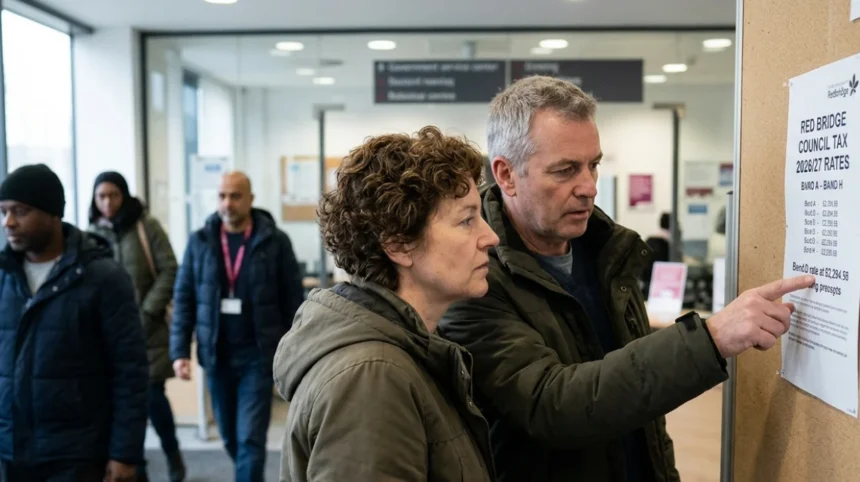
Redbridge Council Tax funds local services in the London Borough of Redbridge, an East London authority covering areas like Ilford, Barking and surrounding wards. Residents pay amounts set annually based on property bands from A to H, with the 2026/27 Band D rate at £2,294.58 including precepts.
- What Is Redbridge Council Tax?
- How Are Redbridge Council Tax Bands Determined?
- What Are the Council Tax Amounts for Each Band in Redbridge?
- Why Did Redbridge Council Tax Increase in 2026?
- What Services Does Redbridge Council Tax Fund?
- How Do You Pay Redbridge Council Tax?
- What Discounts and Reductions Are Available for Redbridge Council Tax?
- How Can You Challenge Your Redbridge Council Tax Band?
- What Are the Implications of Redbridge Council Tax for Residents?
What Is Redbridge Council Tax?
Redbridge Council Tax is a local tax charged on domestic properties in the London Borough of Redbridge to fund services like education, social care, waste collection, and policing. For 2026/27, it totals £2,294.58 for a Band D property, comprising Redbridge’s £1,784.07 share and Greater London Authority’s £510.51 precept, up 4.8% from 2025/26.
Council Tax originated under the Local Government Finance Act 1992, replacing the Community Charge (poll tax). Redbridge Council, the billing authority, sets its portion annually after budget approval. The tax applies to all dwellings except full exemptions like armed forces barracks.
The structure divides into the core council tax, adult social care precept, and external levies. Redbridge’s 2026/27 budget totals £168 million from council tax after grants and income. This funds Children’s Services (£482.3 million gross) and Adult Social Care (£175.4 million).
Levies from bodies like East London Waste Authority (£20.576 million for Redbridge) add to bills. Implications include steady service delivery amid inflation, with residents facing £2.01 weekly rise for Band D.
How Are Redbridge Council Tax Bands Determined?
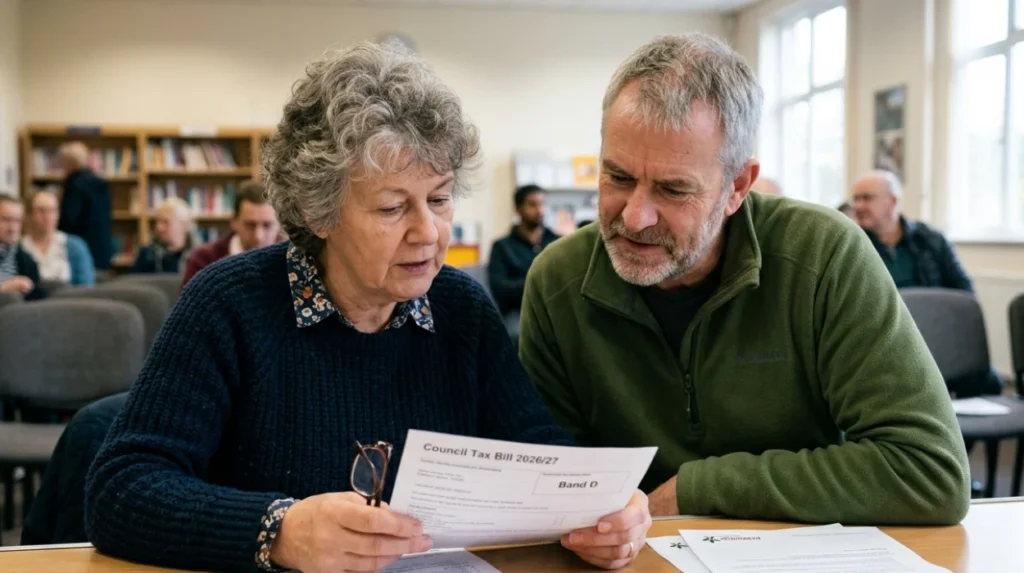
Redbridge Council Tax bands range from A to H based on estimated 1991 property values set by the Valuation Office Agency (VOA), a government body. Band A covers properties up to £40,000 (1991 value), rising to Band H over £320,000; current charges reflect multipliers on Band D (£2,294.58 for 2026/27).
Valuation uses April 1991 open market values, even for newer builds via estimation. The VOA assigns bands via postcode searches on GOV.UK. Redbridge has around 120,000 properties across bands.
Bands follow fixed ranges: A (up to £40,000), B (£40,001-£52,000), C (£52,001-£68,000), D (£68,001-£88,000), E (£88,001-£120,000), F (£120,001-£160,000), G (£160,001-£320,000), H (over £320,000).
Houses in multiple occupation (HMOs) band as single properties unless split. Residents check bands online via Redbridge’s portal or VOA site. Incorrect banding affects thousands; 15,000 Redbridge properties may qualify for checks.
Delays occur due to VOA system migration, taking 6-12 months for reviews. Continue payments during appeals to avoid penalties.
What Are the Council Tax Amounts for Each Band in Redbridge?
Redbridge Council Tax for 2026/27 sets Band A at £1,529.72, Band B £1,784.67, Band C £2,039.63, Band D £2,294.58, Band E £2,804.49, Band F £3,314.39, Band G £3,824.30, and Band H £4,589.16, including all precepts.
These rates rose from 2025/26: Band A £1,459.78, B £1,703.08, C £1,946.37, D £2,189.67, E £2,676.26, F £3,162.86, G £3,649.45, H £4,379.34.
Band D serves as benchmark; lower bands pay 6/9 to 9/9, higher 11/9 to 18/9 multipliers. Examples: A terraced house in Ilford (Band C) pays £2,039.63 yearly; a detached home in Clayhall (Band F) pays £3,314.39.
Rates fund £978.9 million gross services. Redbridge ranks mid-table in London for Band D at £2,295.
Annual setting follows March council vote, effective 1 April. Future rises tie to budgets addressing £20 million gaps.
Why Did Redbridge Council Tax Increase in 2026?
Redbridge Council Tax rose 4.99% for 2026/27 (2.99% general, 2% adult social care), plus 4% GLA, totaling 4.8% or £104.91 on Band D, to cover £53.7 million service growth amid £20 million funding shortfalls.
Budget pressures stem from inflation, demand in social care (up £28.7 million), housing (£14.9 million), and children’s services (£28.2 million). Savings of £7.4 million offset some costs.
Government grants rose £20 million over three years but trail needs. No referendum needed under 5% cap.
Levies increased: ELWA 1.52%, Lee Valley 2.25%, Environment Agency 1.99%. Implications balance services without cuts; council tax met £168 million requirement.
Historic underfunding since 2021 (£10 million adult care cuts) drives precepts. Residents pay £8.30 monthly more on Band D.
What Services Does Redbridge Council Tax Fund?
Redbridge Council Tax funds Children’s Services (£482.3 million), Adult Social Care (£175.4 million), Housing (£59.7 million), Environmental Services (£59.9 million), and levies like ELWA waste disposal (£20.576 million).
Net spend totals £978.9 million general fund plus £44.5 million housing. Key allocations: leisure (£12 million), regeneration (£13 million), customer services (£166.7 million).
GLA precept (£510.51 Band D) supports Metropolitan Police (£334.13), Fire Brigade (£76.85), TfL (£77.09). Examples: police phone theft crackdown, free school meals saving £1,500 per child.
ELWA handles waste for four boroughs via 25-year contract. LPFA covers legacy GLC pensions (£0.029 million).
Implications ensure frontline delivery; 29p daily Band D rise maintains highways, parks, concessions.
How Do You Pay Redbridge Council Tax?
Redbridge Council Tax pays in 10 monthly instalments by 4th unless Direct Debit (72,500 households use it) on dates like 1st, 4th, 10th, 15th, 20th, or 25th; online, phone, or post options available from 1 April.
Direct Debit automates payments, reducing errors. Annual bills arrive early April; first due mid-April.
Online via redbridge.gov.uk/council-tax; app or automated phone. Post to council offices.
Missed payments trigger reminders, then courts. Set reminders online.
Implications: flexibility suits incomes; 6-date Direct Debit choice aids cashflow.
What Discounts and Reductions Are Available for Redbridge Council Tax?
Redbridge Council Tax Reduction Scheme 2026/27 offers up to 100% off for low-income households, plus 25% single occupancy, 100% exemptions for empty student homes or annexes, and disabled bands reductions.
Scheme adopted 22 January 2026, effective 1 April, applies means-tested aid via benefits like Universal Credit. Apply online; examples: full relief for unemployed singles, 50% second homes premium added.
Disabled: band drops one level (D to C charge). Empty properties: 100% first 1 month, then premiums.
Council Tax Support aids 20,000+; low-income get tailored cuts. Implications ease burdens; check eligibility yearly.
How Can You Challenge Your Redbridge Council Tax Band?
Challenge Redbridge Council Tax bands via GOV.UK informal review or formal proposal to VOA, providing 1991 value evidence like neighbor sales; continue paying during process, expect 6-12 month delays.
Start online at VOA site with postcode, request Property Attribute Details. Evidence: photos, floorplans, comparables.
Informal first; VOA duty to review lists. Success rebands back to 1993 with refunds.
Redbridge does not set bands; VOA handles. Examples: overbanded Ilford flats drop via appeals.
Implications: potential thousands saved; 15,000 properties misbanded locally.
What Are the Implications of Redbridge Council Tax for Residents?
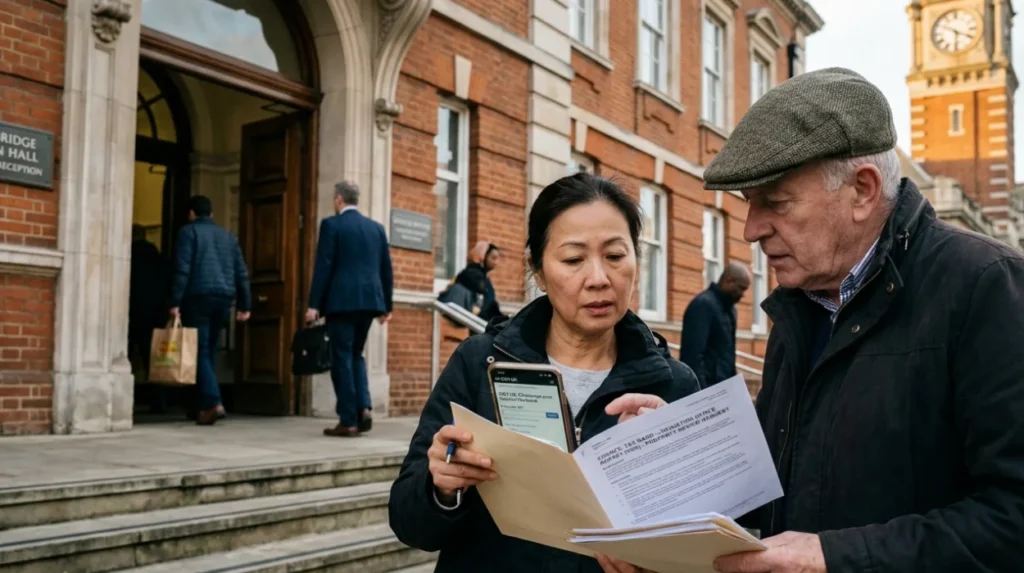
Redbridge Council Tax at £2,294.58 Band D equates to £191.21 monthly or 52p daily, funding £1.095 billion spend amid 4.8% rise, balancing service growth like £1.26 billion GLA policing with household costs up £2.01 weekly.
Impacts vary: Band A pays £127.48 monthly, H £382.43. Low-income get support; average household £191.
Future: annual budgets address gaps, precepts rise for care. Track via council site.
East London Times readers in Redbridge wards like Seven Kings see direct ties to local services.
What is Redbridge Council Tax?
Redbridge Council Tax is a local property tax charged by the London Borough of Redbridge to fund services such as education, social care, waste collection, and policing.