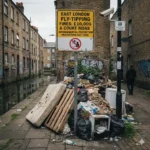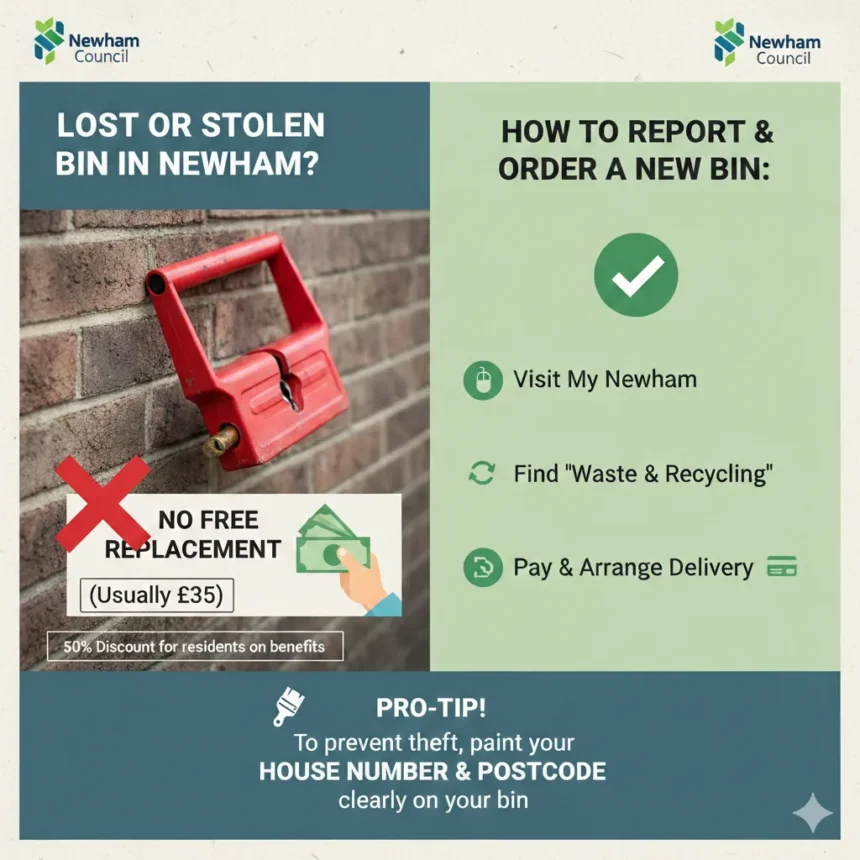
Discovering a stolen bin in Newham can disrupt your household routine, but the London Borough of Newham Council offers a straightforward process for free replacements under specific conditions. This comprehensive guide walks you through every step, from initial reporting to delivery, ensuring you reclaim your waste management without unnecessary costs.
- Understanding Bin Theft in Newham
- Why Bins Get Stolen and Prevention Tips
- Confirming Your Bin Is Stolen
- Step 1: Report the Theft to Newham Council
- Step 2: Should You Report to the Police?
- Step 3: Preparing Your Replacement Request
- Step 4: What Happens After Submission
- Special Cases for Flats and Estates
- Costs: When Replacements Are Free Versus Paid
- Timeline and Expectations
- Legal Context of Bin Ownership in the UK
- Broader Waste Management in Newham
- Maintaining Your New Bin
Understanding Bin Theft in Newham
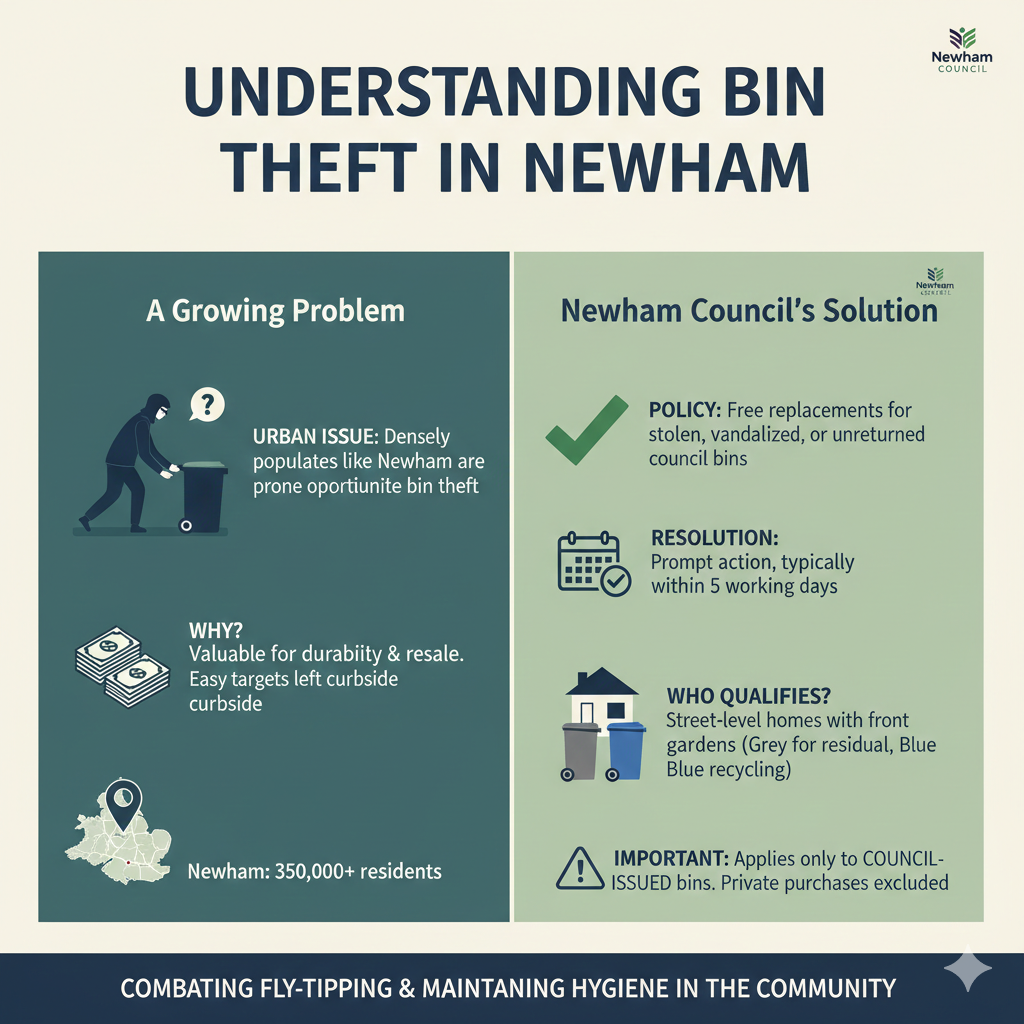
Bin theft has become a surprisingly common issue in urban areas like Newham, where high population density and frequent collections make wheelie bins easy targets for opportunistic thieves. These containers, often left curbside overnight, are valuable for their durability and utility, sometimes resold or repurposed elsewhere. In Newham, households typically receive council-issued bins for general waste and recycling, distinguishing them from privately owned ones.
The London Borough of Newham, encompassing diverse neighborhoods from Stratford to Plaistow, manages waste services for over 350,000 residents. Local policies prioritize resident convenience, providing free replacements for stolen, vandalized, or unreturned bins to maintain hygiene and recycling rates. This service reflects broader UK council efforts to combat fly-tipping and illegal dumping, which spike when bins go missing. Newham’s approach ensures that verified theft reports lead to prompt resolutions, typically within five working days.
Residents in street-level homes with front gardens usually qualify for two bins: one gray for residual waste and one for mixed recycling. Flats or estates with communal bins follow slightly different protocols, often involving managing agents. Recognizing whether your bin qualifies as council-provided is crucial, as only those receive free replacements; private purchases require separate action.
Why Bins Get Stolen and Prevention Tips
Wheelie bins appeal to thieves due to their sturdy plastic construction, often made from high-density polyethylene, which withstands weather and holds value on secondary markets. In Newham, thefts peak during summer collections or after windy nights when bins appear abandoned. Thieves may use them for personal waste or sell them online, exacerbating local waste issues.
Newham Council data indicates that stolen bins contribute to overflowing streets, straining collection crews already handling 50,000 tonnes of waste weekly. Prevention starts with secure storage: position bins behind gates or in locked yards post-collection, avoiding overnight street placement. Marking bins with UV pens or council-issued tags deters resale, as authorities can trace them.
Additionally, community vigilance plays a role. Newham encourages neighbors to report suspicious activity via the council’s app or non-emergency police line. Installing motion-sensor lights near storage areas further reduces risks. These measures not only protect your property but support Newham’s sustainability goals, targeting 50% recycling by 2026.
Confirming Your Bin Is Stolen
Before reporting, verify the bin’s absence isn’t due to a mix-up. Check neighboring properties, alleyways, and local skips where bins sometimes end up after collections. Strong winds in East London’s Thames Gateway area can displace lighter lids or entire bins during gusts exceeding 40mph, common in winter.
Consult your collection calendar, accessible via Newham’s website or MyNewham account, to rule out schedule changes. If your street was fully missed, crews return the next working day without reports. For individual cases, inspect for council tags or serial numbers matching your address—these confirm ownership.
Document everything with photos of the empty collection point, timestamped and geo-tagged. Note the bin type (240L gray, recycling, food waste), color, and any damage history. This evidence strengthens your claim, preventing disputes over “lost” versus stolen status.
Step 1: Report the Theft to Newham Council
The primary action begins online via Newham Council’s official portal. Visit the “Request a new or replacement bin” page on newham.gov.uk, specifically tailored for stolen, vandalized, burnt, or unreturned bins. This self-service form requires your postcode, full address, contact details, and bin specifics.
Eligibility hinges on council issuance: street-level homes qualify automatically if previously allocated. The system prompts for theft confirmation, asking if you’ve checked surroundings. Submit during office hours for fastest processing; responses arrive within 24-48 hours via email. Newham commits to delivery within five working days, weather permitting.
For those without internet, phone Newham’s Waste Services at 020 3373 1000 (Monday-Friday, 9am-5pm). Provide the same details verbally; staff log the request instantly. This method suits elderly residents or those in Beckton or Custom House with connectivity issues. Track progress through your MyNewham account, receiving updates on order status.
Step 2: Should You Report to the Police?
While council replacement is free, notifying police logs the crime officially. Dial 101 or use the Metropolitan Police online form for non-emergencies. Select “theft from person or premises” and describe the bin, emphasizing its council origin to aid recovery efforts.
Police prioritize higher-value crimes, so expect no investigation but a crime reference number (CRN). Share this with Newham Council during replacement requests—it bolsters claims and contributes to local statistics. In Newham, where antisocial behavior reports rose 15% last year, aggregated data informs patrols in hotspots like Maryland Point.
Residents in housing association properties report to their provider first, then council if applicable. This dual-reporting ensures comprehensive coverage without overlap.
Step 3: Preparing Your Replacement Request
Gather proof of residency: council tax bill, utility statement, or tenancy agreement matching the address. Note bin dimensions—standard 240L for houses, 1100L for some estates. Specify needs: general waste, dry mixed recycling, or food waste if applicable.
Newham’s form auto-populates collection schedules based on postcode zones (e.g., Zone A for East Ham). If recently moved, declare prior allocation; unallocated newcomers purchase bins at £30-£50 via the same portal. Damaged-by-collector bins swap free, distinct from theft claims.
Avoid common pitfalls: don’t request during bank holidays, as processing delays occur. Ensure bins are presented correctly weekly (lids closed, 1m from obstacles) to maintain eligibility.
Step 4: What Happens After Submission
Post-submission, Newham’s warehouse in Centre Park dispatches crews. Expect an email confirmation with reference number within hours. Track via the council app, showing “ordered,” “dispatched,” or “delivered.”
Delivery occurs 8am-6pm weekdays; leave space at your boundary. Crews handle placement, but inaccessible gates require resident presence. If undelivered, report via missed collection form next day from 10am.
Quality matches originals: UV-stabilized plastic resists fading, with ergonomic wheels for easy maneuvering. Newham enforces anti-theft markings, enhancing traceability.
Special Cases for Flats and Estates
High-rise or communal setups in Canning Town differ. Report overflowing or missing shared bins to your managing agent first—they liaise with council under service level agreements. Agents handle bulk orders, resolving issues faster than individual reports.
For private estates, check lease terms; some mandate resident-funded replacements. Newham supports via bulk deliveries, charging only for extras. Communal food waste bins follow orange bag protocols, reportable separately.
Costs: When Replacements Are Free Versus Paid
Stolen council bins qualify for free swaps, a policy unchanged since 2010 to encourage reporting. Vandalism or non-return post-collection also gratis. However, lost personal bins or unauthorized extras cost: 240L rubbish £40.50, recycling £25.95, garden waste £40.50.
New residents without history purchase outright. Damage by residents voids free service. Budget accordingly, as payments process via card online.
Timeline and Expectations
From report to bin: 1-5 days average. Peaks during holidays extend to 10. Newham collects 100% weekly, so interim bagging suffices—tie securely, avoid overfilling. Recycling in clear sacks maintains compliance.
Monitor emails; no response after 48 hours? Resubmit or call. Satisfaction surveys follow, shaping service improvements.
Legal Context of Bin Ownership in the UK
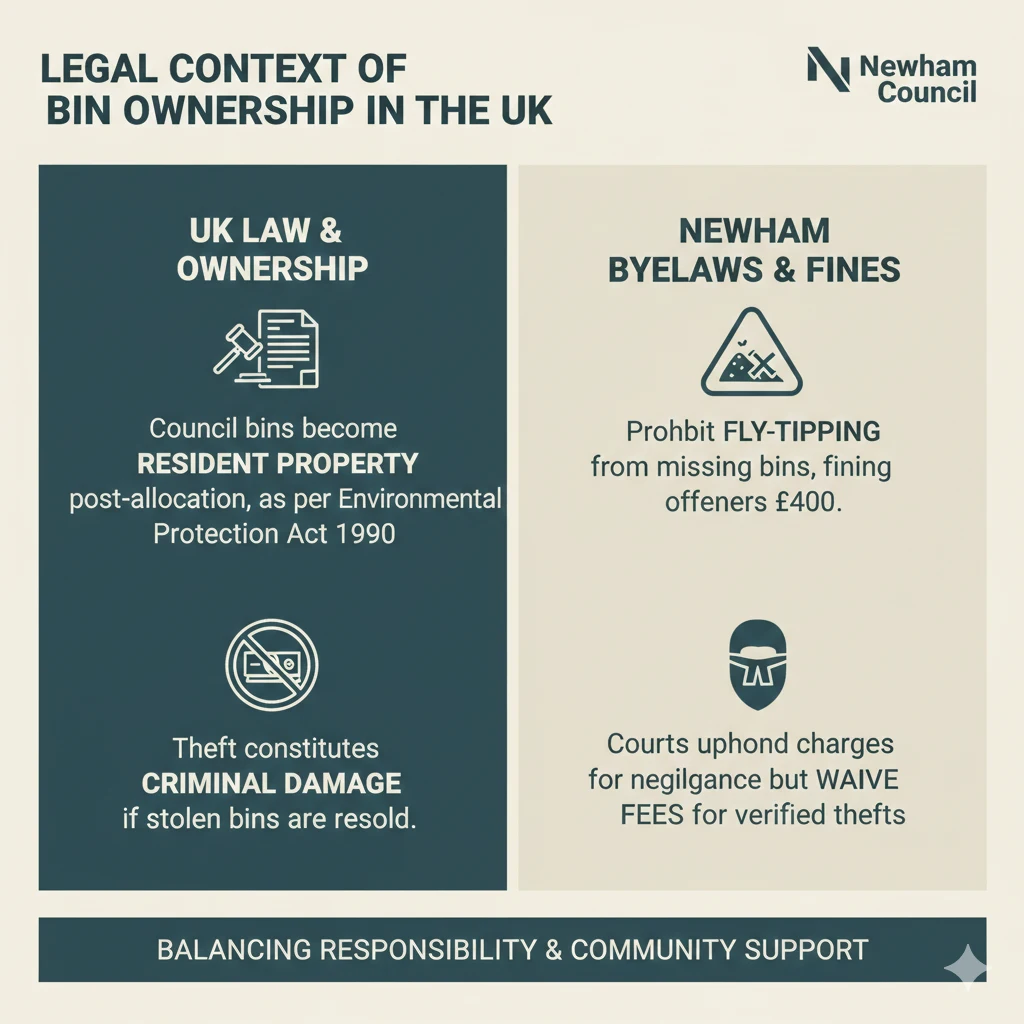
UK law deems council bins resident property post-allocation, per Environmental Protection Act 1990. Theft constitutes criminal damage if resold. Newham byelaws prohibit fly-tipping from missing bins, fining £400.
Courts uphold council charges for negligence but waive for verified thefts. This framework balances responsibility and support.
Broader Waste Management in Newham
Newham invests £20m annually in waste, achieving 35% recycling. Stolen bin protocols fit zero-waste ambitions, with education campaigns reducing thefts 20% since 2020. Participate via community clean-ups for credits.
Maintaining Your New Bin
Post-replacement, clean weekly with mild detergent to prevent odors. Store securely. Report issues promptly to sustain free service access.