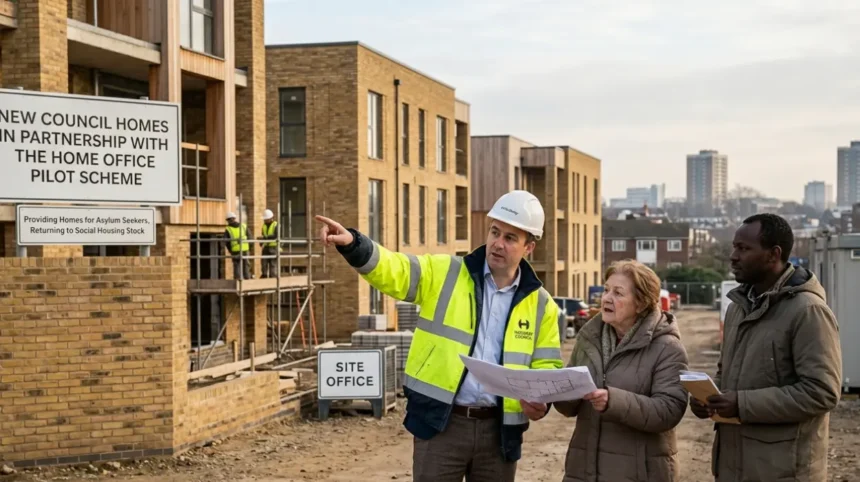
The UK government is running a nationwide pilot scheme under which selected councils can build or refurbish council‑style homes that are initially leased to the Home Office to house asylum seekers, with the long‑term aim of returning these properties to local social‑housing stock. In East London, Hackney Council is among the local authorities actively exploring participation in the scheme as part of a broader effort to reduce reliance on temporary hotels and private‑sector accommodation while also expanding genuinely affordable social homes.
- What is the Council Houses for Asylum Seekers Pilot Scheme?
- Why has the government introduced this pilot?
- Which councils are involved or interested?
- How does the housing model work in practice?
- What is the funding structure and scale of the scheme?
- How does the pilot fit into wider asylum and housing policy?
- What does this mean for East London residents and housing?
- What are the legal and eligibility rules for asylum‑seeker housing?
- What might the future evolution of the scheme look like?
This article explains the “Council Houses for Asylum Seekers Pilot Scheme” in full: what it is, how it works, which councils are involved, the funding model, the legal and policy framework, and what it means for East London residents and local‑housing markets.
What is the Council Houses for Asylum Seekers Pilot Scheme?
The Council Houses for Asylum Seekers Pilot Scheme is a Home Office‑led initiative that provides capital funding to participating local authorities so they can buy, refurbish, or build new homes that are initially used as temporary accommodation for people claiming asylum, then later become part of the councils’ permanent social‑housing stock. Under the pilot, councils act as landlords and managers of these properties while the Home Office remains the lead statutory authority for asylum‑seeker housing, in line with the Immigration and Asylum Act 1999.
The scheme is designed to replace large numbers of asylum‑seeker hotel rooms with purpose‑adapted, council‑managed housing, cutting long‑term taxpayer costs and reducing the visibility of asylum‑seeker accommodation in ordinary residential areas. It also responds to political pressure to end the use of “migrant hotels” and to reduce the Home Office’s dependence on private contractors such as Serco and Clearsprings, who have historically managed most temporary asylum accommodation.
The pilot is framed as a dual‑purpose policy: it addresses the asylum‑accommodation crisis while also creating additional social‑housing units that can later be let at council‑housing rents to local residents. Current guidance suggests that participating councils may keep the homes within their own social‑housing portfolios for at least ten years after the initial asylum‑seeker tenancy period, though the exact reclaim timetable is still being finalised by the Home Office and DLUHC.
Why has the government introduced this pilot?
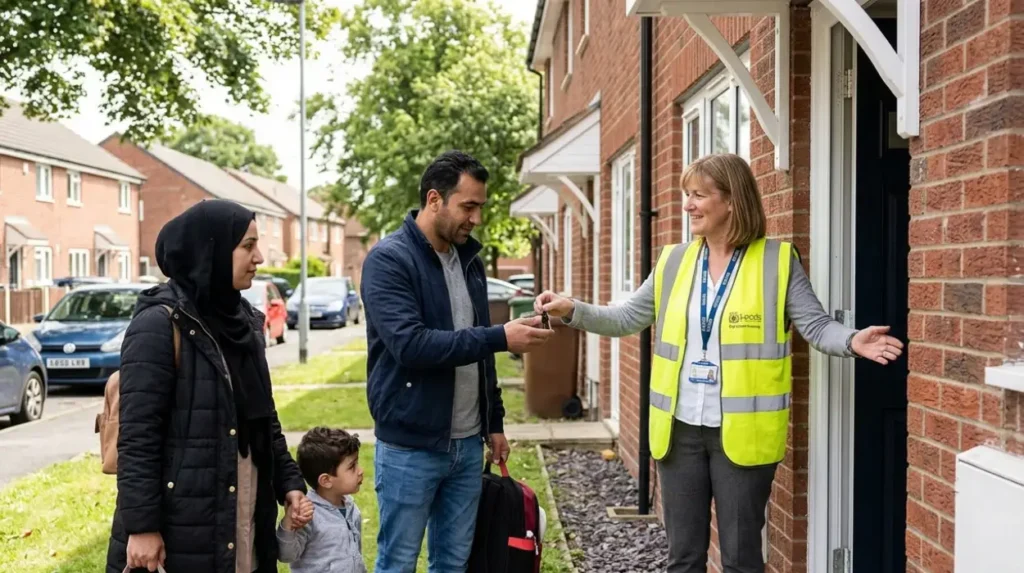
The government is using the pilot to reduce the enormous daily cost of asylum hotels, ease pressure on local communities, and begin renationalising the management of asylum‑seeker accommodation under councils rather than private contractors. Data cited by London‑based media show that the UK was spending an average of around £5.77 million per day on asylum hotels in the year before the pilot was announced, largely via private‑sector contracts.
The pilot also responds to the long‑running shortage of genuinely affordable social housing in major cities, including London, where tens of thousands of people remain on high‑priority waiting lists. By linking the creation of asylum‑seeker homes to permanent council‑housing supply, the scheme aims to squeeze two objectives from one capital‑spending stream: human‑rights‑compliant asylum accommodation and a small expansion of social‑rented stock.
On the political side, the pilot is presented as a way to demonstrate control over migration by “closing every asylum hotel” and bringing more asylum housing under local‑government oversight. The Home Office argues that locally managed housing offers better integration support, more stable tenancies, and fewer complaints from host communities than large hotel‑based clusters.
Which councils are involved or interested?
Around 200 English local authorities have expressed interest in joining the Council Houses for Asylum Seekers Pilot Scheme, though the first confirmed participants are a small group of pilot councils, including Hackney in East London. Named councils that have publicly confirmed or strongly signalled interest include Brighton and Hove, Hackney, Peterborough, Thanet, and Powys, with Hackney often cited as one of the most active London boroughs in exploring the scheme.
Other London and South‑East boroughs have registered interest or are being assessed to join the pilot, including Barnet, Medway, and several coastal authorities in Kent and Sussex. However, some councils have declined or are treating the scheme cautiously, citing concerns that it may divert scarce housing stock away from long‑standing local applicants or add pressure on local services.
For East London readers, the most relevant confirmed participant is Hackney Council, which has described the scheme as compatible with its “Borough of Sanctuary” strategy and its broader aim of becoming a “place of safety and inclusion for refugees, migrants and people seeking asylum.” Hackney’s interest is being evaluated alongside the borough’s existing housing‑shortage pressures and the need to protect existing social‑housing allocations for local residents.
How does the housing model work in practice?
Participating councils either build new homes or refurbish existing buildings such as derelict flats or underused council blocks, then lease them to the Home Office for temporary use by asylum seekers, with an agreement in place for the eventual re‑transfer of those homes into the council’s social‑housing portfolio. The Home Office sets the nightly‑rate or per‑move‑in payment to the council, rather than paying private‑sector providers, and the council takes on day‑to‑day management of the blocks, including maintenance, repairs, and local‑authority‑led support services.
The scheme prioritises projects that can reuse empty or low‑quality housing stock, such as empty office conversions, former care‑homes, or poorly maintained blocks, rather than knocking down homes that locals are currently occupying. Where new build is involved, councils are expected to use existing social‑housing design standards, including accessibility requirements, energy‑efficiency targets, and space‑density rules, so that the properties are suitable both for asylum seekers and for long‑term social‑tenancy use.
Typical project types include:
- Refurbishing a vacant block of 30–50 flats into asylum‑seeker flats with shared communal areas.
- Converting an empty office building into a mixed‑use block with asylum‑seeker flats on upper floors and ground‑floor community space.
- Building a small‑scale new housing block (20–40 units) on a brownfield site, with the initial tenancy reserved for asylum seekers before transfer to general social‑housing lettings.
In East London, potential sites discussed informally by Hackney and other boroughs include underused council estates, former office buildings near transport hubs, and plots within the borough’s wider housing‑delivery pipeline. Local‑authority planning departments are expected to process these projects under the same planning‑regime rules as other social‑housing schemes, subject to public consultation and any additional Home Office‑specific conditions.
What is the funding structure and scale of the scheme?
The government is committing up to £500 million in capital funding over multiple years to support the pilot, with the Home Office and the Department for Levelling Up, Housing and Communities (DLUHC) jointly overseeing the allocation of grants to participating councils. Early reports suggest that the first wave of pilot funding may be around £100–200 million, enough to deliver several hundred homes across the initial participating authorities, with the remainder reserved for potential national expansion.
Councils receive funding in the form of capital grants rather than recurrent revenue, which means the money is restricted to:
- Purchasing land or properties for conversion.
- Paying for design, construction, and refurbishment works.
- Installing basic facilities such as kitchens, bathrooms, heating, and security systems.
The exact split between national and local‑authority funding varies by project but typically follows a model where:
- The central government pays 70–90% of eligible capital costs.
- The local authority may contribute from its own housing‑capital budgets or partner with housing associations to share the remaining costs.
Once the homes are complete, the council invoices the Home Office for each unit occupied by an asylum seeker, usually under a long‑term lease that covers maintenance, utilities, and management. The per‑unit payment is set so that the council can cover running costs and, in some cases, repay a proportion of any local borrowing used to support the project.
How does the pilot fit into wider asylum and housing policy?
The Council Houses for Asylum Seekers Pilot Scheme sits within two broader policy strands: the Home Office’s “end‑the‑asylum‑hotel” agenda and the government’s long‑term social‑housing‑supply programme, including the Local Authority Housing Fund and the Mayor of London’s Refugee Housing Programme. The scheme is explicitly not a route to fast‑track asylum seekers into social housing or council‑tenancy queues; applicants remain subject to the same immigration‑and‑housing rules as any other migrant, and asylum seekers are not eligible for mainstream social‑housing allocations under current policy.
The pilot is instead a way to manage the temporary‑accommodation phase more efficiently, in line with the Immigration and Asylum Act 1999 and the Home Office’s statutory duty to provide “suitable accommodation” to asylum seekers while their claims are processed. By using council‑managed properties, the scheme aims to align asylum‑housing standards more closely with those of local‑authority social housing, including rules on fire safety, overcrowding, and habitability.
In parallel, the Mayor of London’s Refugee Housing Programme has already funded up to 600–630 affordable homes for people who arrived through Ukrainian and Afghan resettlement schemes, showing that there is a broader strategy to use housing‑capital funding to address humanitarian‑migration‑related housing needs. The Council Houses for Asylum Seekers pilot can be seen as a similar, but asylum‑specific, strand of that strategy, with the key difference that units are initially reserved for asylum‑seeker tenancies before being recycled into the wider social‑housing system.
What does this mean for East London residents and housing?
For East London, the pilot could bring a modest number of new or refurbished homes under council control, but it also raises questions about allocation priorities, rent levels, and local‑services pressure in boroughs already facing severe housing shortages. Hackney, for example, has one of the longest social‑housing waiting lists in London, and any decision to commit council‑owned land or capital to asylum‑seeker housing will be scrutinised by local residents and housing‑advocacy groups.
Residents can expect that:
- Any new or refurbished homes built under the pilot will initially be used for asylum seekers, with the understanding that they will later become standard council‑rented properties.
- The council will be required to report on the number of units created, the cost per unit, and how many former asylum‑seeker homes subsequently enter the social‑housing pool.
Potential positive impacts include:
- A small but measurable increase in social‑rent housing stock in East London over the next decade.
- Fewer large‑scale asylum hotels operating in the borough, which may reduce complaints about overcrowded reception centres and temporary‑accommodation clusters.
Potential concerns include:
- Local residents worrying that new housing will be prioritised for asylum seekers at the expense of people on the social‑housing waiting list.
- Community‑relations tensions if asylum‑seeker housing is concentrated in a small number of wards rather than being spread across the borough.
Hackney Council has signalled that it intends to manage the pilot transparently, with public information on proposed sites, unit numbers, and expected removal‑from‑asylum‑status handover dates, alongside regular updates to local‑housing‑monitoring bodies.
What are the legal and eligibility rules for asylum‑seeker housing?
Asylum seekers remain ineligible for mainstream social‑housing allocations under current UK law, even when they occupy pilot‑council homes built or refurbished under the scheme. The tenancies are temporary, tied to the individual’s asylum‑claim status, and governed by Home Office‑commissioned housing contracts rather than standard council‑tenancy agreements.
Eligibility is determined by:
- The person’s immigration status as an asylum seeker (with a valid claim lodged and awaiting decision).
- The Home Office’s assessment of whether they have “no realistic alternative” to temporary accommodation while their claim is processed.
Once an asylum claim is refused or a person acquires a different immigration status, they must either:
- Move into private‑rented housing, if they have the right to work and income.
- Leave the UK or reapply for fresh leave to remain, at which point they may be reassessed for different accommodation bands.
The pilot does not change these rules; it only changes the type of property and the management body used during the temporary‑accommodation phase. Local councils therefore cannot offer permanent tenancies to asylum seekers under the pilot scheme itself, although those who later become refugees or settle through other routes may join the normal social‑housing waiting list like any other resident.
What might the future evolution of the scheme look like?
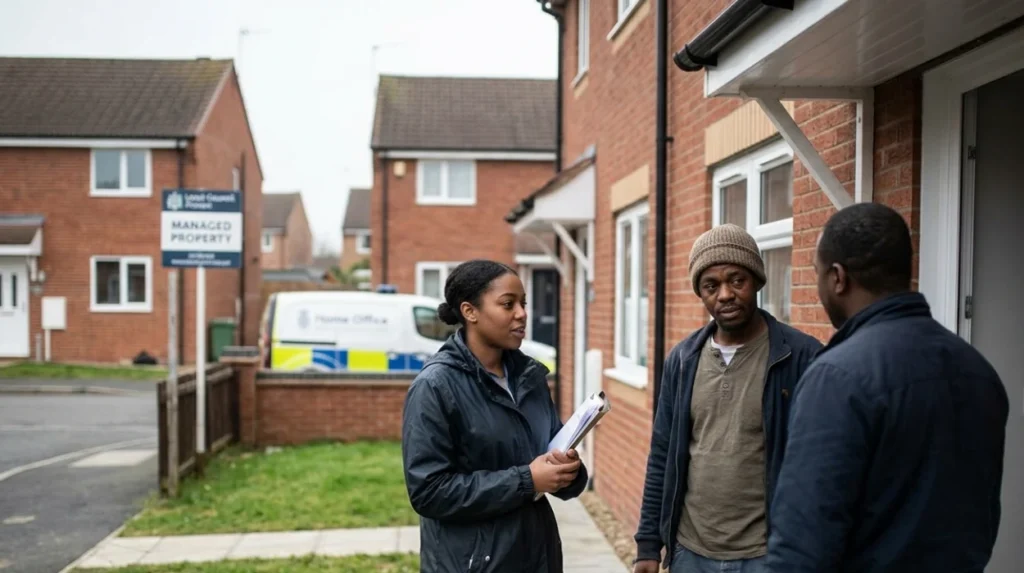
If the pilot is judged successful, the government is expected to expand the model to more councils, potentially using a similar £500‑million‑style funding envelope over several spending reviews to create thousands of additional council‑managed homes for asylum seekers nationwide. Expansion could include:
- More London boroughs beyond Hackney, such as Tower Hamlets, Newham, or Barking & Dagenham, if they meet the funding and site‑availability criteria.
- Additional regional pilots in cities such as Birmingham, Manchester, and Glasgow, where asylum‑hotel use is high and social‑housing demand is intense.
On the regulatory side, future iterations of the scheme may:
- Tighten reporting requirements on how many former asylum‑seeker homes are actually returned to social‑housing stock.
- Introduce local‑impact thresholds, such as maximum percentages of a borough’s social‑housing stock that can be earmarked for asylum‑seeker tenancies at any one time.
For East London, the pilot could become a recurring source of social‑housing delivery over the next decade, but its long‑term success will depend on how the boroughs balance the short‑term need for asylum accommodation against the long‑term housing needs of their existing residents. Authorities such as Hackney are likely to use the pilot as a test case for whether council‑managed asylum housing can reduce costs, improve living standards, and genuinely expand the social‑housing stock without fuelling local resentment.
Overall, the Council Houses for Asylum Seekers Pilot Scheme represents one of the most significant structural shifts in UK asylum‑housing policy in recent years, and its impact on East London will be closely watched by both local‑residents and national‑policy makers.
What is the Council Houses for Asylum Seekers Pilot Scheme?
The Council Houses for Asylum Seekers Pilot Scheme is a government-funded programme that enables local authorities to:
Build new homes
Refurbish empty or underused buildings
Convert existing properties
These homes are initially leased to the Home Office to accommodate asylum seekers. Over time, they are transferred back into permanent council housing stock.
The legal framework sits under the Immigration and Asylum Act 1999, which requires the government to provide accommodation to asylum seekers who cannot support themselves.
Unlike previous models dominated by private contractors like Serco and Clearsprings Ready Homes, councils act as landlords and managers under this scheme.