Brooklime House in Homerton has become a clear east London example of how damp, mould, water ingress, and slow complaint handling damage residents’ homes, finances, and trust. Reports from residents, Hackney Council, the Housing Ombudsman, and government guidance show a long-running housing dispute centered on repair failures, structural concerns, and the duty to act quickly on hazards.
- What is happening at Brooklime House in Homerton?
- Why the case drew attention
- Why do damp and mould disputes happen in housing?
- Why structural faults matter
- What have residents complained about?
- How complaint handling becomes part of the problem
- What did the Housing Ombudsman find?
- Why Ombudsman findings matter
- What laws apply to damp and mould?
- What Awaab’s Law changes
- What does Brooklime House mean for East London?
- What happens next for residents?
What is happening at Brooklime House in Homerton?
Brooklime House in Homerton is the site of a long-running housing dispute involving damp, mould, and water ingress complaints from residents, including leaseholders who say defects began years ago and were not fixed properly. The case now involves repair responsibility, complaint handling, and the wider legal duty to keep homes safe and habitable.
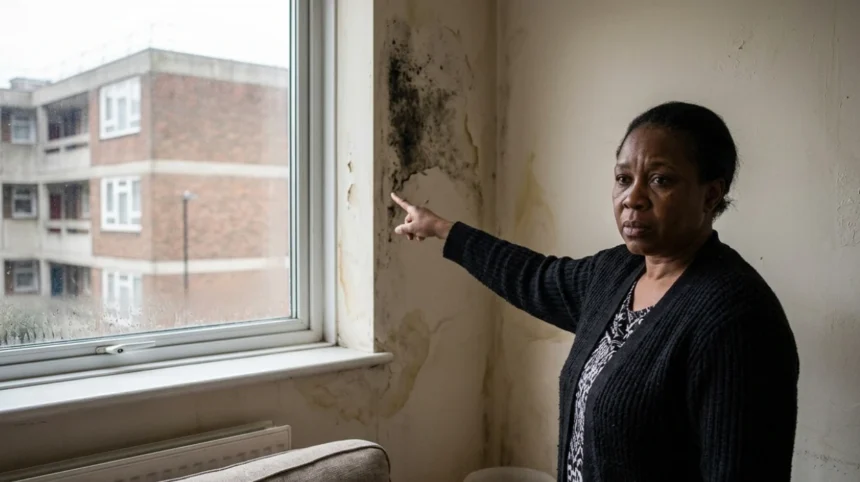
Brooklime House is part of a Hackney Council housing development in Homerton, east London. Media reporting and resident accounts describe repeated damp and mould problems inside homes, alongside water ingress that appears to affect multiple properties in the building. Residents have said they believe a structural issue sits behind the persistent damage, which shifts the problem from simple condensation management to a possible building defect.
The dispute matters because damp and mould are not cosmetic faults. In rented and social housing, they are treated as health and safety hazards when they affect habitability or point to leaks, poor ventilation, defective roofs, or damaged external walls. Brooklime House therefore sits at the intersection of housing maintenance, council accountability, and resident complaints.
Why the case drew attention
The Brooklime House case drew wider attention because residents reported that the issues continued for more than 10 years. That length of time turns a repair problem into a systemic housing failure, especially when complaints remain open and conditions continue to worsen. The story also gained traction because it involves a council landlord and leaseholders who say they were left in defective homes that they cannot easily sell.
The case reflects a broader national concern. Government guidance on damp and mould was strengthened after the death of two-year-old Awaab Ishak, and councils now face stronger pressure to inspect and act quickly on reported hazards. Brooklime House illustrates what happens when that standard is not met in practice.
Why do damp and mould disputes happen in housing?
Damp and mould disputes happen when moisture enters or builds up in a property and the underlying cause is not fixed quickly, leaving tenants or leaseholders with visible mould, damaged walls, and health risks. Structural leaks, failed roofs, broken gutters, poor ventilation, and delayed repairs are the usual triggers.
Damp is the presence of unwanted moisture in a building. Mould is the growth that appears when moisture remains in place long enough for fungus to develop on walls, ceilings, furniture, or fabric. The problem becomes serious when the source is structural, such as a defective roof, cracked wall, failed seal, leaking pipe, or penetrating rainwater.
Government guidance from 2023, updated in 2024, says landlords must understand and address the health risks of damp and mould in rented housing. That guidance was issued by the Ministry of Housing, Communities and Local Government, the Department of Health and Social Care, and the UK Health Security Agency. It places emphasis on early inspection, clear action, and proper record keeping.
There are three common categories of damp, with examples such as rising damp in ground-floor walls, penetrating damp from leaking roofs or cracked masonry, and condensation damp caused by poor ventilation in kitchens or bathrooms. In Brooklime House, residents and reports point most strongly to penetrating damp or water ingress linked to the building fabric.
Why structural faults matter
Structural faults matter because they change who is responsible. Landlords are generally responsible for structure and exterior repairs under the Landlord and Tenant Act 1985, while condensation driven by day-to-day living is handled differently. If the cause is a roof, external wall, or drainage failure, the repair duty sits with the landlord or freeholder.
That distinction is central to Brooklime House. Reporting indicates that Hackney Council holds the freehold and therefore bears responsibility for structural repairs such as roofs and external walls. If multiple homes are affected, the issue points toward a building-wide defect rather than isolated resident behaviour.
What have residents complained about?
Residents have complained about persistent damp, mould, water ingress, unresponsive repairs, and the inability to sell homes that they say are defective. They also say the complaints process has not resolved the problem, leaving them trapped in worsening conditions and ongoing costs.
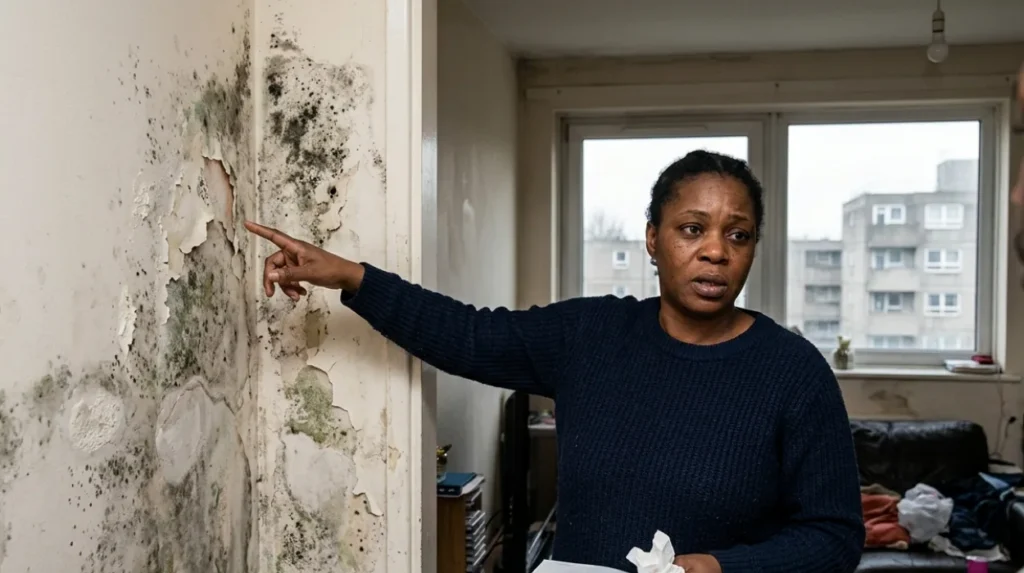
Resident reports describe repeated leaks and mould growth in living rooms, kitchens, bathrooms, and hallways. In one widely reported case, a couple who bought a home at Brooklime House for £350,000 in 2015 said they have lived with damp and mould for more than 10 years. Their account has become a symbol of the wider complaint because it combines repair failure with financial loss.
The residents’ complaint is not only about the presence of damp. It is also about the response. They have said the problems were raised early, yet the repairs did not resolve the underlying cause. That pattern is important because repeated temporary fixes often indicate that the root defect has not been investigated properly.
There is also a leaseholder dimension. Leaseholders commonly pay service charges for works even when the defect lies in the structure of the building. In a case like Brooklime House, that can mean residents face mortgage payments, repair disputes, and difficulty selling at the same time. This financial pressure adds another layer to the complaint.
How complaint handling becomes part of the problem
Complaint handling becomes part of the problem when landlords fail to respond promptly, fail to inspect properly, or fail to complete promised works. The Housing Ombudsman has repeatedly said that poor complaint handling can worsen the impact of disrepair because delays allow damage to spread. In housing cases, the complaint process is not separate from the repair problem; it is part of the landlord’s duty to remedy it.
Brooklime House sits within that pattern. Reporting says the Housing Ombudsman identified service failings by Hackney Council in its response to reports of water ingress and associated damp and mould, and in the handling of complaints. That finding matters because it confirms that the issue was not treated well at the service level as well as the repair level.
What did the Housing Ombudsman find?
The Housing Ombudsman found service failings by Hackney Council in its handling of damp, mould, and water ingress complaints connected to Brooklime House. The Ombudsman’s wider findings on Hackney also show a pattern of delayed repairs, poor monitoring, and weak complaint handling in damp and leak cases.
A September 2024 report referenced in later coverage said the Ombudsman identified service failings in Hackney Council’s response to water ingress, associated damp and mould, and complaint handling in relation to the Brooklime House residents. That finding is significant because it moves the story beyond anecdote and into formal housing oversight.
The broader context is also important. In May 2022, the Housing Ombudsman found severe maladministration for Hackney’s substantial delays in dealing with damp, mould, and leaks at a resident’s home. In December 2023, the Ombudsman again found severe maladministration after Hackney failed to resolve a recurring roof leak for more than three years. These findings show a recurring pattern in the borough’s housing management.
A 2025 special investigation into Hackney’s housing service reported systemic issues in leaks, damp, mould, and general repairs, and cited large numbers of open damp and mould cases. The report said Hackney had 1,400 open damp and mould cases in August 2024, including more than 500 overdue cases and more than 600 severe cases. Those figures show that Brooklime House is part of a wider service crisis, not an isolated complaint.
Why Ombudsman findings matter
Ombudsman findings matter because they establish that the landlord’s processes failed against housing standards. They can lead to orders for repairs, compensation, complaint review, and service improvements. For residents, they provide independent confirmation that the landlord’s response did not meet the expected standard.
In practical terms, the Ombudsman’s role is narrower than a court’s. It reviews how the landlord handled the complaint and repair process, not ownership disputes or every technical building defect. Even so, its findings carry weight because they document delay, poor communication, missed inspections, and failures to act on risk.
What laws apply to damp and mould?
Several housing laws apply to damp and mould, including the Landlord and Tenant Act 1985, the Homes (Fitness for Human Habitation) Act 2018, and the Housing Act 2004. These laws require landlords to maintain structure, keep homes fit to live in, and treat serious damp as a potential hazard.
The Landlord and Tenant Act 1985 places responsibility on landlords to repair the structure and exterior of a property, along with installations for heating, water, and sanitation. The Homes (Fitness for Human Habitation) Act 2018 requires homes to remain fit for human habitation at the start of a tenancy and throughout it, which includes protection from serious damp and mould.
The Housing Act 2004 uses the Housing Health and Safety Rating System, known as HHSRS, to assess hazards in homes. Under that system, damp and mould are treated as potential hazards that can justify enforcement action. Local authorities can inspect properties and require improvement work when hazards are found.
Government damp and mould guidance published in September 2023 and updated in August 2024 was issued in response to the coroner’s prevention of future deaths report after Awaab Ishak’s death. That guidance requires landlords to understand the risk, inspect promptly, and act in a way that prevents residents from living with avoidable hazards. For social landlords such as councils, this sets a clear expected standard.
What Awaab’s Law changes
Awaab’s Law changes the pressure on social landlords by requiring faster action on damp and mould hazards in social housing. BBC reporting in October 2025 said landlords must assess and fix damp and mould within strict timescales after new regulations came into force, with emergency risks to be assessed within 24 hours.
The law is phased, and further elements are scheduled for 2026, including other serious hazards such as electrical and structural problems. That phased rollout matters because many Brooklime House-type cases involve not only damp but also the structural causes behind it.
What does Brooklime House mean for East London?
Brooklime House shows how local housing failures become a borough-wide issue when repair systems do not resolve repeated damp and mould complaints. It highlights the pressure on Hackney Council, the importance of resident reporting, and the growing legal expectation that social landlords fix hazards quickly.
For East London readers, Brooklime House is a local housing story with wider relevance. It shows the cost of weak building oversight in new-build or council-linked housing, especially when residents believe the defect is structural and long-standing. It also shows how leaseholders in mixed-tenure blocks can get stuck between ownership costs and landlord repair failures.
The case also reflects the rising visibility of damp and mould as a political and public health issue. Since the Awaab Ishak case, councils and housing providers face stronger expectations on inspection times, communication, and remedial work. That shift makes old repair habits less defensible.
The wider lesson is straightforward. Where damp, mould, and water ingress continue across years, the issue is rarely superficial. It usually demands proper investigation, a building-level diagnosis, and a complaint process that records what happened and resolves the root cause.
What happens next for residents?
The next steps for residents usually involve formal complaint escalation, Ombudsman review, inspection of the building fabric, and full structural repairs where defects exist. If the property remains unsafe or unfit, residents can seek enforcement action, compensation, or legal advice based on the landlord’s repair duties.
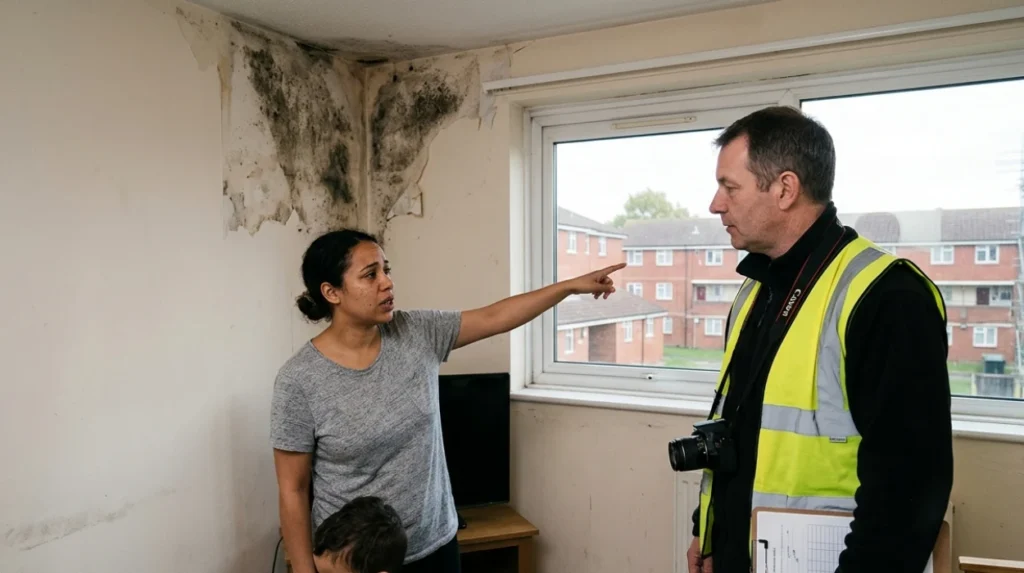
In cases like Brooklime House, the key question is whether the landlord accepts a structural cause and commits to permanent repairs. If the cause remains disputed, residents often need independent evidence such as survey reports, photographs, moisture readings, and records of each repair visit. That evidence helps show whether the problem is condensation, penetrating damp, or a wider building fault.
A complaint route usually starts with the landlord’s own process and then moves to the Housing Ombudsman if the issue is not resolved. The Ombudsman can require the landlord to revisit the case, apologise, compensate, or improve service handling. In serious cases, local authority environmental health or building enforcement routes also become relevant under HHSRS and housing law.
For Brooklime House residents, the long timeline makes permanence the central issue. Temporary mould washes and repeat call-outs do not resolve a structural defect. The practical answer is a proper diagnosis, clear ownership of the repair duty, and sustained works until the building is dry, safe, and fit to live in.
Why does damp and mould keep coming back even after repairs?
Damp and mould usually return when the root cause isn’t fixed. If the issue is structural—like a leaking roof, cracks in walls, or water ingress—surface treatments won’t solve it. Repeated mould often signals a deeper building defect.