Key Points
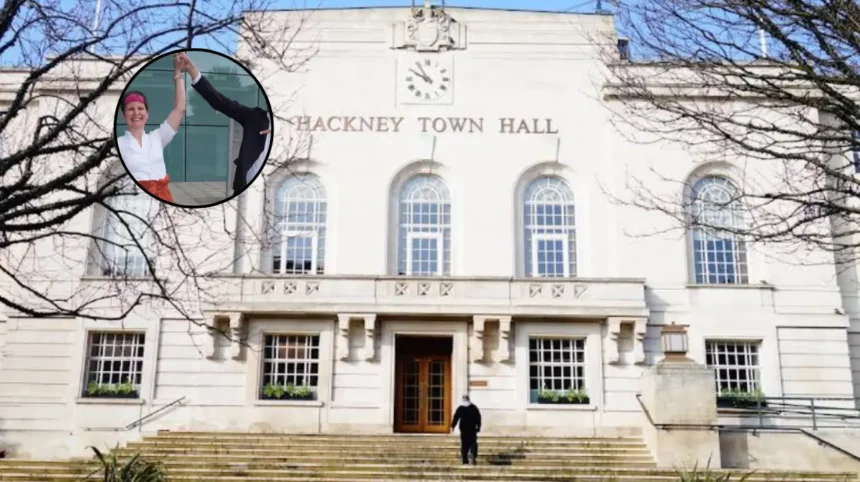
- Zoë Garbett has been elected as the first Green Mayor of Hackney, defeating Labour’s Caroline Woodley.
- Garbett won 35,720 votes, ahead of Woodley’s 26,865, according to Hackney Council and ITV News.
- The result ended Labour’s long hold on the Hackney mayoralty, which had existed since the post was created in 2002.
- Reform UK won control of Havering, securing its first-ever London council majority.
- In Havering, Reform won 39 of 55 seats, while the Residents’ Association became the official opposition with 14 seats.
- Labour was reduced to two seats in Havering, and the Conservatives lost all 23 of their seats there.
- The results were described by broadcasters and party figures as part of a wider political shift in London local elections.
Hackney and Havering (East London Times) May 9, 2026 – The Green Party’s Zoë Garbett has taken Hackney’s mayoralty from Labour in one of the most striking local election results in London, while Reform UK has secured its first London council in Havering.
As reported by ITV News’ London team, Garbett won the Hackney contest with 35,720 votes, defeating Labour’s Caroline Woodley, who received 26,865.
Hackney Council said Garbett became the borough’s first Green Party mayor after a turnout of 40.98%, with the full result showing the Greens ahead of Labour and the other parties.
The result marks the first time since the mayoralty was created in 2002 that a candidate outside Labour has held the office.
What did Garbett say after the result?
According to ITV News, Garbett told supporters she would “change the system” after her victory. The Green Party’s national leadership also treated the result as significant, with party figures suggesting it reflected wider voter dissatisfaction.
The Guardian reported that Garbett promised the result was “just the beginning”, describing the win as a major breakthrough for the party in local government.
Hackney’s official result page also confirmed the winning vote total and identified Garbett as the borough’s first Green mayor.
Why is Hackney significant?
Hackney has long been seen as a Labour stronghold, making the Green victory politically important beyond the borough itself.
BBC reporting highlighted that the contest was closely watched because Hackney voters were not only choosing councillors but also a mayor who oversees the council’s operations.
The result therefore matters both symbolically and practically, because it changes who leads the council and how the borough’s policies may be shaped over the coming years.
How did Reform win Havering?
In Havering, Reform UK won control of the council after taking 39 of the 55 seats, according to the Evening Standard and the New Londoner.
The New Londoner reported that the Havering Residents’ Association now serves as the official opposition with 14 councillors, while Labour held only two seats and the Conservatives lost all of theirs. ITV News also reported that Reform had
“grabbed control of its first London borough”
in Havering, marking a first for the party in the capital.
What did the Havering result mean politically?
The Havering result was widely framed as a historic breakthrough for Reform UK in London politics. BBC coverage said the borough was the first to signal the broader shift seen in the capital’s local elections, with voters choosing a different political direction from Hackney.
The contrast between the two boroughs underlined how London voters in different areas are responding to different issues, with inner London and outer London producing sharply different results.
What does this mean for Labour?
Labour’s losses in Hackney and Havering add to a difficult election night for the party in London. ITV News reported that Labour also lost control of Wandsworth and Westminster, deepening the sense of a poor set of results for the governing party.
The BBC said the results indicated that voters in different parts of London were rejecting the traditional two-party pattern, which will likely intensify pressure on Labour’s leadership to reassess its local and national approach.
What do the figures show?
The Hackney and Havering counts show two very different political outcomes, but both point to significant change.
In Hackney, the Greens beat Labour by nearly 10,000 votes in the mayoral race. In Havering, Reform’s majority was large enough to overturn the borough’s previous balance of power and leave the Conservatives without a single seat.
Background of the development
Hackney has been governed by Labour in the mayoralty since the post was created in 2002, so Garbett’s win ends a long-running political pattern. Garbett is already a well-known Green figure in London politics, having served on the London Assembly and previously run for Hackney mayor and London mayor. Reform’s victory in Havering follows a pattern of gains in parts of outer London, where council control has often been more fluid and local voters have been more open to anti-establishment messages.
Prediction
For Hackney residents, a Green-led mayoralty is likely to bring greater focus on climate policy, housing, local accountability and community-led services, based on the party’s campaign priorities and Garbett’s stated platform. For Havering residents, Reform’s control of the council means the borough is likely to pursue a different direction on local spending, priorities and political messaging, though the practical impact will depend on how the new administration governs. For Labour, the results may sharpen the pressure to rebuild support in both inner and outer London, especially where voters appear willing to switch away from the party in local elections.