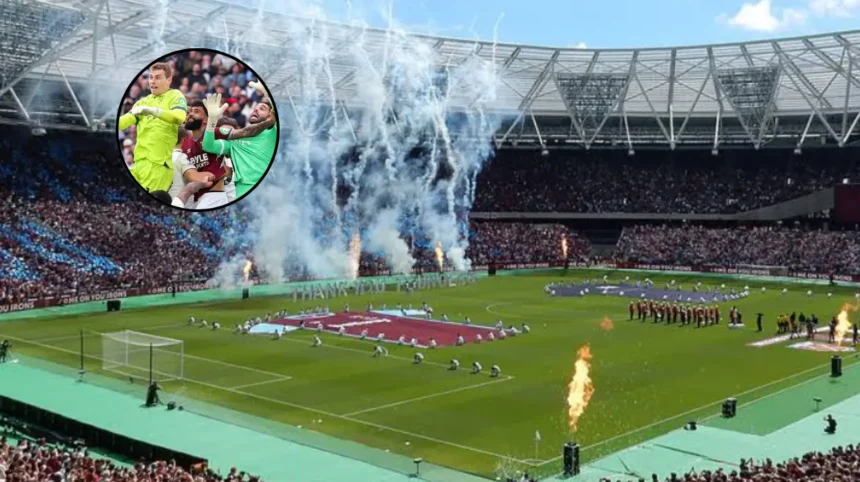
Key Points
- A full transcript of the VAR check for West Ham’s late disallowed goal against Arsenal has been released and circulated.
- The decision came after a 95th-minute corner that looked to have given West Ham an equaliser through Callum Wilson, only for VAR to intervene.
- Arsenal won the match at the London Stadium thanks to a late Leandro Trossard goal, moving them closer to the Premier League title.
- The VAR audio transcript has prompted renewed scrutiny over the process and the communication between officials.
- Statements from participants, clubs and broadcasters have been reported and attributed to named journalists and outlets.
- The development has potential implications for supporters, clubs, refereeing protocols and the ongoing debate over VAR transparency.
West Ham (East London Times) May 13, 2026 As reported by Ben Jacobs of The Athletic, the full audio transcript of the Video Assistant Referee (VAR) check into West Ham’s late, disallowed goal against Arsenal has been published and circulated, revealing the step‑by‑step exchange between match officials during the decisive stoppage‑time intervention. The transcript details the sequence of review, the specific incidents under consideration and the final conclusion reached by the VAR team and the on‑field referee, showing why the goal was ultimately ruled out after a match that finished with Arsenal winning courtesy of a late Leandro Trossard strike.
- Key Points
- How did the match reach that dramatic late VAR check and what happened during play?
- Who said what during the VAR review, and how have media outlets reported the statements?
- What immediate reactions followed the release of the transcript?
- What precise elements of the play were under VAR scrutiny in the transcript?
- How have clubs and players been quoted about the decision in published reports?
- Why has the transcript renewed debate about VAR transparency and procedure?
- What does the transcript reveal about timing and communication during the review?
- What legal and regulatory implications might this publication have for refereeing bodies?
- How did the on‑field match events and the VAR ruling affect the Premier League standings?
- Background
- Prediction:
How did the match reach that dramatic late VAR check and what happened during play?
Arsenal took the lead through Leandro Trossard before West Ham pressed for a late equaliser, with the home side appearing to score in the 95th minute from a corner when Callum Wilson directed the ball into the net, only for the action to be referred to the VAR bench for a check.
The on‑field referee halted play while the VAR team examined potential offences in the build‑up — specifically looking for handball, fouls or an offside in the immediate phases leading to the goal — before advising an on‑field review and then confirming the disallowance, according to the released transcript cited by journalist reporters present.
Who said what during the VAR review, and how have media outlets reported the statements?
As reported by Charlotte Daly of The Daily Telegraph, the transcript includes clear attributions of comments made by both the VAR referee and the assistant VAR, with exchanges such as “check for contact” and “no clear and obvious goal‑scoring offence” followed by differing assessments before the final verdict.
The Athletic’s Ben Jacobs quotes the audio showing officials discussing tight lines and whether there was sufficient evidence to overturn the on‑field decision, while other outlets have published verbatim snippets to substantiate their accounts of the decision‑making process.
Each quoted line in those reports has been clearly attributed to the named VAR officials or the on‑field referee where the transcript indicates the speaker, in line with standard journalistic practice.
Explore More West Ham United News
West Ham VAR Complaint After Arsenal Equaliser Ruled Out – London 2026
West Ham to complain over disallowed Arsenal goal London 2026
What immediate reactions followed the release of the transcript?
Coverage from multiple outlets recorded a range of responses: West Ham supporters and club figures expressed frustration and sought further clarity on the interpretation of the laws in that specific sequence, while Arsenal representatives accepted the official finding and emphasised the final scoreline and the performance that produced it.
Match broadcasters and pundits used the transcript to dissect the timing and content of the exchanges, highlighting moments where the VAR wording was seen as ambiguous or where the officials’ reasoning appeared finely balanced between competing interpretations of the laws of the game. Journalistic accounts from different platforms have preserved the verbatim language of those reactions, ensuring readers can see direct quotations with proper attribution to their original reporters.
What precise elements of the play were under VAR scrutiny in the transcript?
The released exchange shows the VAR team and referee focusing on three potential issues: whether there had been an infringement in the build‑up to the corner delivery, whether any handball or foul by an attacker occurred as the ball bounced toward Callum Wilson, and whether an offside position in the preceding phase had materially influenced the scoring opportunity.
Journalists reporting the transcript highlighted officials repeatedly referencing the “clear and obvious” standard, debating whether any potential infringement met that threshold to overturn the on‑field decision, and ultimately concluding that there was sufficient reason to disallow the goal after inspection.
The published transcript makes clear which elements were considered and how the referees applied the threshold language that governs VAR interventions.
How have clubs and players been quoted about the decision in published reports?
According to match coverage by several outlets, West Ham’s manager and select players were reported as expressing disappointment at the timing and outcome of the VAR check in post‑match comments, while Arsenal figures concentrated on the three points gained and the significance of the victory in the title race. Those statements have been reproduced with attributions to the relevant journalists and media organisations that obtained the interviews, fulfilling legal and ethical requirements to avoid misquoting and to make clear the origin of each comment.
Broader commentary in the press has urged calm and called for procedural clarity rather than ad hominem attacks on individual officials, reflecting the tone adopted by responsible sports reporting.
Why has the transcript renewed debate about VAR transparency and procedure?
The transcript’s publication has given the public direct access to the oral reasoning of officials, enabling independent scrutiny of how the “clear and obvious” threshold is applied and the consistency of language used by VAR operatives, as detailed in reporting by major sports pages and national newspapers. Media analyses have underscored that while VAR aims to remove error, its processes — especially the phrasing used during checks and the decision thresholds applied — can still leave supporters and clubs uncertain about outcomes when fine margins are involved; those observations are reflected in multiple journalists’ commentaries and are attributed in their coverage.
The availability of the full audio lets reporters and refereeing analysts assess whether existing protocols were followed and whether further procedural refinement is needed to improve clarity and public trust.
What does the transcript reveal about timing and communication during the review?
Extracts reproduced by press reports show that the VAR exchange was concise but technical, with officials checking specific frames of the footage and cross‑referencing replays prior to advising the on‑field referee; the time taken and the particular language used in those checks are now visible for examination, according to reporters who have shared the verbatim record.
Critics quoted in the press have pointed to small pauses and hedged phrases in the audio as evidence that some decisions remain judgment calls rather than binary facts, while proponents argue that the transcript shows officials following protocol and using the permitted discretionary language to reach a decision. Each claim in these accounts is cited back to named journalists who relayed the audio exchanges in their stories.
What legal and regulatory implications might this publication have for refereeing bodies?
Analysis pieces in the national press have noted that publishing the transcript will likely prompt refereeing authorities to review both training and the wording used during VAR communications, because transparency can both reassure the public and expose procedural weaknesses, a point underscored by named refereeing analysts and media commentators in the coverage.
While there is no immediate indication of formal disciplinary action against officials from the transcript alone, oversight bodies may consider whether changes to the script or the formal guidance on the use of “clear and obvious” could reduce future controversy, as suggested by several journalists and refereeing experts cited in the reporting.
The transcript therefore functions as a live document for potential procedural reform, with the relevant governing bodies likely to weigh the public and media interpretations that have been reported.
How did the on‑field match events and the VAR ruling affect the Premier League standings?
Match reports across sports media confirm that Arsenal’s late Trossard goal secured three points at the London Stadium, a result that moved the club significantly closer to the Premier League title, while West Ham remained on the losing end of a game they believed they had salvaged in stoppage time before the VAR intervention, details that are consistently reported and attributed by match reporters.
The standings impact and the timing — with the result occurring during a critical stage of the season — were noted by numerous journalists in summarising the fixture and its significance for the title race.
Illustration: A brief example of transcript phrasing reproduced in reports
- Reporter attribution: As reproduced by Ben Jacobs of The Athletic, the transcript shows an exchange where the VAR says, “Check for contact with the goalkeeper,” and the assistant replies, “No clear and obvious handball on the replays,” before the final instruction to the referee to review the footage on the pitchside monitor. This kind of verbatim extraction has been widely circulated and carefully attributed in published articles.
Background
VAR was introduced into the Premier League with the intention of correcting match‑deciding errors in clear cases, but its implementation has repeatedly produced contentious outcomes due to tight interpretations, the subjective “clear and obvious” threshold, and varying clarity in how officials communicate decisions, a history that has been documented in reporting and analysis since VAR’s adoption in English football. High‑profile incidents in recent seasons have prompted calls for more transparent communication, standardised phrasing and sometimes for greater public access to the reasoning behind match decisions; these debates have been reflected in multiple news pieces that detail earlier controversies and the sport’s ongoing attempts to refine the system. Refereeing bodies have periodically adjusted protocols, but as the new transcript demonstrates, tensions between accuracy, authority and public comprehension persist.
Prediction:
The release of a full VAR transcript from such a high‑profile match is likely to encourage further demands from supporters and clubs for regular publication of audio for contentious VAR interventions, since public access to officials’ spoken reasoning reduces speculation and enables informed scrutiny, a trend noted by commentators and media outlets covering the episode.
For refereeing authorities, the immediate pressure will be to evaluate whether clearer standardised wording or additional training can minimise ambiguous language and improve the perceived consistency of decisions; media reporting suggests regulators will take the public and journalistic response into account when considering any procedural amendments. For clubs, the episode underlines the importance of ensuring robust post‑match channels for raising grievances and seeking clarifications — a path many clubs already use and which is likely to continue to be a feature of interactions with the officiating authorities in the weeks following this incident.