Key Points
- Havering Museum has opened the Foundations of Fellowship Exhibition to mark 250 years of Freemasonry in Essex.
- The exhibition is a joint project between Essex Freemasons and Havering Museum.
- It was officially opened by Provincial Grand Master Paul Tarrant, Havering Museum director Dave Taskis and Deputy Mayor of Havering Barry Mugglestone.
- Guests from the wider community, Museum volunteers and Freemasonry representatives attended the launch.
- Members of the Honourable Fraternity of Ancient Freemasons and the Order of Women Freemasons were also present.
- The exhibition highlights history, charity, public service and the inclusive future of Freemasonry in Essex.
- Displays include artefacts linked to Major David Nelson VC, Angel Lodge No. 51 and Sir Alf Ramsey.
- A video presentation shows the charitable and community work of Essex Freemasons today.
Havering (East London News) May 15, 2026 – Museum and Essex Freemasons have opened the Foundations of Fellowship Exhibition to mark 250 years of Freemasonry across the county, with the display bringing together history, charity and community service under one roof. The exhibition was formally launched by Essex Freemasons Provincial Grand Master Paul Tarrant, Havering Museum director Dave Taskis and the Deputy Mayor of Havering, Barry Mugglestone, in a public event attended by guests, volunteers and representatives from across Freemasonry.
As reported by the original coverage, the exhibition is presented as more than a historical display. It is intended to show both the long heritage of Freemasonry in Essex and its present-day work in the community, with organisers emphasising values such as friendship, integrity, charity and inclusion.
What is in the exhibition?
Visitors to the exhibition are given an overview of the history of Freemasonry in Essex through a series of displays and exhibits.
Among the notable items is a collection dedicated to Major David Nelson VC, including his Victoria Cross and related artefacts, which the organisers say offers a reminder of courage, sacrifice and service.
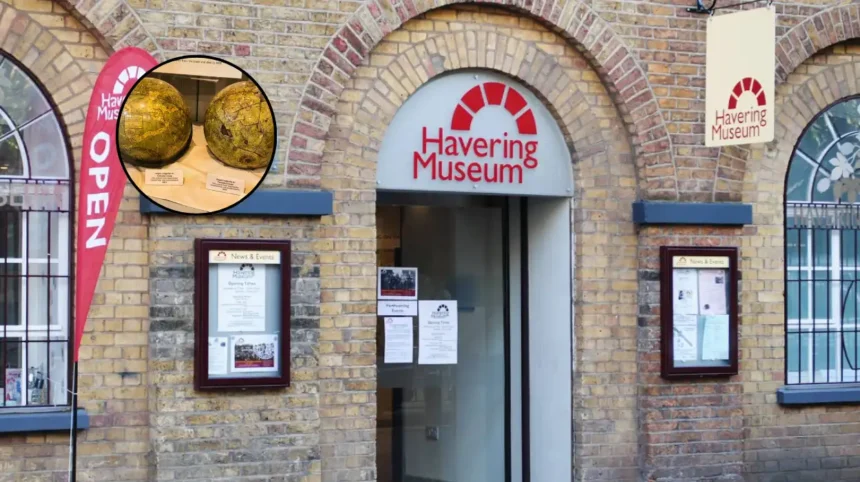
Other items attracting interest include historic globes and documents from Angel Lodge No. 51, along with a Sir Alf Ramsey apron display linked to one of Essex Freemasonry’s best-known members.
These exhibits are presented alongside broader material on the county’s Masonic tradition, giving the public a chance to see artefacts that connect local heritage with national and personal histories.
Who attended the opening?
The opening was attended by several figures connected to the exhibition and the local community. Alongside Paul Tarrant, Dave Taskis and Barry Mugglestone, the event brought together Museum volunteers, supporters and representatives from across Freemasonry.
The coverage also notes that members of the Honourable Fraternity of Ancient Freemasons and the Order of Women Freemasons were present, reflecting what organisers described as a shared celebration of values across different branches of Freemasonry. Their attendance was presented as part of a wider show of unity at the launch.
What did Paul Tarrant say?
Speaking at the opening, Paul Tarrant said the exhibition was both a celebration of 250 years of proud history within Essex Freemasonry and a reflection of the organisation’s role today. He described it as a modern, community-focused group built on friendship, integrity, charity and inclusion.
He also said it was important to recognise the charitable and community work continuing across Essex, while building a future rooted in openness, unity and service to local communities.
The remarks positioned the exhibition not only as a look back at the past, but also as a statement about the organisation’s current public role.
Why does the exhibition matter locally?
The exhibition matters because it places a long-standing county institution in a public setting where residents can see both its history and its charitable activity.
By hosting the display at Havering Museum, organisers have connected a local cultural venue with a wider county milestone, making the anniversary accessible to the public rather than keeping it inside Freemasonry itself.
The launch also highlights cooperation between a museum and a civic organisation, with both sides presenting the project as a shared effort.
That partnership gives the exhibition a local significance beyond Freemasonry, because it also reflects how heritage institutions can frame community identity through public displays and events.
How does the exhibition present Freemasonry today?
The exhibition does not focus only on the past. A specially produced video presentation shows the charitable work carried out by Essex Freemasons today, with references to support for benevolence, volunteering, youth initiatives and public engagement across the county.
That aspect of the display is important because it ties the anniversary to current activity rather than treating the milestone as a purely ceremonial occasion.
The organisers’ approach suggests they want visitors to understand Freemasonry as an active part of civic and charitable life in Essex, not only as a historical society.
What does the opening tell us about community links?
The attendance of museum staff, local civic figures and members from different Masonic orders suggests that the exhibition was designed as a public-facing event rather than a closed internal celebration.
The involvement of the Deputy Mayor of Havering also shows a connection between the exhibition and the borough’s civic life.
The original account places strong emphasis on unity across Freemasonry, particularly through the presence of both male and female Masonic groups.
That detail underlines the inclusive message organisers wanted to project, alongside the broader themes of shared tradition and public service.
Background on the development
Essex Freemasonry’s 250-year milestone provides the historical backdrop to the exhibition. The event at Havering Museum has been framed as part of a wider effort to mark that anniversary by showing how the organisation has developed over time and how it continues to contribute to the county.
The display combines historical artefacts, local stories and present-day charitable activity to create a fuller picture of the organisation’s role in Essex. In that sense, the exhibition is both commemorative and explanatory, offering visitors a way to understand the county’s Freemasonry in historical and contemporary terms.
Prediction for visitors and the community
For museum visitors, the exhibition is likely to deepen public awareness of Freemasonry’s place in Essex history and its continuing community work. It may also encourage interest from people who are not familiar with the organisation, particularly because the display includes well-known local and historical references such as Major David Nelson VC and Sir Alf Ramsey.
For the wider Havering community, the exhibition could strengthen the museum’s role as a venue for civic heritage and public education. It may also help Essex Freemasons present their work more openly to residents by linking tradition with charity, service and local engagement in a setting that is accessible to the public.