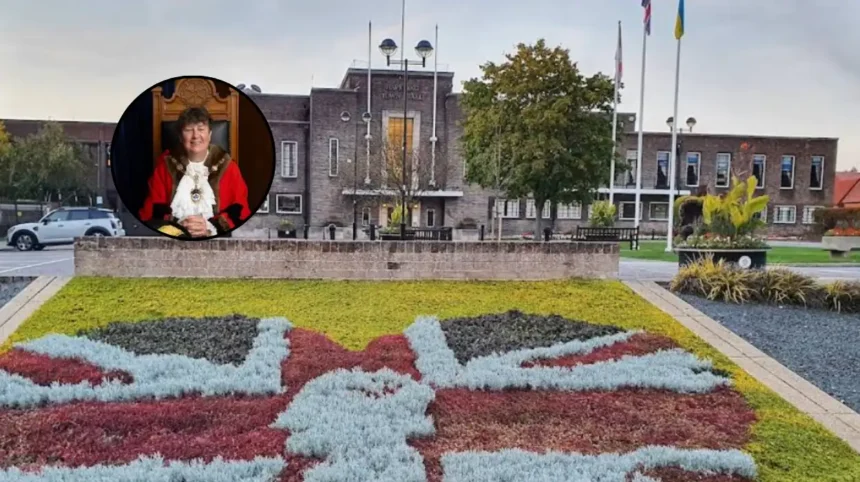
Key Points
- Councillor Sue Ospreay has been thanked publicly at the end of her year as Havering Mayor.
- The tribute describes her as a “people’s mayor” and says she brought energy, humour and enthusiasm to the role.
- During her year, she introduced “The Mayor’s Merit”, an award for people who made an outstanding contribution to the community.
- The tribute says she wore a bear badge linked to her phrase “bear good” across Havering.
- It says she supported charity and community events, including the Prince and Princess Ball and the Lord Mayor of London’s New Year’s Day Parade.
- The piece is written as a farewell message from people who worked with her during her mayoral year.
- The story provided is a tribute rather than a breaking news report, so the central facts are drawn from that text and journalism structure follows the inverted pyramid approach.
Havering (East London News) May 20, 2026 – Thank You Sue Ospreay The People’s Mayor Who Won Havering’s Heart is the message delivered as her mayoral year draws to a close, with the tribute presenting Councillor Sue Ospreay as a mayor who set out to serve the borough closely and energetically.
The original text says last year Havering chose a new Mayor and that Sue quickly became a visible and highly engaged figure across the area. It adds that those who worked with her expected a busy, lively and memorable year from the start.
The wording of the tribute repeatedly underlines that her style was personal, community-focused and hands-on rather than formal or distant.
As reported in the tribute itself, the writer says Sue vowed to be “The People’s Mayor” and, in their view, achieved that aim.
The piece describes her as one of the most loved mayors Havering has had, and says many people believe she has been the best.
That judgment is presented as an opinion within the tribute, so it should be read as the view of the author rather than an independently verified ranking. News writing principles call for clear attribution and the separation of fact from comment, especially where praise is subjective.
What did she do during the year?
The tribute says one of Sue Ospreay’s first initiatives was “The Mayor’s Merit”, an award she personally presented to people across Havering in recognition of their contribution to the community.
It says each award came with one of her bear badges, linked to her phrase that recipients had done “bear good” across Havering.
The text presents this as an example of how she used the mayoral role to recognise local effort directly and personally. It also frames the badge and the wording as part of her approachable style.
According to the tribute, she also supported a range of local activities and charitable work throughout the year. The text says she backed her MCA Trust charity alongside other organisations, schools and community groups.
It further states that she hosted a Prince and Princess Ball, which is described as an event the writer was proud to attend.
These details show the mayoralty being used as a platform for community visibility, fundraising and local recognition rather than ceremony alone.
How did she represent Havering publicly?
The tribute says one of the year’s highlights was Havering winning the Lord Mayor of London’s New Year’s Day Parade.
It adds that Sue did not remain quietly in the viewing stand with other mayors, but instead walked proudly alongside Havering’s floats dressed as Dick Whittington.
That detail is used to illustrate her willingness to take part directly in borough celebrations rather than simply observe them. The wording suggests that her public style matched the informal and energetic tone of the tribute.
The text also says she
“threw herself into everything with passion, humour and heart”.
It describes her as someone who joins in wholeheartedly wherever she goes and says she is one of the biggest-hearted people one could hope to meet. In journalistic terms, these are not neutral factual claims but strong character assessments from the author of the tribute. A careful rewrite should retain them as attributed praise rather than established fact, because balanced reporting depends on clear sourcing and accurate framing.
Why does the tribute matter locally?
The piece matters because it reflects how local civic roles are often judged not only by formal responsibilities but by visibility in the community.
The tribute suggests Sue Ospreay’s mayoralty was valued for its public engagement, recognition of volunteers and participation in borough events. It also implies that local people and community groups saw her as accessible and supportive.
For a borough mayor, that kind of relationship can matter as much as policy influence, because the role is often linked to civic morale and representation.
The text also shows how language can shape the tone of local reporting. Words such as “legend”, “amazing”, “incredible” and “truly fantastic” are celebratory and emotional rather than strictly factual.
In news writing, these phrases would normally be reduced or attributed to avoid editorialising. Journalism guidance is clear that news should place the important facts first, use direct attribution, and keep opinion separate from reporting.
What was said in the tribute?
The author writes that Sue
“has been one of the most incredible Mayors this borough has ever had”
and says many believe she has been the best. The tribute also says her shoes will be “enormous ones to fill”, which signals a sense of loss at the end of her term.
It adds that she is “genuinely loved across Havering”, again presenting a strongly positive assessment from the writer’s perspective. These lines are central to the tone of the original piece and should be understood as tribute language rather than hard news.
The author also says the year with Sue has been
“one of the best things to happen to this borough”
and ends by thanking her as the mayoral year nears its conclusion.
That closing sentiment indicates the piece is as much a farewell note as a report. In a standard news article, the same material would need tighter attribution, more context about the mayoral office, and clearer sourcing of each factual claim. News writing guidance emphasises verification, source attribution and the use of multiple perspectives where possible.
Background of the development
The background to this development is that the story is not a policy announcement or a dispute, but a public tribute marking the end of Sue Ospreay’s term as Havering Mayor.
The original text says she became mayor after Havering chose a new Mayor last year and then spent the year attending events, supporting charities and recognising local contributions.
It presents the mayoralty as a community-facing role, focused on visibility, ceremony and encouragement.
The tribute also shows how such civic posts can become closely associated with a person’s style and public identity.
In reporting terms, this is a feature-style farewell rather than a hard news breaking point. That means the main development is the conclusion of her mayoral year and the public acknowledgement of her work.
The background also explains why the piece leans so heavily on praise: it is written from the perspective of people who worked with her and wanted to thank her publicly.
Journalism standards still apply, though, so a neutral rewrite should keep the appreciative tone attributed to the writer and avoid presenting it as independent fact.
Prediction: how could this affect local audiences?
For residents, community groups and volunteers in Havering, this farewell could strengthen expectations that the next mayor will remain visible and engaged in local events.
If Sue Ospreay’s approach has been widely appreciated, people may look for similar levels of accessibility, recognition and participation from her successor. That can raise the bar for how the mayoral role is judged in public.
It may also encourage community organisations to continue seeking mayoral support for events, charity work and awards.
For audiences who followed her mayoral year, the tribute may reinforce a positive memory of the office and of local civic involvement. It could also influence how future mayoral terms are communicated, with more emphasis on public-facing activity and local recognition.
In practical terms, that means residents may pay closer attention to the next mayor’s attendance at community events and how actively they support local causes. Such expectations can shape the public image of the role long after the year has ended.