Key Points
- Students at New City College’s Tower Hamlets and Hackney campuses raised a total of £1,047.84.
- The fundraising efforts benefited global charities including Unicef, The Children’s Society, and Human Appeal.
- Participating learners are part of the English for Speakers of Other Languages (ESOL) programme.
- Activities included henna painting, pop-up sales, and charity presentations.
- The initiative was part of the “Headstart Project,” a partnership with the charity Family Action.
- The project combines employability training with social action and community engagement.
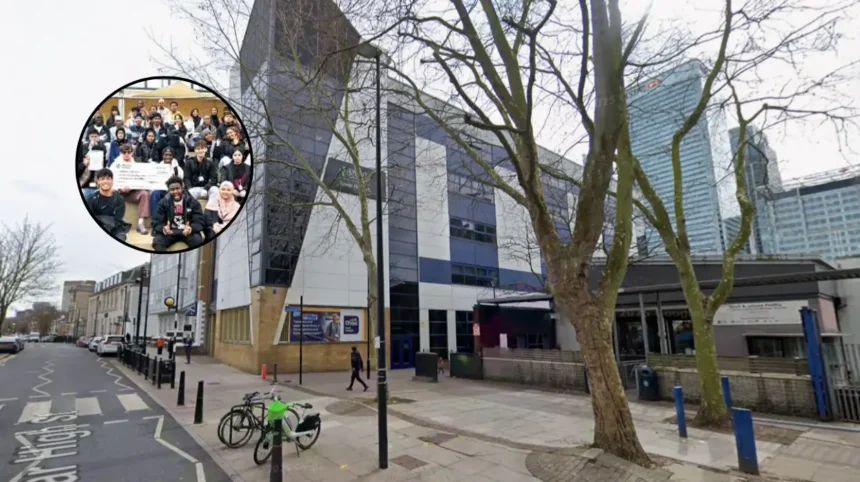
Tower Hamlets (East London Times) May 23, 2026 — Students from New City College have successfully raised more than £1,000 to support vulnerable children globally through a series of student-led community events. The learners, primarily from the Tower Hamlets and Hackney campuses, coordinated the fundraising drive as part of their involvement in the Headstart Project, an initiative designed to integrate language learning with practical life skills and philanthropy.
- Key Points
- How did New City College students raise funds for global charities?
- Which charities will benefit from the Headstart Project donations?
- What is the Headstart Project and how does it support ESOL learners?
- What did the students say about their experience with the charity drive?
- What role did Family Action play in the New City College fundraising?
- Background of the New City College and Family Action partnership
- Prediction: How will this development affect ESOL students and the local community?
How did New City College students raise funds for global charities?
The fundraising campaign saw a diverse range of activities across the two East London campuses. According to reports from New City College, students whose first language is not English (ESOL) took the lead in organising and executing the events.
These included traditional henna painting sessions, the application of temporary tattoos, and various pop-up sales featuring goods created or curated by the students themselves.
Beyond the physical stalls, the students engaged in advocacy by delivering classroom presentations. These presentations were designed to promote their chosen causes, detailing the specific hardships faced by children in conflict-affected areas and explaining the necessity of financial support. The final tally confirmed that the students raised a total of £1,047.84.
Which charities will benefit from the Headstart Project donations?
The funds have been allocated to three prominent organisations known for their work with children in crisis. As noted in the college’s official summary of the event, the beneficiaries include:
- Unicef: The United Nations agency responsible for providing humanitarian and developmental aid to children worldwide.
- The Children’s Society: A national charity working to support vulnerable children in England and Wales.
- Human Appeal: An international NGO that provides aid to those in need, particularly in regions struck by conflict and natural disasters.
The focus of the donations was specifically directed toward children residing in areas affected by war and social instability, reflecting the students’ commitment to international humanitarianism.
What is the Headstart Project and how does it support ESOL learners?
The Headstart Project is delivered in partnership with the charity Family Action. It is specifically tailored to support students enrolled in English for Speakers of Other Languages (ESOL) courses.
The curriculum of the project extends beyond classroom English, focusing heavily on workshops that build employability skills, confidence, and teamwork.
A core component of the programme is its social action element. By requiring students to organise charity events, the project encourages community engagement and helps students navigate the logistics of project management in a professional UK context.
What did the students say about their experience with the charity drive?
The personal impact of the project was highlighted by the participants themselves. In a statement released by New City College, student Maria Begum shared her perspective on the growth she experienced through the programme.
Begum stated:
“Headstart was a great experience. I had the chance to spend time with professionals and, most importantly, I had my first ever interview. I was very nervous, but that interview really built my confidence. Working with Headstart was wonderful and gave me so many amazing opportunities.”
Her testimony underscores the dual purpose of the initiative: providing vital funds for charity while simultaneously equipping immigrants and language learners with the confidence to enter the British workforce.
What role did Family Action play in the New City College fundraising?
As the primary partner in the Headstart Project, Family Action provided the framework for the students’ success. The charity focuses on providing practical, emotional, and financial support to families experiencing poverty, disadvantage, and social isolation across the country.
By partnering with New City College, Family Action helps bridge the gap between education and the labour market for students who may face barriers due to language or lack of local work experience.
The collaboration ensures that the “social action” part of the course—the fundraising—is not just an extracurricular activity but a structured learning experience that mimics the demands of professional environments.
Background of the New City College and Family Action partnership
New City College (NCC) is one of the largest further education providers in South East England, formed through a series of mergers involving Tower Hamlets College, Hackney Community College, and several others.
Its ESOL departments are among the most active in London, serving a diverse demographic of students from various international backgrounds.
The Headstart Project was conceived to address a specific challenge: while ESOL students often gain strong linguistic skills, they frequently lack the “soft skills” and “UK-specific experience” required by employers.
By partnering with Family Action, a charity founded in 1869, the college provides a platform where students can interact with corporate volunteers and professionals.
Historically, these programmes have shifted from purely vocational training to a more holistic approach that includes “Social Action.”
This model posits that by helping others (such as raising money for Unicef), students faster develop a sense of agency and belonging within their local community, which is a critical factor in long-term employment success for non-native speakers.
Prediction: How will this development affect ESOL students and the local community?
The success of this fundraising drive is likely to lead to an expansion of the Headstart Project model within New City College and potentially other London-based further education institutions.
For the students, the immediate effect is an enhanced CV and a proven track record of project management and community leadership.
As confidence is often the primary barrier for ESOL learners entering the job market, the successful execution of these events acts as a “proof of concept” for their own abilities.
For the local communities in Tower Hamlets and Hackney, these initiatives foster greater social cohesion. When students from diverse international backgrounds engage in visible, positive social action, it challenges stereotypes and reinforces the role of the college as a hub for community integration.
In the long term, we can predict that:
- Increased Corporate Interest: Local businesses in East London may be more inclined to offer internships or interview opportunities to NCC students, seeing the practical results of the Headstart workshops.
- Philanthropic Consistency: The success of raising over £1,000 will likely set a new benchmark for future cohorts, making charitable giving a permanent and expected pillar of the ESOL curriculum.
- Charitable Impact: While £1,047.84 is a modest sum in the context of global NGO budgets, for the specific projects within Unicef or Human Appeal, it represents tangible aid—such as emergency medical kits or educational supplies—for children in crisis zones, directly linked to the efforts of students in London.