Hackney is a London borough in East London, defined by its transition from a 19th-century industrial hub to a contemporary centre for creative industries, gastronomy, and green-space innovation (Davis, 2016). For weekend travellers, the area offers a high density of independent markets, historical landmarks, and canal-side developments that distinguish it from the commercial centres of Central London.
- What are the best historical landmarks to visit in Hackney?
- Which parks and green spaces are essential for a weekend itinerary?
- Where can travellers find the best local markets in Hackney?
- What makes Hackney Wick a unique destination for creative tourism?
- How does the food and drink scene reflect Hackney’s diversity?
- What are the practical transport links for a weekend visit?
What are the best historical landmarks to visit in Hackney?
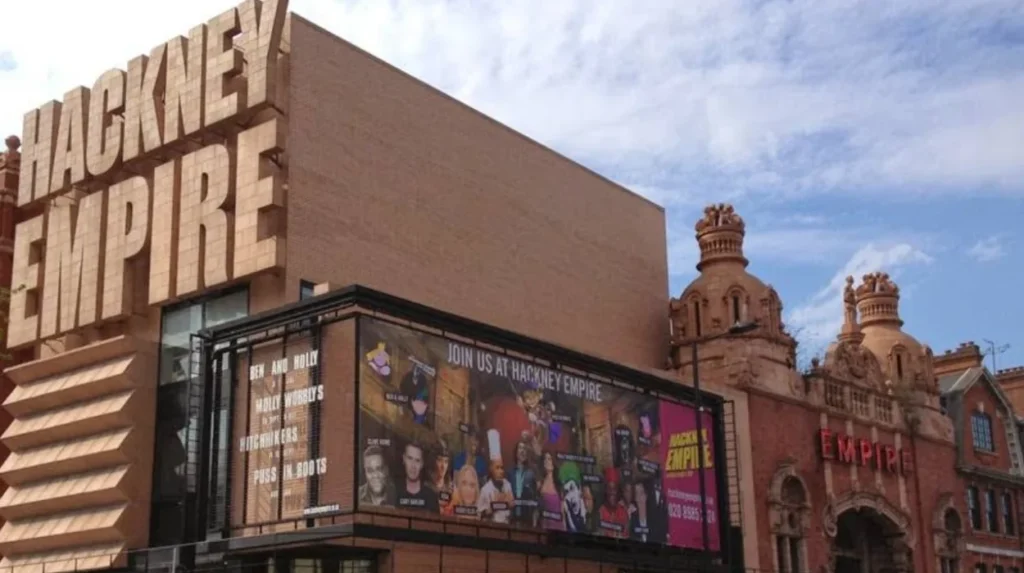
Hackney contains significant heritage sites including Sutton House, a 1535 Tudor manor, and the Hackney Empire, a Grade II listed Edwardian theatre built in 1901. These landmarks document the borough’s evolution from a rural retreat for nobility to an urban cultural powerhouse.*
The architectural landscape of Hackney is a physical record of London’s expansion. Sutton House, managed by the National Trust, stands as the oldest residential building in the East End, featuring original Tudor oak panelling and carved fireplaces. It provides a macro context of the area’s pre-industrial identity. In contrast, the Hackney Empire represents the Victorian and Edwardian leisure boom, having hosted legendary performers like Charlie Chaplin and Marie Lloyd.
Further east, the St. Augustine’s Tower remains the sole remnant of a 13th-century parish church, offering panoramic views of the modern skyline. These sites serve as essential anchors for tourists seeking to understand the socio-economic shifts that defined East London. As you explore the modern site, you are crossing land with a deep heritage. Read about the full [Historical Development of Hackney’s Built Environment] to understand its origins.
Which parks and green spaces are essential for a weekend itinerary?
Victoria Park, known as the “People’s Park,” and London Fields are the primary green spaces in Hackney. These areas provide 86 hectares and 12 hectares of recreational space respectively, featuring lidos, boating lakes, and historical decorative structures for public use.
Victoria Park was opened in 1845 following a petition to Queen Victoria to improve the health of the East End’s working class (Gray, n.d.). It contains the Burdett-Coutts Fountain and a Chinese Pagoda, reflecting 19th-century philanthropic efforts to bring high-standard landscape architecture to the masses. Today, it is a focal point for weekend leisure, hosting major festivals and a weekly Sunday food market.
London Fields is a vital subtopic for visitors interested in active leisure. It houses the London Fields Lido, a 50-metre Olympic-sized heated outdoor pool that remains open year-round. The park acts as a social hub, particularly on Saturdays when it serves as the primary thoroughfare for visitors heading to the adjacent Broadway Market. These spaces are critical for mitigating the density of the borough, which has a population density of 138.4 people per hectare (Whitten, 2022).
Where can travellers find the best local markets in Hackney?
Broadway Market and Columbia Road Flower Market are the two most prominent weekend markets in Hackney. Broadway Market operates on Saturdays, offering artisan food and crafts, while Columbia Road opens on Sundays, specialising exclusively in horticultural goods and plants.
Broadway Market dates back to the 1890s and serves as a historical link between the Regent’s Canal and London Fields. It features over 130 stalls including local cheesemakers, independent bookshops, and vintage clothing vendors. For tourists, it provides a direct experience of Hackney’s contemporary “maker economy,” where small-scale production is prioritised over mass-market retail.
Columbia Road Flower Market is a unique Sunday tradition. The narrow Victorian street transforms into a dense corridor of flower traders shouting “everything for a fiver” in traditional Cockney style. Beyond the flora, the surrounding 60 independent shops—including art galleries, pottery studios, and vintage perfumeries—offer a curated shopping experience. These markets are major economic drivers, drawing thousands of domestic and international visitors each weekend.
What makes Hackney Wick a unique destination for creative tourism?
Hackney Wick is a former industrial zone that now contains one of the highest concentrations of artist studios in Europe. It is a district defined by its “edgeland” status, sitting at the intersection of traditional industry and modern Olympic-led regeneration.
The area began its urbanisation in the 1860s, bordered by the River Lea and the Hackney Cut Navigation (Davis, 2016). It was the site of the world’s first synthetic plastic production (Parkesine) and dry-cleaning innovations. Following the deindustrialisation of the late 20th century, artists repurposed the vacant warehouses into collaborative spaces.
For the weekend traveller, Hackney Wick offers a distinct visual contrast to the rest of London. Key components include:
- Canal-side breweries: Such as Crate Brewery and Howling Hops.
- Art Complexes: Like MotherX and the Schwartz Wharf.
- Street Art: Large-scale murals that are updated frequently by local and international artists. The implication of its proximity to the Queen Elizabeth Olympic Park is a rapid transition toward high-end residential development, making its current “gritty” creative atmosphere a time-sensitive experience for tourists.
How does the food and drink scene reflect Hackney’s diversity?
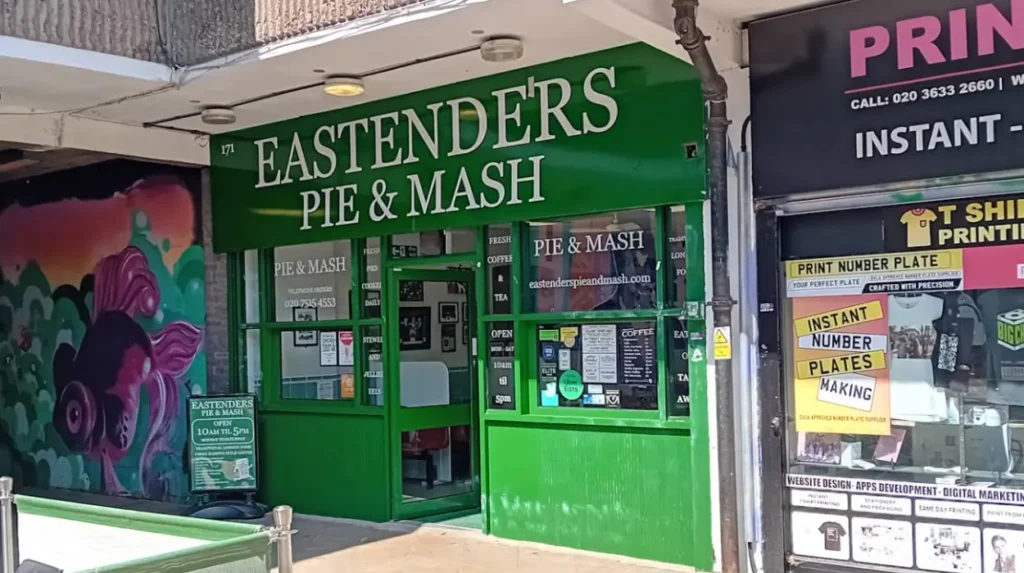
Hackney’s culinary landscape is a multi-layered ecosystem comprising traditional East End pie and mash shops, Vietnamese hubs on Kingsland Road, and Michelin-starred modern British restaurants. This variety reflects the borough’s history of global migration and gentrification.
Kingsland Road, often referred to as “Pho Mile,” contains a high density of Vietnamese establishments that settled in the 1970s and 80s. Restaurants like Song Que and Mien Tay are institutional examples of this cultural footprint. Conversely, the area around Mare Street and London Fields has become a testing ground for experimental gastronomy, with chefs focusing on hyper-local sourcing and fermentation.
Data suggests that the “creative economy” paradigm has swallowed up traditional cultural policy, leading to a hospitality sector that is now a primary driver of economic growth (Oakley & Ward, 2018). For the visitor, this means access to:
- Craft Coffee Roasteries: Climpson & Sons.
- Artisan Bakeries: E5 Bakehouse.
- Natural Wine Bars: P. Franco. This density of high-quality independent operators ensures that Hackney remains a premier destination for “food tourism,” where the experience is rooted in the specific geography and community of the borough.
What are the practical transport links for a weekend visit?
Hackney is primarily served by the London Overground, with key stations at Hackney Central, Hackney Wick, and London Fields. It lacks traditional Underground (Tube) lines, making the Overground and local bus networks the essential modes of transit.
The North London Railway (NLR) and Great Eastern Railway (GER) historically divided and bounded the area, a layout that persists in today’s transport map (Davis, 2016). Visitors typically arrive via the “Ginger Line” (Overground), which connects Hackney to Shoreditch in 5–10 minutes and Stratford in 10–15 minutes.
For a more scenic route, the Regent’s Canal provides a pedestrian and cycle path that links Hackney to Angel, Islington to the west, and Limehouse to the south. This “blue space” serves as a vital artery for tourists, allowing them to navigate between major hubs like Broadway Market and Victoria Park without using motorised transport.
What is Hackney known for in London?
Hackney is known for creative industries, street art, historic markets, canal-side neighbourhoods, independent cafés, and green spaces such as Victoria Park and London Fields. The borough is also recognised for its transformation from an industrial district into one of East London’s leading cultural hubs.