Key Points
- Havering Green Party Chair Mark Whiley accuses Reform Council Leader Keith Prince of removing the Pride flag to stoke a culture war rather than address financial crises .
- Whiley, an out gay man who grew up in Havering, describes the flag raising as a vital, low-cost acknowledgement of LGBTQ+ presence amid rising hate crimes .
- The Council Leader’s first cabinet decision targeted the annual Pride month flag ceremony, which occurs during a lunch break with minimal staffing costs .
- Whiley highlights specific challenges facing LGBTQ+ residents, including healthcare access, employment discrimination, homelessness, and issues for trans people using public facilities .
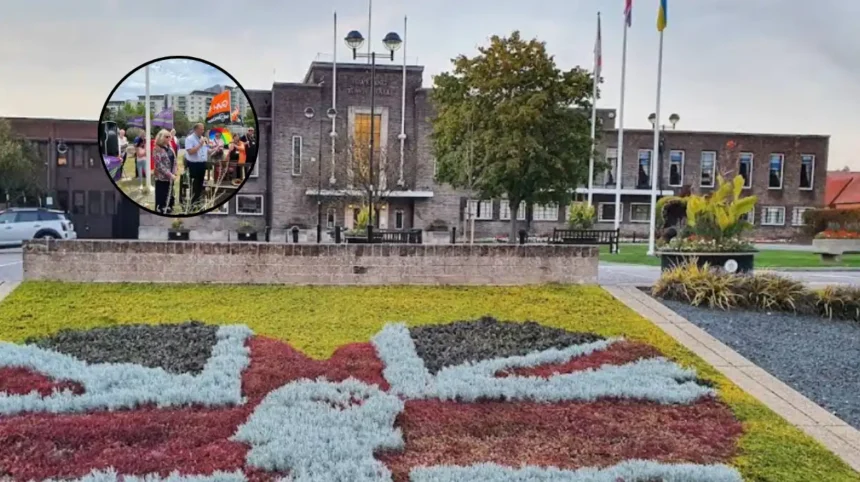
- The Green Party plans to join Havering UNISON and opposition groups for a visible support demonstration at Town Hall on Monday at 11:50 am .
- Whiley criticizes Reform for nearly doubling Member Champion roles while failing to grasp the borough’s严峻 financial realities .
- A new LGBTQ+ network is being launched to campaign for improved lives in Havering, with contact details provided for community involvement .
- Events and shopping opportunities for the LGBTQ+ community are scheduled for next Saturday at Mercury Mall .
Havering (East London Times) June 2, 2025 – Council Leader Keith Prince has made the controversial decision to取消 the raising of the Pride flag at Havering Town Hall for Pride month, a move that has sparked immediate condemnation from the opposition and accusations of political maneuvering. As reported by Mark Whiley, Chair of the Havering Green Party, in a statement released this week, the Council Leader’s first major cabinet decision targets the small, annual ceremony where the flag is hoisted during a lunch break . Whiley asserts that Prince, alongside the Council Chief Executive, holds direct responsibility for flag-raising decisions and has chosen to “pull down a flag” rather than pursue bold “Reform” or address the borough’s difficult financial realities .
- Why does Mark Whiley accuse Keith Prince of stoking a culture war?
- What are the actual costs and significance of the Pride flag raising ceremony?
- What specific challenges do LGBTQ+ residents face in Havering according to the Green Party?
- How is the Green Party and opposition responding to the flag removal?
- What is the background of the development regarding the Pride flag in Havering?
- How will this development affect the LGBTQ+ community and residents of Havering?
Why does Mark Whiley accuse Keith Prince of stoking a culture war?
According to Whiley, the removal of the flag is not a genuine act of “Reform” but rather an attempt to duck meaningful change. As reported by Mark Whiley of the Havering Green Party,
“Cllr. Prince isn’t going for bold ‘Reform’, or facing up to difficult realities, he’s pulling down a flag” .
Whiley argues that Prince is strategically stoking a culture war over Pride month to unite his fractured party, particularly while the Council Leader and the Reform MP are already “fighting over which county we should be part of” . The Green Party Chair suggests that this cultural distraction is necessary to prevent the Reform council group from falling apart as they fail to address the borough’s severe financial challenges .
Furthermore, Whiley points to Reform’s decision to almost double the number of Member Champion roles in the Council as part of a broader strategy. As noted by Whiley,
“It will play well with those that want this borough to be homogenous – straight, white, Christian and with the kinds of views that suggest men should not emote unless in anger” .
This perspective reflects the environment Whiley describes growing up in the borough, which he notes is ” unfortunately for some people, that will be changing” .
What are the actual costs and significance of the Pride flag raising ceremony?
Contrary to the implication that the flag raising is a wasteful expenditure, Whiley emphasizes that the event is a “cheap and easy acknowledgement” that costs the council very little. As stated by Whiley,
“This is not a costly affair, it’s held during a lunch break, once a year, with the Mayor, several people taking time off of work, and retired folk gathering under a pole for half an hour” .
He challenges anyone skeptical of these low costs to review an Freedom of Information (FOI) request he has submitted to the council, which is currently “in the post” .
The significance of the ceremony extends far beyond its minimal financial impact. For Whiley, an out gay man who grew up in Havering, the flag represents a critical visibility measure.
He recounts being subjected to “a lot of homophobic bullying through my teenage years here” and facing “verbally homophobically abused as recently as Election Day” . He notes that he has had “several incidents since I came back to Havering in 2024” . Consequently, he views the flag raising as a necessary acknowledgment that “LGBTQ+ people in Havering exist,” especially given the “rise in hate crime” and specific challenges the community faces .
What specific challenges do LGBTQ+ residents face in Havering according to the Green Party?
Whiley outlines a range of systemic issues affecting the LGBTQ+ community in the borough. As reported by Mark Whiley, the community faces
“numerous specific challenges we face relating to accessing healthcare, employment, homelessness” .
He emphasizes that these challenges are not felt uniformly; they are exacerbated for
“working class people, people of colour or those from faith backgrounds” .
The issues are particularly acute for trans and gender non-binary individuals. Whiley specifies that these groups face significant hurdles
“using public bathrooms, changing rooms, refuge services, sports and community groups and associations” .
Despite the minimal effort required for the flag raising, Whiley states,
“I believe the flag raising to be of minimum effort, and want more from you, not less” .
He argues that removing this symbol is a step backward when the community needs increased support and visibility.
How is the Green Party and opposition responding to the flag removal?
The opposition has organized a coordinated response to demonstrate visible support for the LGBTQ+ community. Whiley announced that
“Green Party members will be joining Havering UNISON, members of the opposition at the Town Hall, and other groups to show visible support for our community on Monday at 11:50am” .
This gathering aims to counteract the message sent by the flag removal and reaffirm the borough’s commitment to inclusivity.
Additionally, Whiley is promoting alternative avenues for community engagement and support. He highlighted that there are
“LGBTQ+ related events and shopping opportunities next Saturday at Mercury Mall” .
However, he is also calling for the formation of a more permanent structure to advocate for the community. Whiley urges residents to
“join me in a new LGBTQ+ network that campaigns to improve LGBTQ+ lives in Havering” .
He draws parallels to similar groups in Southend that are “working on improving gender affirming healthcare,” stating,
“We need to organise around our priorities in Havering” .
Residents interested in joining this new network can contact him directly at [email protected] .
What is the background of the development regarding the Pride flag in Havering?
The development centers on the first cabinet decisions made by Keith Prince following his appointment as the Reform Council Leader of Havering. Prince delivered his first speech on Wednesday, leading to hopes among opposition members and residents that his administration would prioritize the environmental crisis at Launders Lane, the borough’s financial challenges, or innovation in council services .
A positioning statement from Reform, which Whiley commented on the previous week, had suggested a direction toward these substantive issues .
Instead of addressing these critical areas, the administration’s first visible action was the decision to cancel the Pride flag raising. This decision was made by Cllr. Prince in conjunction with the Council Chief Executive, who share responsibility for flag-raising protocols .
The context of this decision is a borough facing “difficult realities” regarding finance and council services, which Whiley argues are being ignored in favor of a cultural distraction .
The personal background of the accuser, Mark Whiley, is central to the controversy. Whiley is the Chair of the Havering Green Party and an out gay man who grew up in the borough .
His personal history includes experiencing significant homophobic bullying during his teenage years in Havering and facing verbal abuse on Election Day and subsequent incidents after returning to the area in 2024 . This personal experience informs his view that the flag is a vital symbol of existence and safety for LGBTQ+ residents in a community where hate crime is rising .
The political context involves internal tensions within the Reform party. Whiley notes that the Council Leader and the Reform MP are already in conflict regarding the county affiliation of the borough .
The accusation is that the Pride flag issue is being used as a unifying cause for the party group, which is otherwise at risk of falling apart .
Additionally, the decision follows Reform’s move to nearly double the number of Member Champion roles, a move Whiley interprets as catering to a specific demographic that desires a “homogenous” borough .
How will this development affect the LGBTQ+ community and residents of Havering?
This development is likely to have significant psychological and social impacts on the LGBTQ+ community in Havering. For residents who already face rising hate crimes, the removal of the flag may be perceived as an official signal that their presence is not welcomed or valued by the council.
As Whiley stated, the flag is a “cheap and easy acknowledgement” that LGBTQ+ people exist . Removing it could exacerbate feelings of isolation and vulnerability, particularly for those already struggling with access to healthcare, employment, and housing .
The impact will be disproportionately felt by marginalized subgroups within the LGBTQ+ community. Whiley highlighted that working-class people, people of colour, and those from faith backgrounds face intensified versions of the challenges already present .
Trans and gender non-binary individuals, who already struggle with accessing public bathrooms, changing rooms, and refuge services, may find their access to support further eroded if the council signals a retreat from inclusive practices . The removal of the flag could embolden those who hold the “homogenous” views Whiley described, potentially leading to an increase in the homophobic bullying and abuse he has personally experienced .
For the broader population of Havering, this development may deepen social divisions. The accusation that the council is stoking a “culture war” suggests that the decision is polarizing the community along ideological lines .
Residents who value inclusivity may feel alienated by an administration that prioritizes cultural symbolism removal over financial prudence and service innovation. Conversely, those who support the “homogenous” vision described by Whiley may view the decision as a positive step, potentially creating friction within the community .