Key Points
- Enforcement Action: Waltham Forest Council has issued a formal planning enforcement notice against the Confucius and Tao Association (CTA), ordering the immediate cessation of the site’s use as a place of worship, community centre, and ancillary café.
- Planning History: The CTA purchased the Lord Brooke pub on Shernhall Street in 2014 but was formally refused planning permission for a religious conversion in early 2015.
- Unauthorised Conversion: Despite the council’s initial rejection, the charity allegedly proceeded with the conversion. The exact timeline of when religious operations commenced remains unclear.
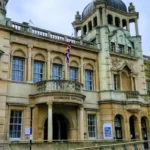
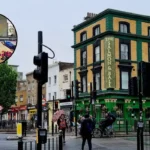
- Site Features: The building operates without formal external temple signage, displaying only branding for the associated Lotus Bloom Café, while retaining historic architectural elements of the original pub.
- Official Appeals: The CTA has officially lodged an appeal with the national Planning Inspectorate, which has effectively suspended the enforcement notice pending a final government decision.
- Historical Context: Prior to its closure, the Met Police had branded the Lord Brooke a “drug haven” due to extensive illicit substance activity on the premises.
Walthamstow (East London Times) April 2026 – An unlicensed Buddhist temple operating inside a former public house in East London has been ordered to shut down after local authority officials intervened over severe breaches of municipal planning laws. Waltham Forest Council has served a comprehensive enforcement notice to the property owners, the Confucius and Tao Association (CTA), demanding they immediately stop using the historic Lord Brooke premises on Shernhall Street as a religious and community hub. The executive action comes more than a decade after the charity first purchased the building and subsequently failed to secure legal permission to transform the neighborhood asset into a house of voluntary worship.
- Key Points
- Why Has Waltham Forest Council Ordered the Closure of the Shernhall Street Temple?
- How Did the Confucius and Tao Association Respond to the Enforcement Notice?
- What Was the Original Intention Behind the Temple Conversion?
- Background of the Lord Brooke Development
- Prediction: How This Development Can Affect Local Residents and Community Groups
- For the Confucius and Tao Association and Faith Groups
Why Has Waltham Forest Council Ordered the Closure of the Shernhall Street Temple?
As reported by Local Democracy Reporter Sebastian Mann of the Waltham Forest Echo and the Guardian Series, the local authority issued the planning enforcement notice in late April after confirming that the building was actively being used outside its permitted legal framework. The enforcement notice explicitly mandates that the charity must halt the
“unauthorised use of the land and buildings as a place of worship, associated community centre, and ancillary café”.
Furthermore, town hall officials have instructed the organisation to cease “all gatherings, events and educational classes” held on the premises.
The scope of the council order extends beyond operational shutdowns; the CTA is required to remove “all fixtures and fittings” associated with the temple installation. Once the interior stripping is completed, the owners are legally obligated to clear all resulting debris and waste from the location.
According to an official statement provided by a Waltham Forest Council spokesperson:
“Planning laws are designed to control the development and use of buildings to benefit the public. We enforce these regulations to maintain and enhance the unique character of our town centres and neighbourhoods as well as to protect the integrity of the planning system.”
The municipal representative further confirmed the exact timeline of the legal service, stating that the council served the enforcement notice at 47 Shernhall Street on Thursday, 30th April after identifying a distinct breach of planning control regarding the building’s usage.
However, the local authority noted that the legal mechanism is temporarily on hold, adding that they are aware an appeal has been lodged with the Planning Inspectorate and as such the notice is currently suspended until they have come to a decision.
Explore More Waltham Forest Council News
Waltham Forest Greens Reveal Rotating Leadership Model for New Council: Waltham Forest 2026
Green Party Wins Waltham Forest Council Control — Waltham Forest 2026
How Did the Confucius and Tao Association Respond to the Enforcement Notice?
The Confucius and Tao Association has chosen to contest the local authority’s heavy-handed shutdown order by escalating the matter to central government adjudicators.
The charity has submitted a formal appeal to the Planning Inspectorate, a national executive body responsible for arbitrating structural disputes, planning system disagreements, and local council decisions across England and Wales.
Because the appeal was submitted within the statutory window, the stringent demands of the council’s enforcement notice—including the removal of internal religious fixtures—remain legally frozen.
The Planning Inspectorate, which processes applications ranging from minor residential home extensions to massive utility infrastructures and multi-thousand-home developments, will conduct an independent review to determine whether the council’s refusal aligns with national planning policy frameworks.
The exact date when the venue secretly transformed into an active place of worship remains unverified by local planning inspectors.
Structurally, the property retains an ambiguous identity. There is no official external signage indicating that a Buddhist temple or Taoist seminar space exists inside the building. Instead, the exterior displays prominent signs for the “Lotus Bloom Café,” an ancillary food and drink operation run by the association.
Observers note that several historic architectural remnants and external features of the original Lord Brooke public house remain clearly visible on-site, over ten years after the establishment served its final pint.
What Was the Original Intention Behind the Temple Conversion?
The ideological foundations of the Shernhall Street acquisition dates back to 2014, when the charity acquired the freehold of the shuttered commercial building.
According to historical media coverage from the Guardian Series detailing the initial municipal meetings, the overarching purpose of the site was to establish a dedicated community anchor focused on promoting the core spiritual and philosophical teachings of Buddhism, Confucianism, and the Great Tao.
The charity’s vision extended into local social work. According to archived planning submissions from 2015, the organisers designed the venue to host public seminars, educational workshops, and outreach programmes aimed directly at tackling regional poverty and reducing localized racial tensions within the ethnically diverse borough of Waltham Forest.
During the original 2015 planning committee hearings, contemporary journalistic records indicate that the emotional weight of the project was profound, with press accounts documenting that the principal Buddhist leader was brought to tears during public discussions regarding the prospective failure to transform what was once a highly problematic local premises into a peaceful sanctuary for local worshipers.
Despite the charitable objectives outlined by the CTA, the borough’s planning committee rejected the change-of-use application in early 2015. The elected committee members argued that the preservation of the commercial footprint was paramount, ruling that the continued use of the building as a public house constituted a
“valued part of the social infrastructure of the area”.
Despite that definitive town hall rejection, subsequent evidence gathered by enforcement teams indicates that the CTA went ahead with their conversion layout regardless of the legal barriers.
Background of the Lord Brooke Development
The long-running battle over 47 Shernhall Street is deeply rooted in the historical decline of traditional British drinking establishments and the changing demographics of East London.
Long before the Confucius and Tao Association entered the picture, the Lord Brooke was a prominent community fixture that suffered a severe operational descent. In 2014, the public house was officially shuttered following intense pressure from law enforcement authorities.
The Metropolitan Police Service had formally branded the establishment a “drug haven” during licensing reviews in 2014. Police interventions occurred after plainclothes operations and forensic sweeps revealed widespread evidence of Class A and Class B drug consumption and distribution throughout the public areas and facilities of the venue.
The structural degradation and criminal activity led to the immediate cancellation of its alcohol license and the subsequent boarding up of the premises.
When the CTA purchased the building later that year, the acquisition was initially framed as an idealistic community rescue mission that would replace a hub of anti-social behaviour with a quiet center for reflection and education.
However, the project immediately collided with Waltham Forest Council’s strict asset-protection policies. Under UK planning laws, public houses are frequently designated as “Assets of Community Value” or protected under local plans to prevent the permanent loss of communal, non-religious gathering spaces. The council’s 2015 rejection was based entirely on this planning doctrine, creating a decade-long stalemate where the charity chose to operate sub rosa rather than abandon their real estate investment.
Prediction: How This Development Can Affect Local Residents and Community Groups
The ultimate resolution of the appeal lodged with the Planning Inspectorate will significantly alter the social fabric and property dynamics for residents living in the immediate vicinity of Shernhall Street, as well as the broader faith communities within Waltham Forest.
For Local Residents and Neighbours
If the Planning Inspectorate upholds the council’s enforcement notice, the surrounding neighborhood will experience a permanent cessation of the religious gatherings and community classes that have quietly drawn visitors to the street for years.
The immediate outcome will likely mean a reduction in localized pedestrian traffic and parked vehicles during peak weekend seminar hours.
However, residents may also face a prolonged period where 47 Shernhall Street sits entirely vacant. Because the council is highly protective of the site’s historical classification as a social hub, they are unlikely to approve standard residential flat conversions easily.
This leaves neighbours facing the prospect of a derelict commercial eyesore unless an independent operator steps forward to buy and restore the building as a fully functioning commercial public house or restaurant—an economically challenging venture in the current hospitality climate.
For the Confucius and Tao Association and Faith Groups
Should the national inspectorate rule in favour of the local council, the CTA will lose its primary regional base, forcing its congregation to seek alternative, legally compliant premises elsewhere in London.
This outcome would require significant capital expenditure to strip the current location of its religious altars, fixtures, and interior fittings.
Conversely, if the central government body rules in favour of the charity and overturns Waltham Forest’s enforcement ban, it will establish a major planning precedent within the borough.
Such a victory would legally legitimize the temple’s long-term presence, paving the way for the installation of formal religious iconography, external signage, and the potential expansion of the Lotus Bloom Café into a larger commercial enterprise. This would provide the borough’s Buddhist and Taoist adherents with a permanent, legally secure sanctuary, though it would mark the absolute end of the site’s history as a secular community pub.