Key Points
- Event Milestone: The Queer Migrant Pride Fest is returning for its fourth consecutive year, bridging celebrations for both Refugee Week and Pride Month in June 2026.
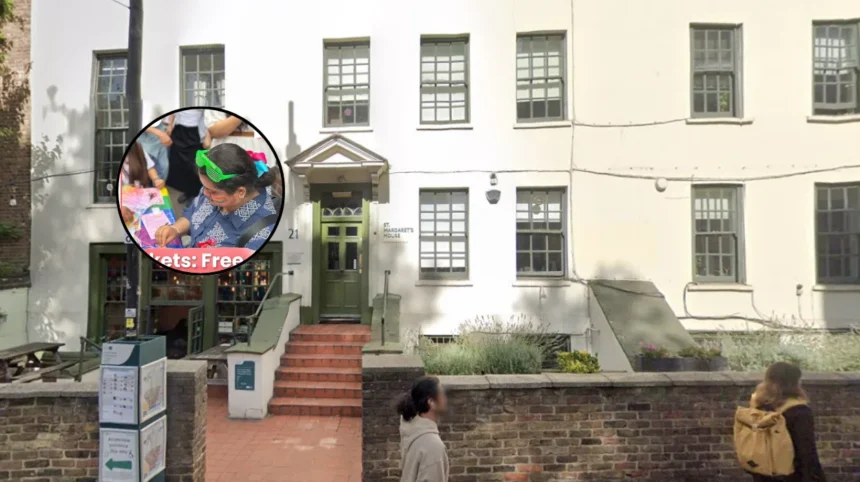
- Organiser and Venue: The free daytime festival is organised by the Ice & Fire Theatre Company and will be hosted at St Margaret’s House in Bethnal Green, East London.
- Core Focus Areas: The festival splits its programming between holistic wellbeing activities, self-expression workshops, practical legal and immigration advice, and evening cultural performances.
- Support Services: Dedicated community stalls from various LGBTQI+ activist groups, support services, and community networks will operate throughout the day alongside a bespoke “Beauty Beyond Borders” salon.
- Political Context: Organisers explicitly state the event aims to counter the injustices of the UK’s “hostile environment” policies by offering support sessions for individuals navigating the asylum and immigration systems.
Bethnal Green (East London Times) June 15, 2026 — An annual celebration fusing the intersection of refugee rights and LGBTQI+ identity is set to return to East London this June. As announced by the organising team at the Ice & Fire Theatre Company, the fourth annual Queer Migrant Pride Fest will take over St Margaret’s House in Bethnal Green. The free, daytime-into-evening festival is timed to coincide simultaneously with the national observations of Refugee Week and global Pride Month. According to promotional materials published by Ice & Fire Theatre Company, the event is designed as an inclusive space structured around a “world without borders” ethos, explicitly opening its doors to the wider public with the declaration that “everyone is welcome”.
- Key Points
- What activities and wellbeing services are scheduled for the daytime festival?
- What practical immigration advice and support will be available to attendees?
- How will the evening food and entertainment segments be structured?
- Background of the Particular Development
- Prediction: How This Development Affects LGBTQI+ Asylum Seekers and the Local Community
The festival functions as a multi-disciplinary hub, blending arts, mental and physical health initiatives, and direct grassroots political action. Organisers have established a digital footprint for the 2026 iteration, directing attendees to the official Queer Migrant Pride Fest Instagram account for ongoing rolling announcements regarding individual performers, workshop facilitators, and community stall participants.
What activities and wellbeing services are scheduled for the daytime festival?
The daytime itinerary for the Queer Migrant Pride Fest places a distinct structural focus on holistic health, personal care, and therapeutic recreation. Representatives writing for the St Margaret’s House event programming board state that the festival centres on “wellbeing and taking care of each other.”
To facilitate this, the physical spaces within St Margaret’s House will be transformed to host active physical workouts, specialised self-defence classes, professional massage therapies, yoga sessions, and guided meditation circles.
In addition to physical wellness, the festival features a dedicated pop-up grooming and styling space. As detailed in the official event itinerary provided by Ice & Fire Theatre Company, the “Beauty Beyond Borders” salon will offer complimentary haircuts and make-up styling sessions.
Organisers note that this specific initiative is intended
“to ensure everyone feels like their most fabulous self,”
addressing barriers to self-care often experienced by displaced individuals and asylum seekers. Alongside these physical therapies, sessions dedicated to creative self-expression will run concurrently, including structured creative writing groups and hands-on arts and crafts workshops.
What practical immigration advice and support will be available to attendees?
Beyond cultural and wellbeing programming, the festival integrates a framework of practical legal and civic support designed to assist individuals navigating the complexities of British administrative systems. Documentation from the Ice & Fire Theatre Company confirms that the festival will host formal workshops and direct immigration advice sessions.
These resources are explicitly tailored for individuals currently undergoing processing within the UK asylum and immigration systems.
Furthermore, the operational scope of these workshops extends to allies and community advocates. The event coordinators state that the educational sessions are also designed
“for people who want to know how to support friends and challenge the injustices of the hostile environment.”
To augment this practical assistance, the main concourse of St Margaret’s House will feature dedicated information stalls operated by a network of LGBTQI+ community organisations, professional support networks, and active legal services.
How will the evening food and entertainment segments be structured?
The transition from daytime workshops to evening festivities centers on community solidarity, mutual aid, and performance art.
According to the event brief released by St Margaret’s House, a central component of the hospitality infrastructure involves food security, ensuring that “everyone will be well-fed with delicious lunch and snacks throughout the day” at no cost to the attendees.
As the festival moves into the evening hours, the programming shifts toward cultural exhibition and entertainment, with an explicit focus on highlighting “queer migrant siblings.”
The evening entertainment lineup features a diverse array of performance mediums, including coordinated dancing, vogueing showcases, independent film screenings, stand-up comedy routines, and live theatre snippets produced by the host company. Organisers describe the intended atmosphere of the closing segments as “a day of joy, pride and camp fabulousness,” explicitly framed as a psychological respite where attendees can temporarily “forget about what’s going on outside.”
Background of the Particular Development
To understand the development of the Queer Migrant Pride Fest, it is necessary to examine the intersecting histories of its host organisation, the venue, and the broader political landscape governing migration in the United Kingdom. The festival is a direct production of the Ice & Fire Theatre Company, a registered charity founded in 2003 by playwright Sonja Linden.
The company specializes in creating theatre derived from real-life testimonies, focusing specifically on human rights violations, exile, and the asylum seeker experience in Britain. Over the past two decades, Ice & Fire has developed a distinct methodology of deploying performance art as a tool for political advocacy, often collaborating with human rights NGOs to give a platform to marginalized voices.
The choice of venue, St Margaret’s House, carries significant historical weight within the context of East London’s social justice movements.
Established in the late 19th century as part of the settlement movement, St Margaret’s House has operated in Bethnal Green for over 130 years as a community hub dedicated to supporting local well-being, social enterprise, and community cohesion.
Today, it functions as an umbrella space for charities, artists, and community groups, making it a natural institutional partner for an event that intersects public arts with social support.
The specific genesis of the Queer Migrant Pride Fest in the early 2020s was a response to the compounding pressures faced by LGBTQI+ asylum seekers in the UK. Historically, individuals fleeing persecution based on sexual orientation or gender identity face unique institutional hurdles within the UK asylum framework, frequently encountering high thresholds of proof regarding their identity during Home Office interviews.
Furthermore, the event was established during the height of the UK Government’s “Hostile Environment” policy framework—a set of administrative and legislative measures first introduced in 2012 designed to make staying in the UK as difficult as possible for undocumented migrants.
The intersection of strict immigration enforcement with the distinct vulnerabilities of the queer migrant population created a documented gap in holistic support services. By pairing practical immigration workshops with cultural pride celebrations, Ice & Fire and St Margaret’s House established this festival to serve as both a defensive legal resource and an affirmative community-building space.
Prediction: How This Development Affects LGBTQI+ Asylum Seekers and the Local Community
The continuation of the Queer Migrant Pride Fest into its fourth year signals a consolidation of grassroots support infrastructure that will directly influence both the queer migrant population in London and the local civic landscape. For LGBTQI+ asylum seekers and refugees, the immediate effect of this festival is the reduction of social isolation and the acceleration of legal literacy.
Navigating the asylum system under restrictive immigration policies often forces individuals into a state of prolonged administrative limbo, which severely impacts mental health.
By providing free access to legal advice alongside mental health resources like yoga, meditation, and mutual aid networks, the festival creates an accessible entry point for migrants to secure legitimate representation and psychological coping mechanisms. This localized intervention is likely to result in improved case awareness and enhanced emotional resilience among the attendees currently facing deportation or status evaluation.
On a broader community level, the festival acts as a mechanism for localized social integration. By placing the event within a historic community centre like St Margaret’s House and opening it to the general public, it fosters direct interaction between the resident population of Bethnal Green and displaced demographics. This proximity helps dismantle xenophobic or homophobic biases by humanizing the migrant experience through shared spaces, art, and food.
However, the overt political framing of the event—specifically its stated goal to “challenge the injustices of the hostile environment”—means the development will also continue to act as a point of friction. As the festival grows in prominence, it serves as a highly visible counter-narrative to state-level immigration policies. This visibility can draw increased scrutiny from nationalist or anti-immigration political factions, potentially increasing security requirements for the venue in future years.
Conversely, for the voluntary sector and human rights advocacy groups, the successful execution of this fourth festival provides a repeatable blueprint for how arts organizations can effectively integrate structural legal aid into cultural programming, likely inspiring similar cross-sector collaborations across other metropolitan boroughs in the UK.