Key Points
- Barking and Dagenham Council has secured £100,000 in funding from the Mayor of London’s Summer Streets fund to revitalise Short Blue Place.
- The street will be converted into an al fresco food destination featuring six semi-permanent, shipping container-style food stalls situated near East Street.
- The regeneration initiative includes a dedicated programme of family-friendly cultural performances, live music, and theatre running from July 2026 until January 2027.
- Artsdepot will curate the entertainment pipeline, collaborating with prominent creative organisations including the Talawa Theatre Company, Sonia Sabri Company, and Emergency Exit Arts.
- The grant is part of a wider £500,000 package distributed across 15 London projects by City Hall, coinciding with the launch of the Mayor’s new strategic licensing powers aimed at boosting the evening economy.
Barking (East London Times) July 3, 2026 – Blue Place in Barking town centre will be converted into a new street food market and cultural entertainment hub after Barking and Dagenham Council secured a £100,000 grant from the Greater London Authority, London Now and the Local Democracy Reporting Service confirmed on July 3, 2026. The capital injection, drawn from the Mayor of London’s £500,000 Summer Streets fund, will finance the installation of six semi-permanent infrastructure stalls and fund an extensive schedule of outdoor theatre, live music, and family-oriented programming. Running from July 2026 through to January 2027, the regeneration project seeks to stimulate the borough’s evening economy, expand footfall for existing metropolitan centre businesses, and offer a dedicated commercial platform for local independent culinary entrepreneurs.
- Key Points
- How Will the Short Blue Place Street Food Transformation Be Delivered?
- What Cultural Events and Performances Are Scheduled for the Venue?
- How Do London and Local Council Leaders View the Development?
- How Does the Barking Initiative Fit Into the Wider London Summer Streets Scheme?
- Background of the Short Blue Place Development
- Prediction: How This Development Can Affect Local Entrepreneurs and Residents
How Will the Short Blue Place Street Food Transformation Be Delivered?
As reported by Nick Clark, a Local Democracy Reporter for the Barking and Dagenham Star, municipal authorities plan to use the £100,000 to construct the physical framework necessary for a permanent outdoor dining presence.
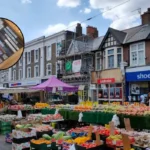
The local authority confirmed it will install six “shipping container-style food stalls” at Short Blue Place, positioned adjacent to the existing McDonald’s restaurant on East Street.
The site will feature an outdoor communal seating area designed to encourage pedestrian lingering and facilitate al fresco dining in the heart of the district.
While an exact operational launch date remains unconfirmed, council representatives told the Local Democracy Reporting Service that internal teams are currently drafting the formal framework through which independent vendors can apply for tenancies. A municipal spokesperson emphasized that selection procedures will maintain
“a strong focus on supporting businesses with a connection to Barking and Dagenham,”
ensuring that the culinary options directly reflect the cultural diversity and heritage of the local population.
What Cultural Events and Performances Are Scheduled for the Venue?
According to official program guidelines published by the Greater London Authority, the transformation will extend beyond gastronomy into an active arts destination. The cultural pipeline will be curated by Artsdepot—the organization recently appointed by council leadership to oversee operations at the nearby Broadway Theatre.
The strategic overview details that the family-friendly artistic schedule will showcase established national touring bodies alongside neighborhood groups.
As outlined in the City Hall project brief, specific programming partners include the Talawa Theatre Company, the Sonia Sabri Company, and Emergency Exit Arts.
The initiative is intended to build “moments of shared spectacle” while simultaneously providing performance opportunities for local grassroots artists, youth organisations, and community groups based within the borough.
How Do London and Local Council Leaders View the Development?
The project has drawn strong support from both municipal and regional political leaders, who view the infrastructure spending as a tool for long-term economic resilience.
As reported by Izzy Lepone of LocalGov, Councillor Dominic Twomey, Leader of Barking and Dagenham Council, expressed political satisfaction with the selection:
“We are delighted to be part of the Mayor of London’s Summer Streets programme and the opportunities it will bring to Barking town centre, particularly Short Blue Place. This investment will help us create a more vibrant and welcoming food destination for residents and visitors, supporting local businesses while encouraging more people to spend time in the heart of our borough. By enhancing our market offer, creating attractive spaces for people to gather and enjoy themselves, and extending activities into the evening, it will help build a town centre that is lively, inclusive and thriving. Barking has a proud history as a market town, and this project will help us build on that heritage by supporting local entrepreneurs, boosting footfall and creating a stronger evening economy.”
Adding to this sentiment, Councillor Rubina Siddiqui, the Cabinet Member for Inclusive Economy and Skills, stated in a public press briefing issued by the London Borough of Barking and Dagenham:
“This is another example of how, in Barking and Dagenham, it starts here. This funding will help create a more vibrant Barking Town Centre by supporting local businesses, giving residents even more great food options, and creating a welcoming destination where people can come together. We’re committed to strengthening our food economy and bringing more cultural events into the town centre, making it an even better place to live, work and visit.”
From a regional perspective, the Mayor of London, Sadiq Khan, framed the Barking development as part of a wider strategic push to alter how public spaces utilize al fresco layouts. In statements recorded by the Institute of Licensing, Khan remarked:
“I’m delighted that we’re working with boroughs and local businesses to bring al fresco dining, live music, events and later opening hours to streets across our capital. From Woolwich to Willesden Green, Finsbury Park to Feltham, and right in the heart of the capital in Waterloo, this investment will create new outdoor spaces, support local businesses and give Londoners and visitors even more reasons to get out and enjoy our city. By making it easier to extend opening hours and expand what’s on offer, I’m determined to support our hospitality and nightlife, as we build a better London for everyone.”
Furthermore, London’s Deputy Mayor for Culture and Creative Industries, Justine Simons, added that
“London’s incredible culture and creativity can bring out the very best in our high streets and public spaces,”
noting that the micro-grants give administrative teams the immediate tools to test modern operational hours.
How Does the Barking Initiative Fit Into the Wider London Summer Streets Scheme?
Data released by City Hall indicates that Barking and Dagenham is one of only four London authorities selected to receive a maximum “Large Al Fresco” grant of £100,000.
The alternative top-tier beneficiaries include the London Borough of Brent (for transformations across Wembley High Road, Ealing Road, and Kingsbury), the Royal Borough of Greenwich (for Woolwich Summer Lates at General Gordon Square), and the London Borough of Lambeth (for Saturday road closures at Lower Marsh in Waterloo).
The remaining balance of the £500,000 central pot has been split into eleven smaller “pocket” allocations of up to £10,000 each.
These micro-grants have been distributed to Camden, Ealing, Haringey, Hounslow, Islington, Lewisham, Newham, Sutton, and Waltham Forest to fund localized night markets, pop-up DJ sessions, and temporary parklets built over redundant parking bays.
Industry representatives have welcomed the coordinated rollout. As noted by industry analyst reports, Kate Nicholls, the Chair of trade body UKHospitality, stated it was
“fantastic to see so many London boroughs taking advantage of the Mayor’s Summer Streets fund”
to actively insulate commercial districts from shifting consumer habits.
Background of the Short Blue Place Development
The transformation of Short Blue Place builds upon Barking’s historical identity as a prominent Essex fishing and market hub, adapting that heritage to meet modern urban demands.
Over the last decade, high streets across Greater London have faced significant economic pressures due to rising digital retail trends and changing workplace patterns.
In response, local authorities have increasingly transitioned town centres away from traditional retail-dominated layouts toward experience-led economies focused on food, beverage, and collective leisure.
The funding delivery intersects directly with a major legislative shift in municipal governance. The return of the Summer Streets fund occurs alongside the formal activation of the Mayor of London’s new strategic licensing powers.
These new regulatory capabilities provide City Hall with a direct, statutory voice in licensing policy, intentionally designed to assist local businesses in extending evening trading hours and simplifying the process for establishing outdoor seating.
The installation of fixed shipping container units in Barking represents an infrastructure-first approach to pedestrianisation, testing whether semi-permanent commercial food hubs can effectively curb vacancies and stabilize footfall outside of standard daylight hours.
Prediction: How This Development Can Affect Local Entrepreneurs and Residents
The introduction of the Short Blue Place street food market is highly likely to alter the economic and social habits of two primary groups: local independent entrepreneurs and neighborhood residents.
For the borough’s independent culinary entrepreneurs, the provision of six dedicated shipping container kiosks offers a low-risk commercial testing ground.
Traditional brick-and-mortar commercial leases in Greater London frequently require prohibitive upfront capital and multi-year commitments, which systematically exclude early-stage businesses.
By establishing managed, plug-and-play stalls with shared seating infrastructure, the council creates an accessible incubator pipeline. Successful micro-vendors will be able to build brand equity, refine menus, and establish operational capital, potentially leading to future permanent tenancies within vacant high street lots.
Conversely, existing nearby standard fast-food and conventional restaurant operators may experience heightened localized competition for lunchtime and early-evening trade, forcing an upgrade in their own service models or promotional strategies.
For local residents and families, the project will directly alter the spatial utility of Barking town centre during the evening. Historically, the area immediately surrounding East Street has lacked diverse evening leisure spaces that do not revolve exclusively around traditional drinking establishments.
The inclusion of Artsdepot-curated theatrical and musical performances alongside casual dining options introduces a structured, family-friendly environment.
This expansion of the evening economy is predicted to increase pedestrian footfall between 18:00 and 21:00, improving natural street surveillance and potentially lowering anti-social behavior anxieties through increased community activation.