Key Points
- Havering Green Party Chair Mark Whiley has written to the Council’s Monitoring Officer after a council press release framed a routine planning approval as evidence of a new political approach under the Reform administration.
- The council’s website described the Jewson Romford expansion as “the first major planning application approved under Havering’s new Reform administration” and said it “sends a clear message about our ambition for the borough.”
- Whiley argued planning committees are quasi‑judicial bodies that must decide strictly on planning merits, and said political framing risks creating the impression decisions are aligned with an administration’s agenda.
- At the Strategic Planning Committee, Chair Cllr Kevin Ayres (Reform) stressed planning must be “strictly in accordance with planning principles” and “fairly and in a legally correct manner,” but the single agenda item received only around five minutes’ discussion.
- The Local Government Association’s Probity in Planning guidance warns councillors must avoid any appearance of bias or predetermination, which Whiley says the press release wording may imply.
- Whiley asked Cabinet Member for Planning and Public Protection Cllr Terry Brown to reassure residents that Reform members will approach applications without bias or predetermination.
- Havering Council Leader Cllr Keith Prince told the Havering Daily: “That goes to prove what a complete waste of space the Greens are and why the people of Havering rejected them.”
- The dispute comes amid wider planning tensions in Havering, including high‑profile green belt and data centre debates that have intensified scrutiny of the borough’s planning system.
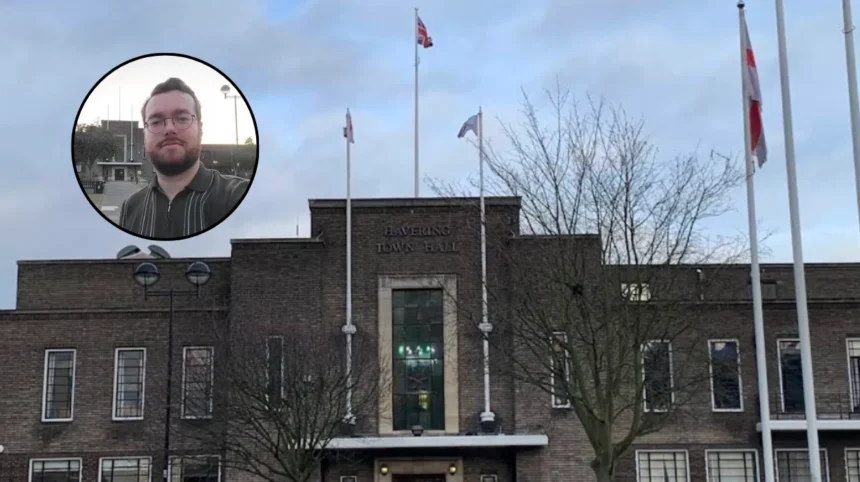
Havering (East London Times) July 16, 2026 — Havering Green Party Chair Mark Whiley has raised concerns with the Council’s Monitoring Officer after a Havering Council press release appeared to frame a routine planning decision as evidence of a new political approach to planning under the new Reform administration.
- Key Points
- What did the council say about the Jewson Romford planning approval?
- How did the Strategic Planning Committee handle the application?
- What do planning probity rules say about bias and predetermination?
- What reassurance has been sought from the Cabinet Member for Planning?
- How has the council leader responded to the Greens’ complaint?
- What wider planning issues are affecting public confidence in Havering?
- Background: How did Havering’s planning and political landscape arrive at this point?
- Prediction: How might this development affect residents, applicants and councillors in Havering?
The council’s website described the Jewson Romford expansion as “the first major planning application approved under Havering’s new Reform administration” and claimed it
Mark Whiley said:
“Planning committees are quasi‑judicial bodies. Their role is to make decisions strictly on planning merits, impartially and without political influence. When a council press release presents a planning approval as part of a political programme to ‘unlock Havering’s potential’, it risks creating the impression that decisions are being aligned with an administration’s agenda rather than assessed objectively.”
At last Thursday’s Strategic Planning Committee, the Chair, Cllr Kevin Ayres (Reform), opened the meeting by emphasising that planning must be conducted
“strictly in accordance with planning principles”
and that the committee must act
“fairly and in a legally correct manner.”
However, the single item on the agenda received only around five minutes of discussion, which Whiley says
“if it continues, may raise legitimate questions about whether applications are being scrutinised with the level of diligence expected in a quasi‑judicial process.”
The Local Government Association’s Probity in Planning guidance states that councillors
“need to avoid any appearance of bias or having ‘predetermined’ views when making a decision on a planning application or policy.” Whiley argues that the political framing used in the press release “may imply an approach to planning at odds with planning guidelines for councillors.”
“The approach to planning should be the same in every council,” he added.
“Impartial, transparent, and based solely on planning merits. There is no reinventing the wheel — it is simply a matter of doing the job well. I am asking the Cabinet Member for Planning and Public Protection, Cllr Terry Brown, to reassure residents that Reform members of the committee will continue to approach applications without bias or predetermination.”
Whiley also noted wider concerns about public confidence in Havering’s planning system:
“Residents need to trust that councillors are acting independently of developers and commercial interests. That trust is fragile, and communications that politicise planning decisions do not help rebuild it.”
In response, Havering’s Leader of the Council Cllr Keith Prince told the Havering Daily:
“That goes to prove what a complete waste of space the Greens are and why the people of Havering rejected them.”
What did the council say about the Jewson Romford planning approval?
As reported by staff of the Havering Council press office in an official release, the council described the Jewson Romford expansion as
“the first major planning application approved under Havering’s new Reform administration”
and claimed it
The wording positioned the approval within the new administration’s programme, which prompted the Green Party’s complaint that the language could be read as suggesting political direction over a quasi‑judicial function.
How did the Strategic Planning Committee handle the application?
As reported by Mark Whiley of the Green Party, at last Thursday’s Strategic Planning Committee, Chair Cllr Kevin Ayres (Reform) opened by stressing that planning must be conducted “strictly in accordance with planning principles” and that the committee must act
However, the single item on the agenda received only around five minutes of discussion, which Whiley said
“if it continues, may raise legitimate questions about whether applications are being scrutinised with the level of diligence expected in a quasi‑judicial process.”
What do planning probity rules say about bias and predetermination?
As reported in guidance cited by Whiley, the Local Government Association’s Probity in Planning guidance states that councillors
“need to avoid any appearance of bias or having ‘predetermined’ views when making a decision on a planning application or policy.”
Whiley argued that the political framing used in the press release
“may imply an approach to planning at odds with planning guidelines for councillors.”
What reassurance has been sought from the Cabinet Member for Planning?
As reported by Mark Whiley of the Green Party, he said:
“I am asking the Cabinet Member for Planning and Public Protection, Cllr Terry Brown, to reassure residents that Reform members of the committee will continue to approach applications without bias or predetermination.”
He added:
“The approach to planning should be the same in every council. Impartial, transparent, and based solely on planning merits. There is no reinventing the wheel — it is simply a matter of doing the job well.”
How has the council leader responded to the Greens’ complaint?
As reported by the Havering Daily, Havering’s Leader of the Council Cllr Keith Prince told the Havering Daily:
“That goes to prove what a complete waste of space the Greens are and why the people of Havering rejected them.”
What wider planning issues are affecting public confidence in Havering?
As reported by the Havering Daily, it has been a difficult week across Havering, with a series of high‑profile planning issues dominating headlines and sparking fresh concern among residents.
The situation at Arnold’s Field, Launders Lane, has taken another significant turn, with the council confirming that the landowner has refused permission for it to access the site and carry out temporary works aimed at preventing fires ahead of the summer, and the council indicating it is now pursuing legal action.
Meanwhile, plans to build a major data centre on green belt land in North Ockendon continue to divide opinion, with a group beginning legal action to challenge the consultation process through a judicial review, arguing that the 28‑day consultation period was not sufficient given the complexity of the plans.
Elsewhere, the situation in Noak Hill remains ongoing and unresolved, with the council previously issuing enforcement and stop notices in relation to alleged unauthorised development, and that case now subject to an appeal with the Planning Inspectorate.
As reported by the BBC, Havering was the first to indicate a shift as an overnight tally revealed that Reform UK has gained control of its inaugural council in the capital, while community groups across Havering have issued joint statements raising urgent concerns over green belt erosion and declining local amenity.
Background: How did Havering’s planning and political landscape arrive at this point?
Havering’s planning system has long operated under the principle that planning committees are quasi‑judicial bodies that must decide applications on planning merits, impartially and without political influence.
The borough’s planning debates have intensified in recent years over large‑scale proposals, including a major data centre on green belt land in North Ockendon that could become one of the largest of its kind in Europe, and repeated enforcement disputes over unauthorised development in areas such as Noak Hill.
In May 2026, Reform UK gained control of Havering Council, marking a significant political shift in the borough and bringing new scrutiny to how planning decisions are communicated and perceived.
Community groups have coordinated to raise concerns over green belt erosion and the perceived weakening of protections, while the council has defended its position in enforcement cases and planning appeals, including a recent Planning Inspectorate decision that dismissed appeals against enforcement notices at a site in Church Road, Noak Hill.
Prediction: How might this development affect residents, applicants and councillors in Havering?
If the Monitoring Officer upholds the view that the council’s communications risked creating an appearance of political influence over planning, the immediate effect may be tighter internal controls on how planning approvals are described in press releases and on social media, with greater emphasis on neutral, merits‑based language.
For residents, clearer separation between political messaging and quasi‑judicial decisions could help restore confidence that councillors are acting independently of developers and commercial interests, which Whiley described as “fragile” trust.
For planning applicants and developers, more consistent, neutral communications may reduce perceptions that approvals are tied to a particular administration’s agenda, potentially lowering the risk of legal challenges based on alleged predetermination or bias.
For councillors, especially those on the Strategic Planning Committee, the episode may lead to more detailed training on probity, longer discussion times for complex applications, and stricter adherence to Local Government Association guidance to avoid any appearance of bias or predetermination.
In the longer term, if the council adopts more cautious communications and demonstrates robust, transparent decision‑making, the borough’s planning system could become more resilient to legal challenges and public criticism, supporting more stable delivery of housing, infrastructure and commercial development across Havering.