The London Borough of Tower Hamlets is a local authority administrative area located in East London, situated immediately east of the City of London and north of the River Thames. The borough encompasses a total geographic land area of 19.8 square kilometres. According to the 2021 Census conducted by the Office for National Statistics, Tower Hamlets recorded a resident population of 310,300 people, reflecting a 22.1 percent population increase from 254,100 residents in 2011. This population growth rate represents the highest percentage increase recorded across any local authority in England. Tower Hamlets maintains a population density of 15,695 residents per square kilometre, establishing it as the most densely populated local authority in the United Kingdom. The median age of residents within Tower Hamlets is 30 years, which represents the youngest median population age in England.
- What makes the London Borough of Tower Hamlets geographic location and demographic profile unique?
- How did Tower Hamlets evolve from medieval farmland into a central hub of global trade and industrial maritime activity?
- What historical attractions and cultural landmarks define the tourist experience in Tower Hamlets?
- How do the markets in Tower Hamlets preserve local economic heritage and community traditions?
- What green spaces and urban nature reserves exist within Tower Hamlets for recreation?
- How does Canary Wharf contribute to the economy and modern tourism of East London?
- What work-friendly hubs and transit facilities in Tower Hamlets serve digital nomads and business travellers?
Demographic composition within Tower Hamlets exhibits significant cultural diversity. The 2021 Census reports that 51.5 percent of residents were born in England, while approximately 40 percent were born outside the United Kingdom. The borough holds the largest proportion of British Bangladeshi residents in the United Kingdom, accounting for 34.6 percent of the local population. White British residents constitute 31.9 percent of the total population. Religion data indicates that 39.9 percent of the population identify as Muslim, forming the largest Muslim demographic proportion among all local authority areas in England and Wales, while 22.3 percent identify as Christian. The administrative boundaries encompass distinct historic districts, including Spitalfields, Whitechapel, Bethnal Green, Bow, Mile End, Wapping, Limehouse, Poplar, and the Isle of Dogs.
What makes the London Borough of Tower Hamlets geographic location and demographic profile unique?
Tower Hamlets occupies 19.8 square kilometres directly east of the City of London along the River Thames. The borough contains 310,300 residents, a median age of 30 years, and a population density of 15,695 people per square kilometre.
Geographic positioning directly determines the economic and spatial development of Tower Hamlets. The borough forms the core of the historic East End of London, serving as an immediate physical buffer between the square mile of the City of London financial centre and the wider Thames Estuary corridor.
The borough boundary spans key geographical zones along the northern bank of the River Thames. These geographical zones include waterfront wharf lands in Wapping, maritime docks surrounding Limehouse Basin, peninsula landmasses across the Isle of Dogs, and inland urban quarters in Bow and Globe Town. Three major transport corridors traverse the borough horizontally: A11 road (Mile End Road), A13 road (Commercial Road and East India Dock Road), and the River Thames marine transit route.
Tower Hamlets functions as an entry point for international migration to London. In the seventeenth century, Protestant Huguenot refugees fleeing France established a silk weaving industry in Spitalfields. In the nineteenth century, Irish labourers migrated to the borough to build maritime infrastructure, followed by Ashkenazi Jewish refugees escaping persecution in Eastern Europe. In the twentieth century, post-Second World War migration brought Sylheti Bangladeshi settlers who established commercial centers along Brick Lane.
Data from the Office for National Statistics illustrates the structural shift in housing and economic activity. Between 2011 and 2021, single-family cohabiting couples without children increased from 14.7 percent to 17.4 percent of households in Tower Hamlets. Employment rates for residents aged 16 and over rose from 55.7 percent in 2011 to 58.7 percent in 2021.
This high density and demographic youth generate continuous demand for leisure spaces, cultural venues, and remote workspace infrastructure. The concentration of distinct ethnic enclaves provides visitors with direct access to multicultural culinary traditions, historical architectural styles, and community institutions within walking distance of central London railway stations.
How did Tower Hamlets evolve from medieval farmland into a central hub of global trade and industrial maritime activity?
Tower Hamlets evolved from rural hamlets supporting the City of London into an international maritime trade portal during the nineteenth century. Docks built across Wapping and the Isle of Dogs processed global cargo, driving industrial expansion and urbanisation.
Before industrialisation, the territory comprising modern Tower Hamlets consisted of small agrarian hamlets governed by the Tower of London parish administrative system. Farmers supplied agricultural products, livestock, and raw materials to the medieval population of the City of London.
Maritime trade expansion along the River Thames during the late eighteenth century necessitated enclosed dock facilities to prevent cargo theft and ship congestion in the Pool of London. Parliament passed the West India Dock Act 1799, authorizing the construction of enclosed commercial docks on the Isle of Dogs. The West India Docks opened in August 1802, followed by the London Docks in Wapping in 1805, the East India Docks in Blackwall in 1806, and the Regent’s Canal Dock (Limehouse Basin) in 1820.
As you explore the modern site, you are crossing land with a deep heritage. Read about the full [Insert Anchor Text for History Article Here] to understand its origins.
Industrial manufacturing grew directly alongside dockland operations. The borough housed three major industrial sectors: garment manufacturing, shipbuilding, and chemical processing. The Truman Brewery, established on Brick Lane in 1666 by Thomas Bucknall and expanded by Benjamin Truman in 1722, became the largest brewery in London by the nineteenth century. Shipyards along Millwall constructed heavy iron steamships, including Isambard Kingdom Brunel’s SS Great Eastern, launched at John Scott Russell’s shipyard in 1858.
World War II military bombardment heavily targeted Tower Hamlets due to its concentration of industrial docks and rail supply lines. Between September 1940 and May 1941, aerial bombing during the Blitz killed 2,221 civilians, injured 7,472 residents, completely destroyed 46,482 residential houses, and damaged 47,574 properties across the borough. Containerised shipping technologies in the 1960s required deeper water ports downriver, leading to the closure of the East India Docks in 1967, the London Docks in 1969, and the West India Docks in 1980.
The closure of the docks catalyzed urban regeneration projects overseen by the London Docklands Development Corporation, established by the UK Government under the Local Government, Planning and Land Act 1980. Industrial brick warehouses were converted into residential apartments, cultural centers, and leisure destinations, forming the architectural foundation visible to tourists today.
What historical attractions and cultural landmarks define the tourist experience in Tower Hamlets?
Tower Hamlets contains iconic national monuments, including the Tower of London and Tower Bridge. Cultural venues such as Whitechapel Gallery and historic places of worship showcase architectural heritage spanning Norman, Georgian, Victorian, and modern architectural design periods.
The concentration of protected architectural structures makes Tower Hamlets a primary destination for cultural heritage tourism in the United Kingdom. The borough holds over 900 listed buildings and 58 designated Conservation Areas.
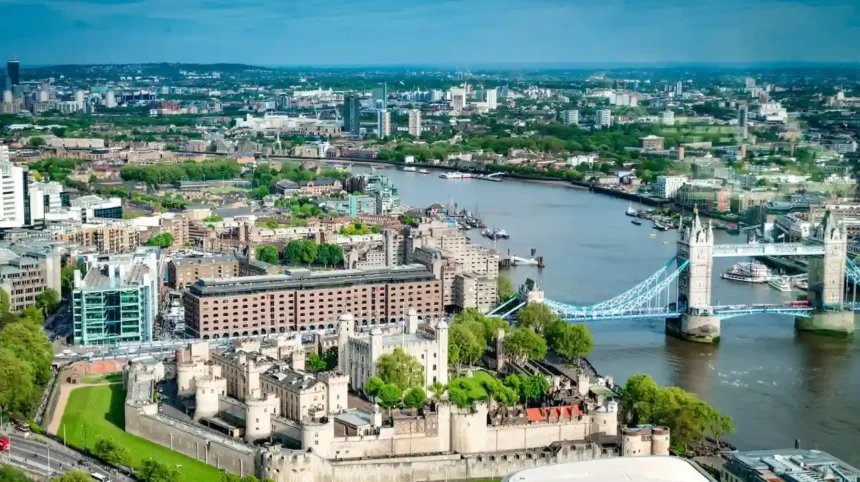
The primary landmark is the Tower of London, a UNESCO World Heritage Site founded in 1086 by William the Conqueror. The fortress features the White Tower, built from Caen stone, and houses the Crown Jewels of the United Kingdom, comprising 23,578 gemstones including the Imperial State Crown. The Yeoman Body, established in 1485, provides historical interpretation to visitors. Adjacent to the fortress, Tower Bridge opened in 1894 as a combined bascule and suspension bridge designed by Sir Horace Jones and Sir John Wolfe Barry.
Religious and civic structures document successive waves of social and architectural transformation. Three prominent historical churches designed by architect Nicholas Hawksmoor stand within the borough: Christ Church Spitalfields (completed in 1729), St George in the East (completed in 1729), and St Anne’s Limehouse (completed in 1730). The Brick Lane Jamme Masjid demonstrates religious transitions: built in 1743 as a French Protestant church (Neuve Eglise), converted in 1898 into a synagogue (Spitalfields Great Synagogue), and established in 1976 as an Islamic mosque.
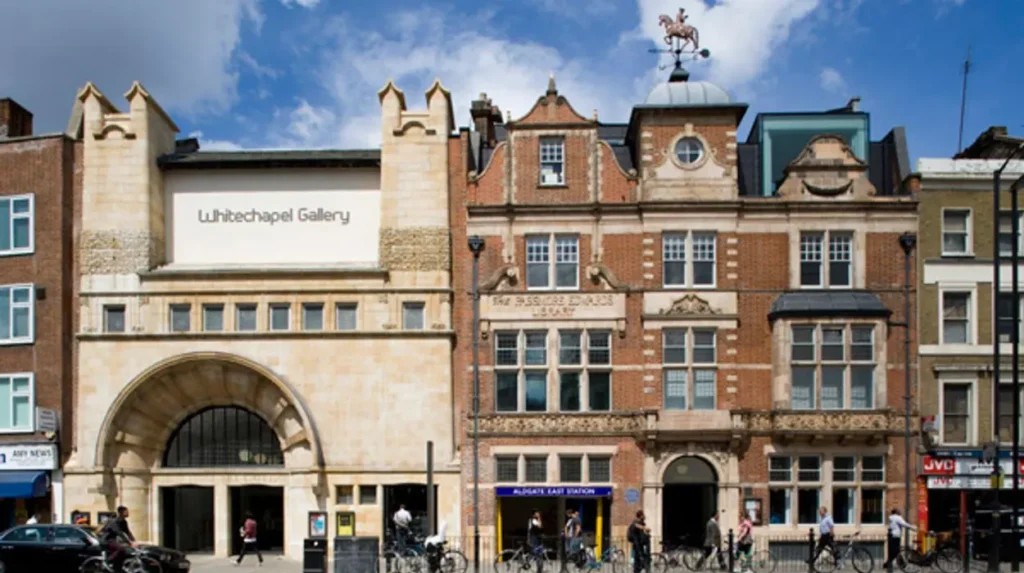
Arts and culture institutions deliver international public exhibitions. The Whitechapel Gallery, founded in 1901 by Samuel Barnett, introduced modern art to East London and premiered Pablo Picasso’s painting Guernica to the British public in 1938. Museum of London Docklands, housed in a grade I listed sugar warehouse built in 1802 at West India Quay, displays artifacts documenting transatlantic trade, river commerce, and port expansion.
Visitors encounter physical evidence of political, economic, and religious shifts within short physical distances. The preservation of these sites guarantees that heritage leisure travel continues to generate economic revenue for local hospitality businesses.
How do the markets in Tower Hamlets preserve local economic heritage and community traditions?
Street markets in Tower Hamlets drive retail activity and maintain historic commerce traditions. Brick Lane Market, Columbia Road Flower Market, and Petticoat Lane Market sell antiques, horticulture, textiles, and street food to thousands of weekly visitors.
Open-air trading markets have operated continuously in East London since the medieval period. In Tower Hamlets, street markets serve as economic incubators for independent traders and primary attractions for domestic and international leisure travellers.
The borough contains seven major historic street markets: Brick Lane Market, Columbia Road Flower Market, Petticoat Lane Market, Roman Road Market, Whitechapel Market, Spitalfields Market, and Chrisp Street Market.
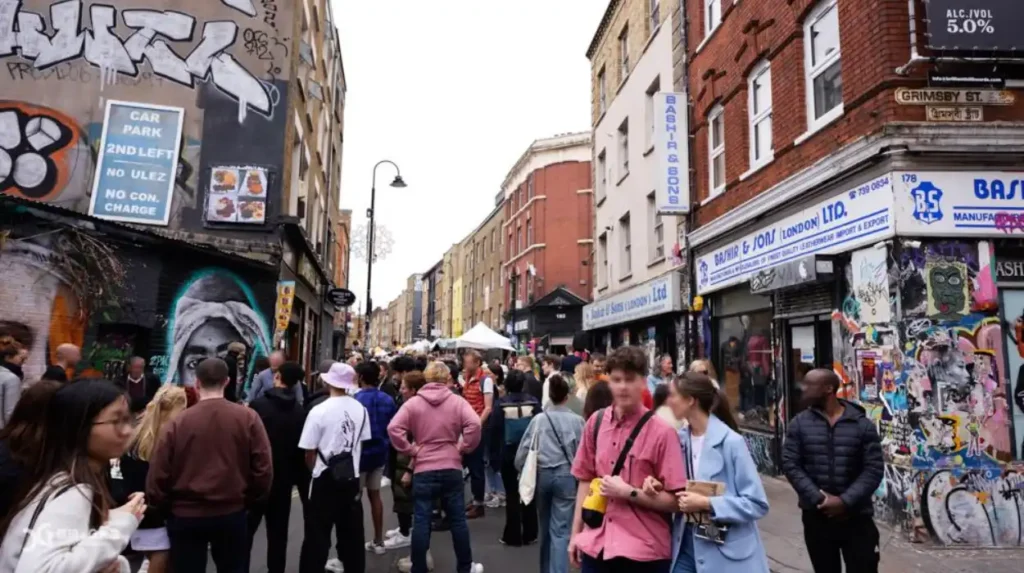
Brick Lane Market operates predominantly on Sundays, featuring street stalls selling vintage clothing, antique furniture, rare vinyl records, and global cuisine. The surrounding area contains Bangladeshi culinary establishments, earning the street the designation of “Banglatown”. Adjacent to Brick Lane, the Old Spitalfields Market operates under a Victorian roofed canopy built in 1887, hosting independent designers, artisans, and food vendors seven days a week.
Columbia Road Flower Market operates every Sunday between 08:00 and 15:00 in Bethnal Green. Sixty independent traders set up street stalls along a two-block strip of Victorian shopfronts, selling bedding plants, cut flowers, shrubs, and gardening equipment. Petticoat Lane Market, located along Wentworth Street and Middlesex Street, dates back to the seventeenth century when French Huguenot silk weavers sold garments. Today, the market specializes in clothing, fabrics, and leather goods.
Chrisp Street Market in Poplar holds historical significance as the first purpose-built pedestrian shopping precinct in the United Kingdom, designed by architect Frederick Gibberd for the 1951 Festival of Britain Exhibition of Architecture. Roman Road Market in Bow has traded along a former Roman road highway for over 150 years, offering affordable goods to local residents.
These commercial hubs sustain small enterprise operations, preserve traditional urban streetscapes, and drive foot traffic into surrounding independent cafes, art galleries, and retail outlets.
What green spaces and urban nature reserves exist within Tower Hamlets for recreation?
Tower Hamlets features extensive public parks and urban nature conservation zones. Victoria Park, Mile End Park, and Tower Hamlets Cemetery Park provide 120 hectares of green space, biological biodiversity, and outdoor recreation facilities for residents and tourists.
Urban parks in Tower Hamlets were planned during the nineteenth century to mitigate health crises caused by dense industrial overcrowding in the East End. Today, these green corridors provide recreational space and environmental cooling.
Victoria Park is the largest public green space in Tower Hamlets, covering 86.47 hectares of parkland in Bethnal Green and Bow. Established by an Act of Parliament in 1841 and designed by architect James Pennethorne, the park opened to the public in 1845 as London’s first purpose-built public park.
The park contains two boating lakes, a Grade II listed Victoria Fountain erected in 1862 by philanthropist Angela Burdett-Coutts, a Chinese Pagoda reconstructed from the 1851 Great Exhibition, and sports fields. The park hosts large music festivals, including All Points East, drawing 40,000 visitors per event day.
Mile End Park spans 32 hectares along the eastern bank of the Regent’s Canal, stretching linear form across the borough from Victoria Park south to Limehouse Basin. Constructed on industrial wasteland cleared after World War II bombing, the park features the Green Bridge, designed by CZWG Architects and completed in 2000. The Green Bridge carries turf, trees, and pedestrian walkways directly over the busy A11 Mile End Road highway.
Tower Hamlets Cemetery Park covers 11 hectares in Bow. Opened in 1841 as one of London’s “Magnificent Seven” Victorian cemeteries, the site ceased burials in 1966 and was declared a Local Nature Reserve in 2000. The park contains secondary woodland growth, supporting over 300 species of plant life, 65 species of nesting birds, and historic burial monuments of notable East End residents.
These public parks protect wildlife biodiversity within a dense metropolis while offering leisure travellers, outdoor enthusiasts, and families accessible open spaces for exercise, cultural events, and relaxation.
Explore More Area Guide
Best Riverside Experiences & Walking Routes – Tower Hamlets 2026
Exploring Tower Hamlets Like a Local Visitor Guide | Tower Hamlets 2026
How does Canary Wharf contribute to the economy and modern tourism of East London?
Canary Wharf is a 39-hectare commercial district on the Isle of Dogs. It serves as a global financial engine, housing corporate headquarters, architectural skyscrapers, public sculpture trails, underground shopping malls, and waterfront dining destinations.
Canary Wharf represents one of the largest urban dockland redevelopment projects in modern history. Situated on the West India Docks peninsula, it transformed abandoned industrial shipping basins into a financial district that complements the City of London.
Redevelopment began following master planning approval in 1985 led by Olympia & York. Construction of One Canada Square commenced in 1988 and completed in 1991. Designed by architect César Pelli, the 235-metre skyscraper was the tallest building in the United Kingdom until 2012. The district contains major corporate headquarters, including HSBC Tower (8 Canada Square), Citigroup Centre (25 Canada Square), and Barclays Bank headquarters (1 Churchill Place).
Canary Wharf employs over 120,000 workers across financial services, technology, legal, and consulting sectors. Beyond commerce, the Canary Wharf estate has expanded into a mixed-use leisure and residential destination. The district contains over 300 shops, bars, and restaurants set across four subterranean retail malls: Canada Place, Cabot Place, Jubilee Place, and Crossrail Place.
Crossrail Place features a roof garden designed by Foster + Partners. The garden sits beneath an ETFE translucent canopy and contains exotic plant species imported from countries connected to the historic West India Dock trading routes.
Canary Wharf holds one of the largest public art collections in the United Kingdom, featuring over 100 outdoor sculptures created by prominent artists including Henry Moore, Eduardo Paolozzi, and Antony Gormley.
The continuous expansion of residential towers, public parks, open-air cinema screenings, and seasonal light installations makes Canary Wharf a primary modern attraction for domestic business travellers, architects, and leisure visitors exploring modern urban engineering.
What work-friendly hubs and transit facilities in Tower Hamlets serve digital nomads and business travellers?
Tower Hamlets offers extensive digital connectivity and public transport links. High-speed rail networks, Docklands Light Railway lines, co-working spaces, and waterfront cafes enable business travellers and digital nomads to work efficiently while exploring East London.
The convergence of creative industries in Shoreditch and Spitalfields alongside financial infrastructure in Canary Wharf creates ideal conditions for remote professionals. Tower Hamlets contains remote workspace density supported by advanced transport links.
Digital nomads and business travellers utilize four major workspace models across the borough: co-working spaces, public libraries, hotel lobbies, and independent specialty coffee houses. Co-working providers like Second Home Spitalfields on Hanbury Street offer flexible desks, high-speed fibre optic Wi-Fi, and private meeting rooms within bio-climatic architectural layouts. Public study facilities include the Idea Store Whitechapel, a flagship community library and learning center designed by David Adjaye, opened in 2005.
Transport accessibility within Tower Hamlets relies on four integrated public transit networks: Transport for London Underground, Docklands Light Railway (DLR), London Overground, and the Elizabeth Line.
The Elizabeth Line, opened in May 2022, serves major borough stations at Whitechapel and Canary Wharf. The Elizabeth Line provides direct high-speed transit from Whitechapel to London Heathrow Airport in 36 minutes and to Liverpool Street station in two minutes.
The Docklands Light Railway network, established in 1987, operates automated trains connecting Limehouse, Shadwell, Bank, Stratford, and Greenwich. The River Bus service, operated by Uber Boat by Thames Clippers, runs frequent commuter ferry vessels from piers at Canary Wharf, Tower Pier, and Limehouse.
The combination of rapid transit connectivity, quiet remote working environments, high digital bandwidth, and diverse dining options allows modern mobile professionals to integrate business productivity seamlessly with neighborhood exploration across East London.
Why is Tower Hamlets considered one of East London’s top attractions?
Tower Hamlets is considered a top East London attraction because it combines historic landmarks, multicultural communities, modern architecture, green spaces, markets, and financial districts. Visitors can explore world-famous sites such as the Tower of London and Tower Bridge, experience diverse food and culture in areas like Brick Lane, and discover modern developments such as Canary Wharf.