Tower Hamlets is one of East London’s most historically significant and culturally diverse boroughs. It stretches from the historic Tower of London and the River Thames through Whitechapel, Spitalfields, Bethnal Green, Stepney, Limehouse, Poplar and the Isle of Dogs. The borough combines medieval heritage, maritime history, migration, markets, religious landmarks, contemporary arts, international food and modern business districts.
- Why is Tower Hamlets important for visitors interested in history, food and culture?
- Which historic places should visitors explore in Tower Hamlets?
- How does Tower Hamlets’ food scene reflect its cultural history?
- Which cultural attractions and museums are worth visiting in Tower Hamlets?
- Where can visitors experience Tower Hamlets’ markets, streets and local neighbourhoods?
- What parks and riverside spaces can visitors enjoy in Tower Hamlets?
- How should visitors plan a history, food and culture day in Tower Hamlets?
- Why does Tower Hamlets remain relevant for future visitors?
- What makes Tower Hamlets an essential East London destination?
The area takes its name from the Tower of London and the hamlets historically associated with it. Its southern boundary follows the River Thames, while the borough contains major waterways including the Regent’s Canal, Limehouse Cut and River Lea. Canary Wharf provides a modern financial centre alongside older docklands, warehouses and riverside neighbourhoods.
Tower Hamlets also has substantial heritage protection. The council identifies 58 conservation areas, including Brick Lane and Fournier Street, Wapping Pierhead, Limehouse Cut, Roman Road Market, Whitechapel Market and Wilton’s Music Hall. These designations help protect architectural and historic character while allowing the borough to continue evolving.
The borough’s population reached approximately 310,300 in the 2021 Census, representing a 22.1% increase from 2011. This rapid population growth reflects the continuing transformation of an already densely populated part of London.
For visitors, the result is a compact destination with several distinct experiences. A single day can combine a medieval fortress, a former dock, a historic market, a riverside walk, South Asian cuisine, contemporary art and a Canary Wharf skyline.
Why is Tower Hamlets important for visitors interested in history, food and culture?
Tower Hamlets brings London’s medieval, maritime, industrial, migration and modern histories together with internationally recognised food districts and cultural venues, giving visitors access to historic landmarks, markets, museums, religious buildings, waterways, parks and contemporary neighbourhoods within one East London borough.
The borough’s importance comes from the concentration of different historical periods. The Tower of London represents medieval royal and military history. The surrounding East End contains streets shaped by migration, trade, manufacturing and working-class communities. The former London docks document Britain’s maritime and commercial expansion.
Whitechapel and Spitalfields provide particularly strong evidence of changing communities. Brick Lane developed from a rural field path into an urban street and became associated with successive immigrant communities. Huguenot refugees arrived from France from the 1680s and established silk-weaving industries in Spitalfields. Later migration transformed the area further.
Food is closely connected with this social history. Brick Lane and surrounding streets are recognised for Bangladeshi restaurants, curry houses, bakeries, cafés, street food and international dining. Markets provide another layer, with established trading areas such as Spitalfields Market, Brick Lane Market, Roman Road Market and Whitechapel Market.
Culture extends beyond food and heritage buildings. Tower Hamlets contains galleries, music venues, theatres, community arts spaces and museums. The Museum of London Docklands explains the development of London’s port and the social history connected with the River Thames.
The borough also provides modern contrasts. Canary Wharf contains major financial institutions, high-rise architecture, public art and waterside spaces. The area demonstrates how former docklands have been transformed into a major business district.
This combination makes Tower Hamlets suitable for heritage-focused visitors, food travellers, architecture enthusiasts and visitors seeking a deeper understanding of East London.
Which historic places should visitors explore in Tower Hamlets?
The Tower of London, Tower Bridge, Spitalfields, Brick Lane, historic docks, Wilton’s Music Hall and surviving East End streets provide a broad introduction to Tower Hamlets’ medieval, maritime, industrial, religious, commercial and migration history.
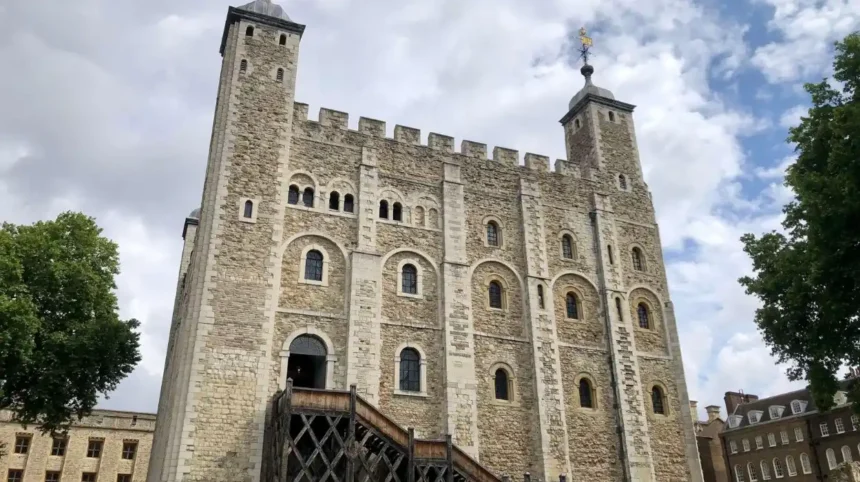
The Tower of London is the borough’s most internationally significant historic attraction. The complex includes structures from different periods, with the White Tower dating from 1078. The site developed as a fortress, royal residence, prison, armoury and ceremonial location. It is also associated with the Crown Jewels.
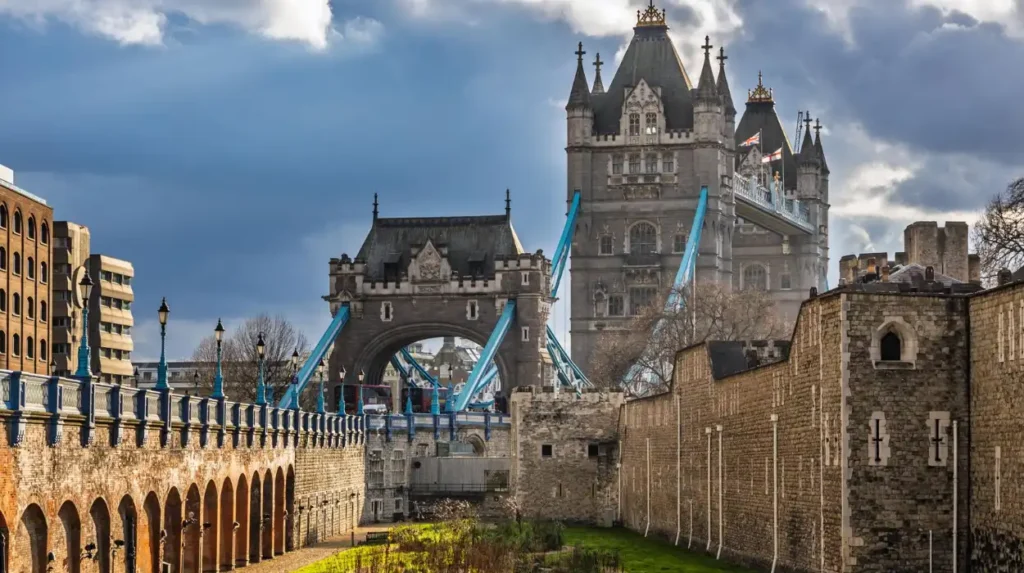
Tower Bridge stands immediately south-east of the Tower of London. Opened in 1894, the bridge became an important crossing over the Thames and remains one of London’s best-known engineering landmarks. Its Victorian architecture provides a strong connection between the historic City and the former docklands.
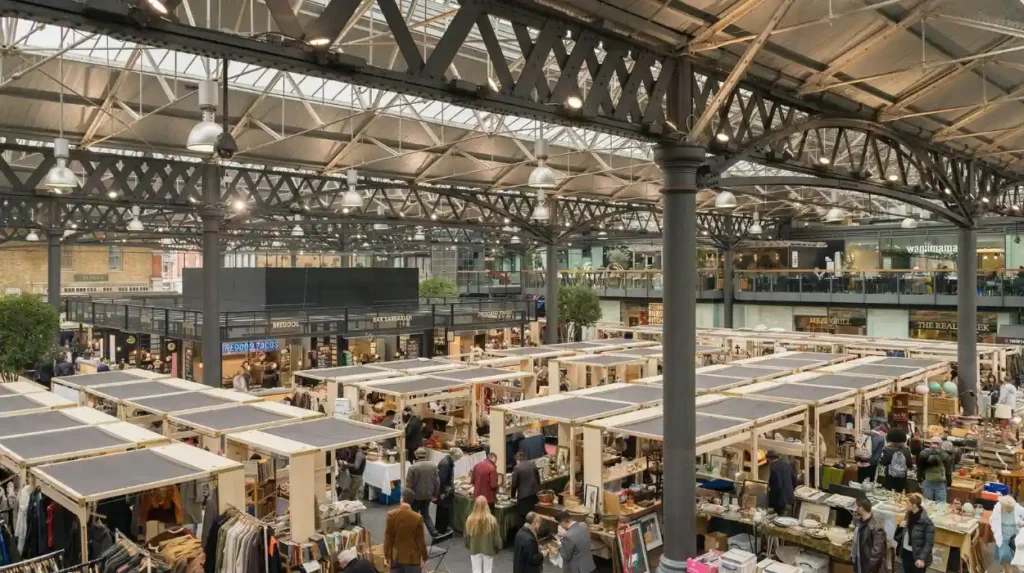
Spitalfields is important for understanding the development of East London. The area contains surviving streets, historic buildings, markets and religious architecture. Fournier Street is particularly notable for its Georgian houses, many associated with the district’s Huguenot history.
Brick Lane provides another important historical layer. The street existed by the 16th century and was initially associated with brickmaking, agriculture and open land. From the late 17th century, urban development expanded rapidly. Huguenot silk weavers contributed to Spitalfields’ textile economy, followed by later communities that reshaped the neighbourhood.
Wilton’s Music Hall provides an important cultural heritage site. The venue is recognised as one of the world’s oldest surviving music halls. Its historic fabric connects entertainment history with the social history of the East End.
The former docklands provide another essential element. West India Docks, Limehouse Basin and Wapping preserve evidence of the period when London operated as one of the world’s leading ports. Warehouses, dock walls, canals and converted industrial buildings show how maritime trade shaped local communities.
Tower Hamlets also contains numerous conservation areas. The council currently identifies 58, covering locations such as Boundary Estate, Cable Street, Stepney Green, Wapping Wall, West India Dock, Victoria Park and Whitechapel High Street.
Visitors interested in architecture should therefore avoid limiting their exploration to major attractions. The surrounding streets often provide the strongest evidence of how the borough developed.
As you explore the modern streets and regenerated waterfronts, you are crossing land with a deep heritage. Read about the full [Insert Anchor Text for History Article Here] to understand its origins.
How does Tower Hamlets’ food scene reflect its cultural history?
Tower Hamlets’ food culture reflects successive migration, trade and community development, with Brick Lane and Spitalfields particularly associated with Bangladeshi cuisine, while markets, cafés, bakeries, restaurants and international food businesses demonstrate the borough’s wider multicultural character.
Food in Tower Hamlets is closely connected with migration. Different communities established businesses, restaurants and food traditions as the East End changed during the 19th, 20th and 21st centuries.
Brick Lane is the most recognisable example. Its restaurant district became strongly associated with the Bangladeshi community, particularly Sylhetis who formed an important part of post-war migration to East London. Curry restaurants became a defining feature of the street and surrounding Spitalfields area.
The food experience extends beyond restaurants. Brick Lane’s wider market environment includes street food, cafés, bakeries and independent traders. Visitors can combine eating with shopping for vintage clothing, records, art, books and specialist products.
Spitalfields Market provides a more structured market environment. Its location within the historic Spitalfields district makes it useful for visitors who want to combine food, shopping and architecture.
Whitechapel Market provides another important connection between commerce and community. Market trading has long played a role in the East End, providing residents with access to food, clothing and household goods.
Roman Road Market offers a different neighbourhood experience. Located near Bethnal Green and Bow, it reflects the commercial history of the surrounding residential communities.
The borough’s modern food scene is not limited to South Asian cuisine. Visitors encounter Middle Eastern, European, African, East Asian and contemporary British food businesses across the borough. Cafés and independent restaurants are particularly common around Bethnal Green, Spitalfields, Whitechapel, Shoreditch-bordering streets and Canary Wharf.
Food-focused visitors should also distinguish between permanent businesses and market traders. Opening days and individual business hours vary. Checking current trading information before travelling provides a more reliable experience.
For visitors interested in cultural history, food provides a practical way to understand migration. Restaurant districts, specialist food shops and markets show how communities established economic networks and maintained culinary traditions in East London.
Which cultural attractions and museums are worth visiting in Tower Hamlets?
The Museum of London Docklands, Tower of London, Wilton’s Music Hall, local archives, historic churches, galleries and community cultural spaces provide visitors with different perspectives on maritime trade, royal history, migration, entertainment, religion, art and everyday life.
The Museum of London Docklands is central to understanding the borough’s maritime past. Located in a historic warehouse at West India Quay, the museum examines London’s relationship with the River Thames, the development of the docks, international trade and the communities connected with the port.
The museum is particularly useful for visitors who want historical context before exploring Canary Wharf and the docklands. The surrounding streets contain modern office towers alongside preserved waterfront infrastructure.
The Tower of London provides a different cultural experience. Its collections and surviving buildings connect visitors with royal history, military architecture, state power and ceremonial traditions.
Wilton’s Music Hall focuses on performance heritage. Its survival provides evidence of the entertainment economy that developed in the East End during the Victorian period.
Tower Hamlets Local History Library and Archives provides a deeper research resource. Its collections include historic documents dating from 1384, maps, plans, photographs and newspaper cuttings. These resources support research into buildings, streets, families and changing communities.
Religious buildings also form an important part of the borough’s cultural landscape. Churches, mosques, synagogues and other places of worship reflect different phases of settlement and community development.
Whitechapel is particularly significant in this respect. Its historic buildings and community institutions demonstrate the changing social composition of East London.
Visitors interested in contemporary culture should also explore the borough’s independent galleries, studios, music venues and arts organisations. Bethnal Green and surrounding areas have developed strong creative communities, while Canary Wharf contains a substantial public art environment.
Cultural exploration works best when visitors connect institutions with their surrounding neighbourhoods. A museum explains historical processes, while nearby streets demonstrate how those processes affected architecture, commerce and everyday life.
This approach also helps explain why Tower Hamlets feels different from many other central London destinations. Its cultural identity is distributed across streets, markets, buildings and communities rather than concentrated inside one attraction.
Where can visitors experience Tower Hamlets’ markets, streets and local neighbourhoods?
Visitors can experience Tower Hamlets through Brick Lane, Spitalfields, Whitechapel, Roman Road, Bethnal Green, Wapping, Limehouse and Canary Wharf, each offering different combinations of markets, architecture, food, shopping, waterways, public spaces and cultural activity.
Brick Lane is one of the strongest starting points for visitors interested in food and street culture. The surrounding streets contain restaurants, cafés, market stalls, independent shops, vintage businesses and creative spaces.
Spitalfields offers a more concentrated heritage environment. Historic Georgian architecture sits alongside the modern market and newer commercial development. Fournier Street and nearby streets provide strong architectural evidence of the district’s past.
Whitechapel has a different character. Whitechapel Road has long served as a major east-west route through the East End. Its market, shops, religious buildings and public spaces reflect the area’s long commercial and multicultural history.
Bethnal Green combines residential streets, green spaces, museums, cultural venues and independent businesses. The neighbourhood provides a useful base for exploring the wider East End without relying exclusively on major tourist attractions.
Roman Road has a strong local shopping identity. Its market and surrounding independent businesses provide a neighbourhood-scale experience.
Wapping and Limehouse offer particularly strong connections with the River Thames. Narrow streets, historic warehouses, dock infrastructure and riverside paths show the physical relationship between housing, industry and the river.
Canary Wharf provides the clearest contrast. The former docklands have become a major financial district with high-rise offices, transport connections, shopping facilities, restaurants and public spaces.
Visitors interested in architecture should compare these areas rather than treating Tower Hamlets as one uniform destination. Georgian streets, Victorian buildings, industrial warehouses, post-war housing and contemporary towers coexist within a relatively small geographical area.
Markets also operate differently. Some have established weekly trading patterns, while others contain permanent shops and food businesses. Visitors should check current schedules for individual markets because opening arrangements change.
The best neighbourhood exploration therefore combines a defined route with flexibility. Walking between nearby areas reveals transitions that are difficult to understand from isolated attractions.
What parks and riverside spaces can visitors enjoy in Tower Hamlets?
Tower Hamlets contains more than 120 parks and green spaces, including Victoria Park, Mile End Park, Island Gardens, Mudchute Park and Farm and Tower Hamlets Cemetery Park, giving visitors opportunities for walking, heritage viewing, nature and riverside recreation.
Tower Hamlets has an extensive network of parks and open spaces despite its dense urban character. The council lists more than 120 parks and green spaces across the borough.
Victoria Park is the largest and oldest major public park in Tower Hamlets. It opened in the 19th century and contains historic lakes, gardens, mature trees, monuments and architectural features. The park also has strong connections with the development of public recreation in Victorian London.
Mile End Park provides another major green corridor. It connects different parts of the borough and includes recreational, ecological and cultural facilities.
Island Gardens sits on the Isle of Dogs beside the River Thames. Its riverside position provides views towards Greenwich across the water. The park is also historically important and forms part of the buffer zone associated with the Maritime Greenwich World Heritage Site.
Mudchute Park and Farm offers a distinctive urban countryside environment. It is one of the borough’s two local nature reserves, alongside Tower Hamlets Cemetery Park.
Tower Hamlets Cemetery Park provides a different type of heritage landscape. The former cemetery contains historic graves, mature vegetation and wildlife habitats. It demonstrates how burial grounds can also function as important urban ecological spaces.
The borough identifies several waterways as Sites of Importance for Nature Conservation. These include the River Thames and Bow Creek, the Regent’s Canal, Limehouse Cut, Limehouse Basin and the River Lea.
Riverside exploration is particularly valuable for understanding the borough’s industrial history. Canals and docks were infrastructure for transporting goods, connecting warehouses and supporting London’s port economy.
Today, many waterfront areas have been redeveloped for housing, offices, leisure and public space. The historic geography remains visible through dock basins, waterways and surviving industrial structures.
Visitors should also recognise that parks have different functions. Some are formal gardens, others are large recreational parks, nature reserves, cemeteries or waterfront spaces. Combining a historic attraction with a park or riverside route creates a broader understanding of the borough.
Explore more Area Guide
Best Cultural Experiences to Enjoy While Visiting Tower Hamlets in London
Tower Hamlets Day Out Guide: Where to Eat, Walk, and Explore
How should visitors plan a history, food and culture day in Tower Hamlets?
A well-planned Tower Hamlets day should connect nearby attractions rather than crossing the borough repeatedly, combining one major heritage site with a historic neighbourhood, a food destination, a museum or cultural venue and a riverside or park experience.
A practical itinerary begins with geography. Tower Hamlets contains several distinct visitor zones, so grouping nearby attractions reduces unnecessary travel.
Visitors focused on medieval history can begin around the Tower of London and Tower Bridge. From there, the riverside and Wapping areas provide a route towards the historic docklands.
Visitors focused on food and migration can centre their day around Whitechapel, Spitalfields and Brick Lane. These areas allow visitors to combine markets, historic architecture, restaurants and independent businesses.
A museum-focused itinerary can include the Museum of London Docklands and the Canary Wharf waterfront. This combination explains the relationship between the historic docks and the modern financial district.
Visitors interested in parks can combine Victoria Park with Bethnal Green or Roman Road. Mile End Park provides another route towards the eastern part of the borough.
Public transport is an important part of planning. Tower Hamlets is served by London Underground, Docklands Light Railway, London Overground, Elizabeth line services and extensive bus routes. Stations include Tower Hill, Aldgate East, Whitechapel, Bethnal Green, Stepney Green, Mile End, Canary Wharf, West India Quay and others around the borough.
Walking remains valuable because many historical features sit within short distances of each other. However, visitors should allow extra time for markets, museum exhibitions, restaurant queues and changing opening hours.
A food itinerary also benefits from timing. Restaurants and cafés have individual service periods, while markets have specific trading days. Visitors should verify current information before setting out.
For digital nomads and business travellers, Canary Wharf, Spitalfields and Whitechapel provide numerous cafés, commercial areas and transport connections. Work-friendly facilities vary by venue, so visitors should check seating, Wi-Fi and laptop policies directly.
History-focused travellers should reserve sufficient time for major sites. The Tower of London alone contains multiple buildings, exhibitions and collections. Rushing through it reduces the historical context.
A balanced day therefore works best when it combines depth with geographical efficiency. One major heritage attraction, one cultural or museum stop, one food-focused neighbourhood and one outdoor route provide a clear structure without excessive travel.
Why does Tower Hamlets remain relevant for future visitors?
Tower Hamlets remains important because heritage protection, population growth, regeneration, cultural diversity, public transport investment and waterfront development continue reshaping an established East London landscape without removing its historical identity.
The borough’s future relevance is closely connected with regeneration. Canary Wharf has already transformed former docklands into a major international business district. Other areas continue to experience redevelopment and investment.
Heritage protection provides an important framework for managing this change. Tower Hamlets currently has 58 conservation areas, while its heritage strategy covers listed buildings, scheduled monuments, registered parks and gardens, World Heritage interests and locally significant assets.
The challenge is maintaining historic character while accommodating new housing, businesses, infrastructure and public facilities. Conservation areas provide planning controls designed to preserve or enhance architectural and historic character.
Population change also influences the borough’s future. The 2021 Census recorded approximately 310,300 residents, up from around 254,100 in 2011. That 22.1% increase was the largest percentage population increase recorded among English local authorities over the period.
Greater population density increases demand for public spaces, transport, cultural facilities, restaurants, shops and community infrastructure. Parks therefore have a role beyond recreation. They provide environmental, social and public-space functions within a densely built environment.
The borough’s biodiversity strategy also recognises the importance of waterways, parks, burial grounds, gardens and other habitats. Sites of Importance for Nature Conservation provide additional protection for areas with wildlife value.
Tourism benefits from this combination of heritage and contemporary development. Visitors can see medieval architecture, Victorian public spaces, former industrial infrastructure and modern skyscrapers within the same borough.
The cultural landscape will also continue to reflect changing communities. Restaurants, markets, places of worship, independent businesses and creative organisations contribute to the living character of East London.
For future visitors, Tower Hamlets therefore offers more than a collection of attractions. It provides a concentrated view of how London has developed through monarchy, migration, trade, industrialisation, urban planning, regeneration and cultural change.
The most meaningful visit combines these layers. Historic buildings explain the past. Markets and restaurants demonstrate living culture. Museums provide context. Parks and waterways reveal the physical geography. Modern business districts show the borough’s continuing economic transformation.
What makes Tower Hamlets an essential East London destination?
Tower Hamlets is an essential East London destination because it combines globally important heritage, historic markets, multicultural food, museums, cultural venues, docklands, parks and modern architecture, allowing visitors to experience several centuries of London’s social, economic and cultural development.
The borough provides unusually strong historical depth. The Tower of London connects visitors with medieval England, while Spitalfields documents migration and textile production. The docks explain London’s international trading economy. Whitechapel and Brick Lane demonstrate the continuing influence of migration and community enterprise.
Food provides another route into local history. Restaurants, markets and specialist food businesses demonstrate how communities have established cultural and economic identities.
Culture is similarly distributed. Museums, music halls, galleries, archives, religious buildings and public art create different entry points into the borough’s identity.
The physical environment reinforces this history. The Thames, canals, docks and former industrial sites explain why this part of London became commercially important. Parks and gardens show how public-space planning developed alongside urban growth.
Modern Tower Hamlets adds another layer. Canary Wharf represents the transformation of former docks into an international financial district. Contemporary buildings sit close to historic waterfront infrastructure, making the contrast visible within a short journey.
The borough’s heritage protection system helps preserve this layered environment. Conservation areas, listed buildings, registered parks and gardens and other heritage designations provide formal mechanisms for protecting significant places.
For first-time visitors, the most effective approach is to choose a theme and then connect it with other experiences. A heritage itinerary can include food. A food-focused trip can include migration history. A Canary Wharf visit can include docklands history. A park walk can reveal historic architecture.
Tower Hamlets is therefore best understood as a connected cultural landscape rather than a simple checklist of attractions. Its value comes from the relationship between places, communities, buildings, waterways, markets and institutions.
For visitors planning an East London trip, that combination provides a clear reason to spend time beyond the capital’s traditional tourist core. Tower Hamlets offers a direct way to examine London’s past while experiencing the communities, businesses and cultural spaces shaping its present.
What is Tower Hamlets known for?
Tower Hamlets is known for its historic landmarks, multicultural communities, markets, food scene, docklands and cultural attractions. The borough includes the Tower of London, Brick Lane, Spitalfields, Canary Wharf, Victoria Park and the Museum of London Docklands.