Tower Hamlets is an East London borough spanning 19.77 square kilometres with 331,886 residents. It combines medieval UNESCO sites, 120 open parks, historic textile quarters, and modern commercial hubs like Canary Wharf, offering dense cultural, dining, and walking routes.
- What are the best restaurants and street food markets in Tower Hamlets?
- Where are the most scenic walking routes and green spaces in Tower Hamlets?
- What historic landmarks and cultural attractions should you visit in Tower Hamlets?
- How do you plan an efficient day-out itinerary across Tower Hamlets?
- 1. The Cultural & Culinary Trail (West to North Route)
- 2. The Maritime & Heritage Walk (South Waterfront Route)
- 3. The Green & Waterway Escape (Central to East Route)
- Where can digital nomads and domestic business travellers work and unwind in Tower Hamlets?
The London Borough of Tower Hamlets sits directly east of the City of London and north of the River Thames. The borough forms a core section of Inner East London. According to the Office for National Statistics 2024 population estimates, Tower Hamlets maintains a population of 331,886 residents, making it the most densely populated local authority in England and Wales with 16,788 residents per square kilometre. The borough has a median resident age of 30 years, representing the youngest demographic profile in the United Kingdom.
The spatial layout of Tower Hamlets divides into distinct character areas shaped by centuries of industrialisation, maritime trade, and urban regeneration. The western boundary includes Spitalfields, Whitechapel, and Brick Lane, which feature 18th-century Huguenot weaver houses, Victorian market structures, and contemporary art institutions. The southern waterfront comprises Wapping, Limehouse, and the Isle of Dogs. These maritime districts contain historic brick sugar warehouses, working docks converted into residential quarters, and the Canary Wharf financial complex. The northern and eastern sectors encompass Bethnal Green, Bow, and Old Ford, which host expansive Victorian parklands and canal networks.
Visitors experience a high concentration of heritage assets within short walking distances. Tower Hamlets contains two world-famous landmarks: the Tower of London and Tower Bridge. The borough incorporates three historic conservation corridors: the Thames Path, the Regent’s Canal, and the Hertford Union Canal. Visitors access 22 distinct art galleries, four street markets, and over 120 public parks covering 15 percent of the borough’s total land area.
The demographic diversity of Tower Hamlets enriches its commercial and social infrastructure. Over 110 languages are spoken across the borough, with Bangladeshi, British, and European communities establishing distinct culinary and retail ecosystems. This demographic composition establishes Tower Hamlets as an international cultural hub for domestic tourists, international visitors, local residents, and business professionals seeking recreation after working hours.
What are the best restaurants and street food markets in Tower Hamlets?
Tower Hamlets hosts famous dining destinations including Brick Lane’s curry houses and beigel bakeries, Old Spitalfields Market, and Michelin-rated restaurants in Bethnal Green. The borough features four historic street markets, waterfront dining in Limehouse, and financial district eateries in Canary Wharf.
The dining infrastructure of Tower Hamlets reflects successive waves of international migration and trade. Food enthusiasts access four major street markets: Brick Lane Market, Old Spitalfields Market, Petticoat Lane Market, and Columbia Road Market. Old Spitalfields Market operates under a Victorian canopy constructed in 1887. It houses 41 permanent food traders serving international street food, including Taiwanese bao buns, Ethiopian vegan stews, and hand-pulled Chinese noodles. Brick Lane operates as the historic capital of South Asian cuisine in London, featuring dedicated curry houses alongside historic Jewish bakeries. Beigel Bake, established at 159 Brick Lane in 1974, produces over 7,000 traditional Jewish-style salt beef beigels daily, operating 24 hours a day.
Historic food establishments provide direct links to the borough’s working-class heritage. Traditional East End pie and mash shops serve minced beef pies with liquor sauce, which is a parsley-based gravy derived from eel cooking broth. F. Cooke on Hoxton Street and historic outlets near Whitechapel preserve recipes dating to 1862. Brick Lane’s Banglatown district contains award-winning South Asian restaurants serving regional Sylheti fish curries, biryanis, and tandoori specialities.
High-end gastronomy and modern British cooking are concentrated in Bethnal Green and Spitalfields. The Clove Club, located inside the historic Shoreditch Town Hall near the borough border, holds two Michelin stars and focuses on seasonal British produce. Town Hall Hotel on Patriot Square houses Michelin-starred restaurant Da Terra, which merges Latin American flavors with Italian technique.
Historic riverside public houses line the Wapping and Limehouse waterfronts. The Prospect of Whitby, constructed in 1543 on Wapping Wall, is recognised as the oldest riverside pub on the Thames, featuring original flagstone floors and a pewter bar counter. The Town of Ramsgate, built in 1545, and The Grapes in Limehouse, established in 1583 and owned by actor Sir Ian McKellen, offer traditional British pub menus alongside panoramic river views.
As you explore the modern site, you are crossing land with a deep heritage. Read about the full [Insert Anchor Text for History Article Here] to understand its origins.
Canary Wharf delivers modern waterside dining inside multi-storey commercial developments and floating pavilions. Wood Wharf and Parkgate Pavilion feature international steak houses, seafood brasseries, and high-end sushi bars overlooking South Dock.
Where are the most scenic walking routes and green spaces in Tower Hamlets?
Tower Hamlets contains over 120 green spaces, including Victoria Park covering 86 hectares and Mile End Park spanning 32 hectares. Scenic walking routes follow the Thames Path, Regent’s Canal, and Hertford Union Canal, linking historic docks, locks, and urban nature reserves.
Tower Hamlets provides an interconnected grid of public parklands and blue-space corridors that allow continuous pedestrian travel across East London. The borough contains three primary award-winning parks: Victoria Park, Mile End Park, and Tower Hamlets Cemetery Park.
Victoria Park, known locally as “Vicky Park,” opened in 1845 as the first public park in London designed specifically for the working class. Spanning 86 hectares across the northern border of the borough, it features two distinct sections separated by Grove Road. The western section houses the historic West Lake, an ornate Chinese Pagoda originally built for the 1841 Chinese Exhibition in Hyde Park, and the Pavilion Cafe. The eastern section contains a boating lake, sports pitches, deer enclosure, and Victoria Park Bandstand. The park retains Grade II listing on the Historic England Register of Parks and Gardens and hosts major outdoor cultural music events every summer.
Mile End Park spans 32 hectares as a linear ecological park constructed on land cleared by World War II bombing. The park extends 1.5 miles parallel to the Regent’s Canal, connecting Victoria Park to the Limehouse Basin. The park features four functional zones: the Ecology Zone with natural reeds and wind turbines, the Arts Zone, the Sports Zone containing an Olympic-standard athletics stadium, and the Green Bridge designed by architect Piers Gough, which carries trees and footpaths over the busy A11 Mile End Road.
Tower Hamlets Cemetery Park covers 11 hectares in Bow and represents one of London’s historic “Magnificent Seven” Victorian cemeteries. Opened in 1841 and closed to burials in 1966, it functions as a designated Local Nature Reserve and Site of Metropolitan Importance for Nature Conservation. The woodland reserve contains over 350,000 graves surrounded by native broadleaf trees, wild fungi, and protected bird species.
Waterway trails offer pedestrian routes isolated from motor traffic. The Thames Path National Trail runs for 6.5 miles along the southern perimeter of the borough, passing through Wapping, Limehouse, Millwall, and the Isle of Dogs. Walkers observe original granite cobblestones, historic stairs leading to the mudflats, and converted 19th-century shipping docks.
The borough’s internal canal network includes three main waterways: Regent’s Canal, Hertford Union Canal, and Limehouse Cut. The Regent’s Canal trail begins at Limehouse Basin—where the canal meets the Thames—and extends northward through Stepney and Mile End before reaching Victoria Park. Limehouse Cut, opened in 1770 as London’s oldest canal, provides a straight 1.4-mile walking corridor connecting Limehouse Basin to the River Lea at Bow Locks.
Community agriculture exists across two city farms: Mudchute Park and Farm on the Isle of Dogs and Stepney City Farm on Stepney Way. Mudchute covers 32 acres of countryside, housing over 300 farm animals, stables, and rare-breed livestock directly beneath the skyline of Canary Wharf. Stepney City Farm covers 3 acres, offering rural craft workshops, animal enclosures, and a weekly farmer’s market.
What historic landmarks and cultural attractions should you visit in Tower Hamlets?
Key cultural attractions include the Tower of London built in 1086, Tower Bridge opened in 1894, the Whitechapel Gallery established in 1901, and the London Museum Docklands. The borough houses 22 art galleries and three national museums across its historic quarters.
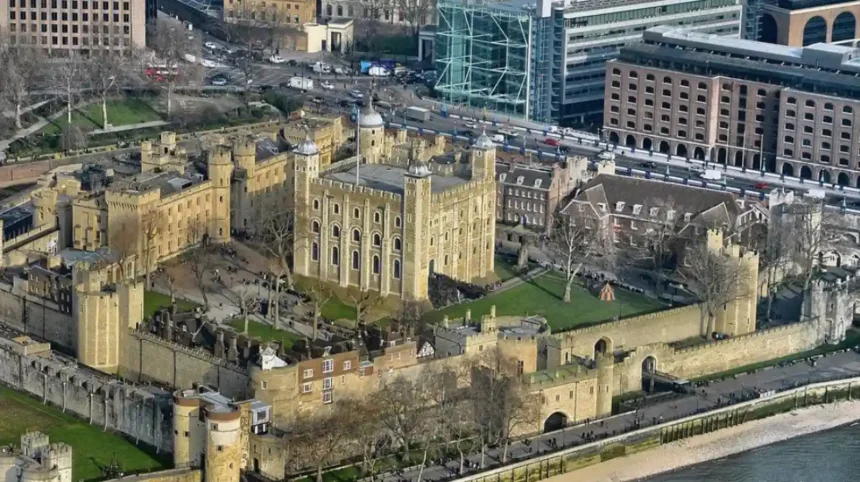
Tower Hamlets contains iconic national monuments alongside pioneering contemporary art institutions. The Tower of London, situated at the southwestern corner of the borough, was founded in 1086 by William the Conqueror. Designated as a UNESCO World Heritage Site in 1988, the fortress complex covers 12 acres and encompasses the White Tower, the Medieval Palace, and the Jewel House, which stores the official Crown Jewels of the United Kingdom. Yeoman Warders, established in 1485, conduct guided historical tours across the grounds daily.
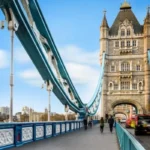
Tower Bridge, completed in 1894 under the direction of engineer Sir John Wolfe Barry and architect Sir Horace Jones, spans the River Thames adjacent to the Tower of London. The bascule and suspension bridge features two 65-metre towers linked by high-level walkways located 42 metres above the water level. Visitors access glass-floored walkways and the original Victorian Engine Rooms, which preserve the steam engines that powered the bridge bascules until 1976.
The visual arts sector centers on the Whitechapel Gallery, opened in 1901 on Whitechapel High Street. Designed by architect Charles Harrison Townsend in the Arts and Crafts style, the gallery premiered Pablo Picasso’s masterpiece Guernica on its UK tour in 1939. The gallery maintains a schedule of non-commercial contemporary art exhibitions, educational workshops, and film screenings. Across the borough, independent creative venues include Rich Mix on Bethnal Green Road—a multi-disciplinary arts center housing three cinema screens and live performance spaces—and the Auto Italia gallery in Bow.
Maritime and industrial history is preserved at the London Museum Docklands, located at West India Quay. Housed within a Grade I listed sugar warehouse constructed in 1802 during the expansion of the West India Docks, the museum documents the history of the River Thames, the transatlantic trade in enslaved people, and the evolution of London’s port infrastructure from Roman times to the construction of Canary Wharf.
The performance arts sector features Wilton’s Music Hall on Grace’s Alley in Whitechapel. Constructed in 1859 by John Wilton, it represents the world’s oldest surviving grand music hall. The Grade II* listed building retains un-restored Victorian interior plasterwork, hosting theatrical productions, musical performances, and opera.
Family-focused cultural institutions include Young V&A, situated on Cambridge Heath Road in Bethnal Green. Formerly the V&A Museum of Childhood, the institution reopened in July 2023 following a £13 million redevelopment project. The museum features three interactive galleries titled Imagine, Play, and Design, displaying over 2,000 objects from the Victoria and Albert Museum’s collection of toys, games, and children’s design objects.
Historic house museums include Dennis Severs’ House at 18 Folgate Street in Spitalfields. The Georgian townhouse presents ten room installations arranged as if occupied by a family of Huguenot silk weavers between 1724 and 1919. Visitors walk through the silent, candle-lit rooms to experience immersive historical atmospheres.
Explore More Area Guide
Top Family-Friendly Attractions in Tower Hamlets All Year Round
Discover Tower Hamlets: Markets, Museums & Historic Neighbourhoods in East London
How do you plan an efficient day-out itinerary across Tower Hamlets?
Planning an efficient itinerary requires combining adjacent neighbourhoods using the borough’s 10 Underground stations, 15 Docklands Light Railway stations, and London Overground lines. Visitors select themed routes focusing on historic maritime sites, culinary exploration, or continuous parkland and canal walks.
Maximising a visit to Tower Hamlets depends on using the borough’s public transport network. The borough contains ten London Underground stations across four lines: Central Line (Bethnal Green, Mile End), District and Hammersmith & City Lines (Whitechapel, Stepney Green, Bow Road, Bromley-by-Bow, Aldgate East), and Jubilee Line (Canary Wharf). The Elizabeth Line stops at Whitechapel and Canary Wharf, linking East London to Heathrow Airport and Central London. The Docklands Light Railway (DLR) operates across 15 stations in the borough, connecting Bank and Tower Gateway to Limehouse, Poplar, Greenwich, and Stratford. Overground services operate from Shadwell, Wapping, Bethnal Green, and Cambridge Heath stations.
Visitors choose from three structured single-day itineraries based on personal interests:
1. The Cultural & Culinary Trail (West to North Route)
- 09:00–11:00: Start at Old Spitalfields Market for morning coffee and artisanal pastries, followed by a walk down Brick Lane to view street art by Banksy, Stik, and Roa.
- 11:00–13:00: Visit the Whitechapel Gallery to explore contemporary exhibitions, then buy fresh salt beef beigels at Beigel Bake on Brick Lane.
- 13:00–15:30: Walk north to Bethnal Green to visit Young V&A and explore Columbia Road. (If visiting on Sunday between 08:00 and 15:00, explore the Columbia Road Flower Market).
- 15:30–18:00: Walk along the Hertford Union Canal into Victoria Park, concluding with dinner at a traditional Bethnal Green gastro pub.
2. The Maritime & Heritage Walk (South Waterfront Route)
- 09:00–11:30: Arrive at Tower Hill, explore the Tower of London grounds, and walk across the upper glass walkway of Tower Bridge.
- 11:30–13:30: Follow the Thames Path eastward through historic Wapping, passing Wapping Dock Stairs and stopping for lunch at The Prospect of Whitby pub.
- 13:30–15:30: Continue along the riverfront to Limehouse Basin. Observe historical canal locks where Regent’s Canal meets the Thames.
- 15:30–18:00: Ride the DLR to West India Quay, explore the London Museum Docklands, and walk through the public art displays in Canary Wharf.
3. The Green & Waterway Escape (Central to East Route)
- 10:00–12:00: Begin at Limehouse DLR Station, entering the Regent’s Canal towpath northward through Stepney and Mile End Park.
- 12:00–14:00: Stop at Stepney City Farm for lunch at the farm cafe, then walk north over the Green Bridge.
- 14:00–16:30: Enter Victoria Park, rent a rowing boat on West Lake, and visit the Chinese Pagoda.
- 16:30–18:30: Exit towards Pavilion Cafe or cross into Queen Elizabeth Olympic Park at Fish Island for canalside craft breweries.
Visitors must consider seasonal timings. Columbia Road Flower Market operates exclusively on Sundays from 08:00 to 15:00. Historic street markets operate at peak density on Friday, Saturday, and Sunday mornings. Museum venues close entry 45 minutes prior to listed evening closing times.

Where can digital nomads and domestic business travellers work and unwind in Tower Hamlets?
Digital nomads and business travellers utilise public libraries known as Idea Stores, high-speed Wi-Fi cafes in Spitalfields and Canary Wharf, and waterside co-working spaces. Work-friendly hubs offer proximity to quiet gardens, artisanal coffee roasters, and corporate transport links.
Tower Hamlets provides dedicated civic and commercial infrastructure designed for remote professionals, digital nomads, and business visitors. The London Borough of Tower Hamlets Council operates a public library network titled Idea Stores. The flagship Idea Store Whitechapel, situated at 321 Whitechapel Road, occupies a five-storey glass building designed by architect David Adjaye. Idea Stores offer free gigabit Wi-Fi, quiet study desks equipped with power outlets, printing facilities, and quiet cafe areas. Additional locations include Idea Store Bow on Roman Road and Idea Store Chrisp Street in Poplar.
Private work-friendly environments exist across the borough’s commercial districts:
Work-Friendly Hubs and Features
- Spitalfields & Shoreditch Border: Independent specialty coffee shops along Commercial Street, Hanbury Street, and Folgate Street provide high-speed internet, power sockets, and laptop-friendly seating arrangements.
- Canary Wharf & Wood Wharf: Crossrail Place Roof Garden offers enclosed public seating surrounded by exotic plants, equipped with free public Wi-Fi and quiet workspaces beneath a semi-open timber lattice roof.
- Limehouse & Wapping Waterfronts: Waterside cafes along Limehouse Basin provide quiet working atmospheres with views of historic marina moorings.
Business travellers seeking flexible desk space access short-term co-working operators. Spaces at 30 Churchill Place in Canary Wharf, WeWork at 135 Bishopsgate (Spitalfields border), and Second Home on Hanbury Street offer day passes, private meeting rooms, high-speed fibre connectivity, and printing hubs. Second Home features biophilic design with over 2,000 live plants, creating an optimal environment for creative focus.
Post-work relaxation venues surround these working hubs. Professionals transition from business hours to leisure by walking along the Thames Path, visiting the outdoor fitness circuits at Mile End Park, or attending late-night gallery openings at Whitechapel Gallery. Canary Wharf features extensive underground shopping malls containing over 300 retail stores, sports clubs, and waterside wine bars along South Dock. The borough’s transport connectivity ensures business travellers reach the City of London in under 10 minutes via the Underground or Elizabeth Line, making Tower Hamlets an ideal base for balancing work and leisure.
What is Tower Hamlets known for?
Tower Hamlets is known for the Tower of London, Tower Bridge, Brick Lane, Old Spitalfields Market, Canary Wharf, Victoria Park, and its rich East End heritage. The borough combines historic landmarks, multicultural communities, riverside walks, markets, museums, and one of London’s most diverse food scenes.