Tower Hamlets is one of East London’s most varied visitor destinations. The London borough combines historic landmarks, former docks, major cultural institutions, markets, canals, parks, riverside spaces and modern business districts.
- What are the best places to visit in Tower Hamlets?
- Why is the Tower of London important for tourists in Tower Hamlets?
- What can tourists see around Tower Bridge and St Katharine Docks?
- Why should visitors explore Wapping and Limehouse?
- What makes Brick Lane and Spitalfields popular with tourists?
- What can visitors learn at the Museum of London Docklands?
- Is Canary Wharf worth visiting as a tourist destination?
- Which parks and green spaces are best for visitors in Tower Hamlets?
- What historic and cultural experiences should visitors explore in Whitechapel and Stepney?
- How can tourists experience Tower Hamlets through its waterways?
- What is the best way to plan a day exploring Tower Hamlets?
- Why is Tower Hamlets important for understanding East London?
The borough extends from the River Thames northwards into areas including Whitechapel, Spitalfields, Bethnal Green, Mile End, Bow, Poplar, Limehouse, Wapping and the Isle of Dogs. Its southern boundary follows the distinctive bend of the Thames, while the River Lea forms part of its eastern edge.
Tower Hamlets had approximately 310,300 residents at the 2021 Census, an increase of 22.1% from around 254,100 in 2011. The Office for National Statistics recorded the borough as the most densely populated local authority area in England in 2021.
This density sits alongside an unusually concentrated collection of historic and modern attractions. Visitors can move from the Tower of London and riverside Wapping to Brick Lane, Spitalfields, the Museum of London Docklands and Canary Wharf within a relatively compact part of the capital.
Tower Hamlets also has an extensive network of canals, docks and open spaces. The council identifies the River Thames and Bow Creek, London’s canals, the Lea Valley, Victoria Park, Mile End Park, Mudchute Park and Farm and Tower Hamlets Cemetery Park among its important natural and ecological sites.
For tourists, this creates several distinct experiences: historic sightseeing, East End food and markets, waterfront walks, museums, architecture, green spaces, shopping and contemporary city culture.
What are the best places to visit in Tower Hamlets?
The best places include the Tower of London, Tower Bridge, Museum of London Docklands, Brick Lane, Spitalfields, Victoria Park, Canary Wharf, St Katharine Docks, Limehouse and the historic Wapping riverside. These locations collectively represent Tower Hamlets’ history, culture, food, architecture, commerce and open spaces.
Tower Hamlets rewards visitors who explore beyond a single attraction. The western part of the borough contains major royal and riverside landmarks, while central districts provide markets, cultural venues and historic streets. Further east, former docklands have developed into modern residential, commercial and leisure areas.
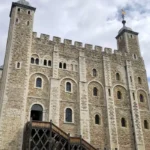
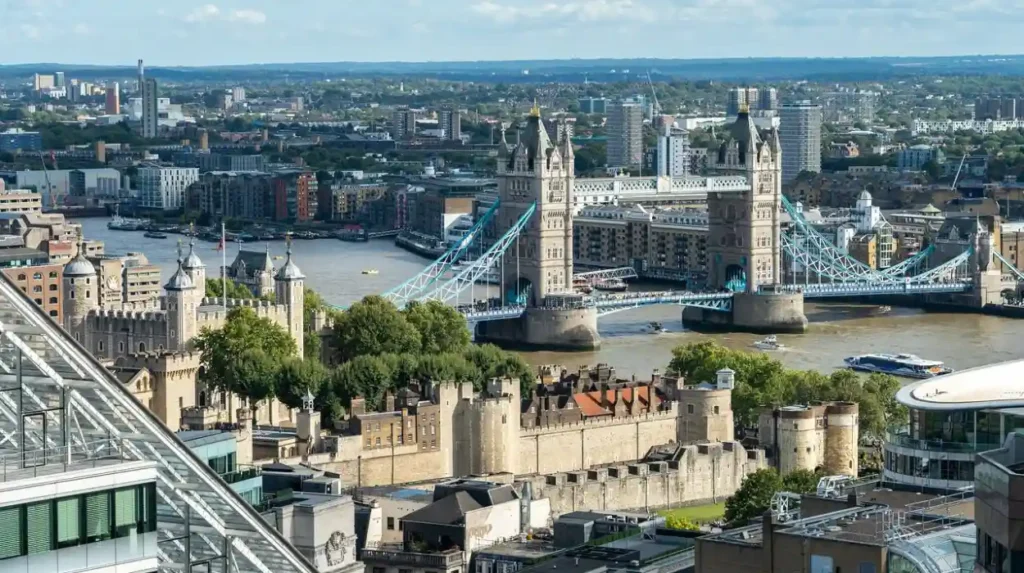
Tower of London is one of the borough’s most significant historic attractions. The UNESCO World Heritage Site sits beside the Thames and has served different functions throughout its long history, including royal residence, fortress, prison and treasury.
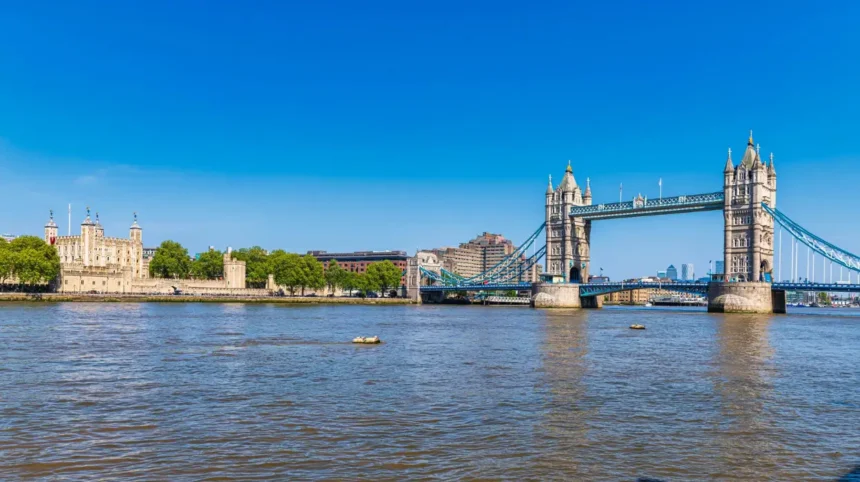
Nearby Tower Bridge provides one of London’s best-known crossings of the Thames. Its Victorian architecture and elevated walkways connect the Tower Hamlets riverside with Southwark.
The borough’s visitor experience then changes sharply around Spitalfields and Brick Lane. These districts are associated with markets, independent businesses, restaurants, street art and multicultural East End history.
The former docklands provide another major layer. The Museum of London Docklands explains the development of London’s port, the transatlantic trade system, migration and the transformation of the Docklands.
Canary Wharf represents the modern end of this transformation. The district contains offices, public spaces, shops, restaurants, transport connections and high-rise architecture built around the former West India Docks.
Why is the Tower of London important for tourists in Tower Hamlets?
The Tower of London is important because it connects Tower Hamlets with nearly 1,000 years of royal, military and political history. Its fortress buildings, royal associations, Crown Jewels and riverside setting make it a central historic attraction for East London visitors.
The Tower of London began as a major royal fortress after William the Conqueror ordered the construction of the White Tower in the 11th century. Successive monarchs expanded the complex, creating a fortified royal residence and strategic defensive site beside the Thames.
Its location explains part of Tower Hamlets’ historical identity. The borough takes its name from the historical relationship between the Tower of London and the hamlets that surrounded it. The local authority describes Tower Hamlets as the heart of London’s East End and highlights the Tower and the Thames as defining features.
The Tower complex contains the White Tower, medieval defensive walls, historic towers and ceremonial spaces. It is also associated with the Crown Jewels, which remain one of the institution’s major visitor attractions.
The surrounding riverside provides a useful starting point for exploring eastern central London. Visitors can walk from the Tower towards Tower Bridge, St Katharine Docks and Wapping, creating a continuous route through several historic landscapes.
The area also demonstrates how the Thames shaped London’s development. The river supported defence, trade, transport and industry. The concentration of historic structures along this section of the waterfront reflects that long relationship.
Tourists interested in history should allow enough time to examine the fortress rather than treating it only as an exterior landmark. Its significance comes from the combination of architecture, royal history, military infrastructure and surviving collections.
What can tourists see around Tower Bridge and St Katharine Docks?
Tower Bridge and St Katharine Docks form a compact riverside sightseeing area with Victorian engineering, historic warehouses, water basins, pedestrian routes and Thames views. The district works particularly well for visitors combining architecture, photography, walking, restaurants and historic waterfront exploration.
Tower Bridge opened in 1894 and became an important transport crossing over the Thames. Its distinctive bascule mechanism allowed large vessels to reach the upper reaches of the Pool of London.
The bridge is especially significant because it combines practical engineering with monumental Victorian architecture. Visitors can view the bridge from the Thames Path, surrounding streets and riverside areas.
St Katharine Docks lies immediately east of the Tower of London. The former commercial dock has been transformed into a mixed-use waterfront district containing restaurants, offices, residences and pedestrian spaces.
The dock system forms part of Tower Hamlets’ wider network of historic waterways. Council planning documents identify St Katharine Docks, Shadwell Basin, Limehouse Basin, West India Docks, Millwall Docks and East India Docks among the borough’s docks and basins.
The district is particularly suitable for a walking itinerary because several attractions sit close together. Visitors can begin at the Tower, continue towards Tower Bridge and then explore the dock basin before moving east towards Wapping.
The riverside also provides changing views of historic warehouses and modern developments. This contrast is characteristic of Tower Hamlets, where former industrial land has been adapted for residential, commercial and leisure uses.
The wider Thames waterfront remains an important part of the borough’s identity. The council classifies the River Thames and Bow Creek as sites of metropolitan importance for nature conservation.
As you explore the modern riverside, you are crossing land with a deep heritage. Read about the full [Insert Anchor Text for History Article Here] to understand its origins.
Why should visitors explore Wapping and Limehouse?
Wapping and Limehouse are valuable for visitors because they preserve strong connections with London’s maritime and industrial past. Their riverside streets, former warehouses, churches, canals, docks and surviving industrial structures provide a quieter historical experience away from Tower Hamlets’ busiest commercial districts.
Wapping occupies a strategic position along the Thames east of the Tower of London. Its history is closely connected with shipping, warehouses, wharves and river-based industries.
The riverside environment changed substantially after the decline of London’s traditional docks. Former industrial spaces were redeveloped, while sections of the historic built environment remained.
Limehouse provides another important waterside landscape. Limehouse Basin connects the Regent’s Canal and Limehouse Cut with the Thames. The basin opened in 1820 as Regent’s Canal Dock and functioned as an interchange between river shipping and the canal network.
Limehouse Cut is particularly significant in the history of London’s waterways. Local conservation research records that the canal was constructed during the capital’s industrial expansion and later widened to support larger barges. Industrial buildings and warehouses subsequently developed along its route.
The Limehouse area also contains St Anne’s Church, designed by Nicholas Hawksmoor and completed in the early 18th century. The church and surrounding streets form part of a wider architectural heritage route.
Visitors can combine Limehouse Basin with a canal-side walk. The route offers views of boats, bridges, historic structures and modern residential development.
The council’s walking routes also identify the Limehouse Accumulator, a brick tower built in 1869 to provide hydraulic power for dock cranes and locks.
This makes Limehouse especially relevant for visitors interested in industrial history, canals, architecture and walking.
What makes Brick Lane and Spitalfields popular with tourists?
Brick Lane and Spitalfields are major East End destinations for food, markets, independent businesses, street art and multicultural heritage. Their appeal comes from the concentration of historic streets, restaurants, market activity, creative businesses and communities within a compact urban area.
Brick Lane runs through an area historically shaped by successive waves of migration and trade. The surrounding district has strong associations with Jewish, Bangladeshi and other communities that contributed to the cultural development of the East End.
Food is one of Brick Lane’s most recognisable visitor attractions. Restaurants, cafés, bakeries and street-food businesses create a diverse food environment, with South Asian cuisine playing an important role in the area’s identity.
The street is also associated with markets and independent retail. Visitors encounter vintage clothing, second-hand goods, creative products, cafés and small businesses.
Spitalfields adds a different architectural dimension. The area contains historic buildings alongside contemporary retail and hospitality businesses. Old Spitalfields Market provides a major destination for shopping, food and leisure.
Tower Hamlets Council specifically identifies Petticoat Lane and Columbia Road Flower Market among the borough’s vibrant markets.
The area is also significant for understanding migration. Tower Hamlets’ conservation research records the transition from a large Jewish community to later Bangladeshi settlement, illustrating how migration has repeatedly reshaped the East End.
Visitors should explore the surrounding streets rather than concentrating only on Brick Lane itself. Neighbouring streets reveal historic warehouses, religious buildings, market structures, residential architecture and creative businesses.
For tourists, Brick Lane and Spitalfields provide a direct introduction to contemporary East London culture while retaining strong connections to the borough’s commercial and migration history.
What can visitors learn at the Museum of London Docklands?
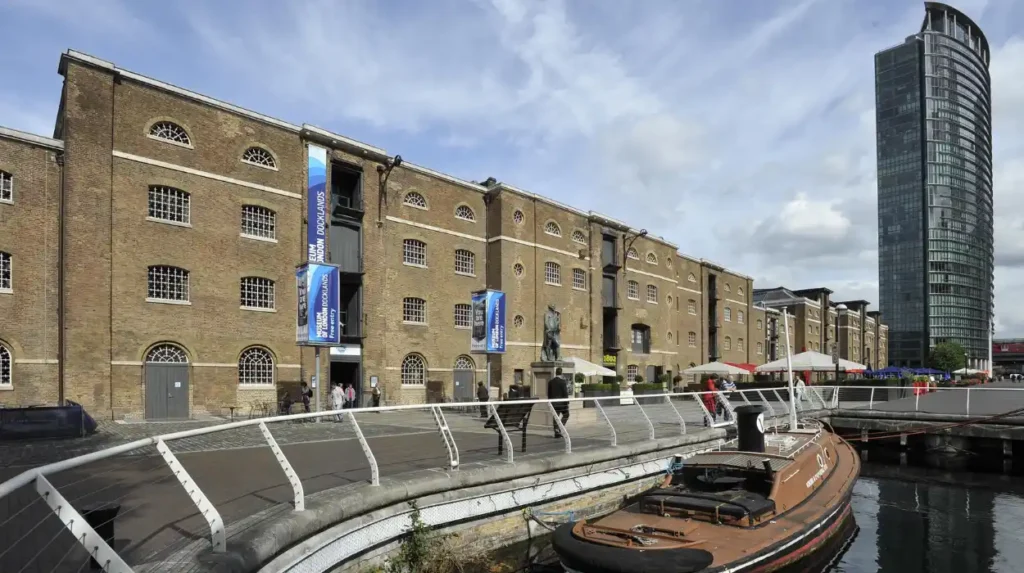
The Museum of London Docklands explains how the River Thames, docks, trade, migration and industry shaped London. Its collections provide historical context for the warehouses, basins and regenerated docklands that visitors encounter across Tower Hamlets today.
The Museum of London Docklands is located at West India Quay beside the former West India Docks. Its setting is important because the building itself forms part of the historic dock landscape.
The museum explores London’s relationship with the Thames and its port. Exhibitions cover subjects including trade, shipping, dock workers, migration, urban development and the transformation of the Docklands.
The West India Docks were central to London’s commercial development during the 19th and 20th centuries. Their warehouses stored imported goods arriving through the port before distribution around London and beyond.
The museum provides useful context before exploring Canary Wharf and the surrounding dock basins. Visitors can see how a landscape once dominated by cargo handling and warehouses became a major financial and commercial district.
The history of Tower Hamlets also includes significant wartime disruption. Council conservation research records extensive damage to housing and dock infrastructure during the Second World War. The subsequent decline of traditional docks accelerated as containerisation changed the requirements of port operations.
East India Docks, for example, eventually closed in 1967 after changing cargo-handling practices made the historic dock facilities obsolete.
This industrial transition is essential to understanding modern East London. Canary Wharf, residential developments and new public spaces were constructed on land previously dominated by dock infrastructure.
The museum therefore functions as more than a standalone attraction. It provides historical context for an entire district and helps visitors interpret the physical landscape outside its doors.
Is Canary Wharf worth visiting as a tourist destination?
Canary Wharf is worth visiting for its high-rise architecture, public spaces, shopping, restaurants, transport connections, waterfront setting and relationship with the former West India Docks. It demonstrates Tower Hamlets’ transformation from an industrial port district into a major business centre.
Canary Wharf occupies the northern part of the Isle of Dogs. The district is internationally recognised as a major financial and commercial centre.
Its skyline contrasts strongly with the historic East End neighbourhoods to the west and north. High-rise office buildings stand beside the preserved dock basins, creating a distinctive combination of modern architecture and industrial heritage.
The public realm includes landscaped areas, pedestrian routes, squares and waterside spaces. Restaurants and shops provide additional reasons for visitors to spend time in the district outside normal business activities.
The area is also highly accessible. Canary Wharf is served by the London Underground, Docklands Light Railway, Elizabeth line and local bus services. This makes it a practical base for exploring other parts of East London.
The West India Docks remain an important physical reminder of the district’s industrial origins. The transformation of the docks demonstrates the scale of economic change that affected Tower Hamlets during the late 20th century.
The council describes Canary Wharf as part of the borough’s internationally recognised Docklands and identifies the district as a major European financial centre.
Visitors interested in architecture can focus on the skyline and public spaces. Visitors interested in history can examine the relationship between modern towers and the surviving dock system.
Canary Wharf also works well for travellers with limited time. Its combination of transport, food, shopping, offices, public spaces and waterfront views creates a compact modern destination.
Explore more Area Guide
Top Family-Friendly Attractions in Tower Hamlets All Year Round
Discover Tower Hamlets: Markets, Museums & Historic Neighbourhoods in East London
Which parks and green spaces are best for visitors in Tower Hamlets?
Victoria Park, Mile End Park, Mudchute Park and Farm and Tower Hamlets Cemetery Park are among the borough’s most significant green spaces. They provide walking routes, recreation, wildlife habitats and open landscapes within one of London’s most densely populated boroughs.
Tower Hamlets contains a substantial network of parks and open spaces despite its high population density. The council identifies Victoria Park, Mile End Park, Mudchute Park and Farm and Tower Hamlets Cemetery Park among important sites for nature conservation.
Victoria Park is the borough’s oldest and largest park. Tower Hamlets Council states that it receives around nine million visits each year.
The park was created in response to severe overcrowding and poor public health conditions in the East End during the 19th century. A petition signed by 30,000 local residents in 1840 called for the creation of a royal park in Tower Hamlets.
Today, Victoria Park provides large lawns, mature trees, water features, paths and recreational spaces. Its location between Bethnal Green, Bow and Hackney makes it accessible from several parts of East London.
Mile End Park stretches along the Regent’s Canal and provides another important green corridor. It includes facilities such as Mile End Stadium, the Ecology Park and the Arts Pavilion.
Mudchute Park and Farm offers a different experience on the Isle of Dogs. It combines open land, wildlife and a working urban farm within the modern Docklands environment.
Tower Hamlets Cemetery Park provides another distinctive landscape. It combines historic cemetery features with habitats for plants and wildlife.
These spaces are particularly useful for visitors seeking a break from museums, markets and dense commercial districts. They also demonstrate the importance of publicly accessible green infrastructure in a densely populated London borough.
What historic and cultural experiences should visitors explore in Whitechapel and Stepney?
Whitechapel and Stepney provide important cultural and historical experiences through religious buildings, markets, community heritage, museums, historic streets and East End architecture. The districts reveal how migration, industry, faith and social change have shaped Tower Hamlets across generations.
Whitechapel is one of Tower Hamlets’ best-known neighbourhoods. Its history includes markets, manufacturing, hospitals, religious institutions, migration and political activity.
The area is particularly important for understanding the multicultural development of the East End. Different communities established businesses, religious institutions and cultural networks in response to changing patterns of migration.
Whitechapel Market remains part of the district’s commercial identity. The surrounding streets provide access to restaurants, shops and historic buildings.
Stepney lies east of Whitechapel and contains several important historic structures. Stepney Green and the surrounding conservation areas provide examples of older residential architecture within a rapidly changing urban environment.
Religious buildings are particularly significant. They demonstrate the changing composition of local communities and the continuing importance of faith institutions in East London.
Tower Hamlets also maintains a substantial local-history collection. The Tower Hamlets Local History Library and Archives contains historic documents dating from 1384, alongside maps, plans, photographs and newspaper cuttings.
This archival material provides evidence for the development of streets, buildings, businesses and communities across the borough.
Visitors interested in local history should therefore consider Whitechapel and Stepney as destinations in their own right rather than simply routes between major attractions.
The districts also connect naturally with Spitalfields and Brick Lane. A walking itinerary through these areas can cover architecture, markets, migration history, food and contemporary East End culture within a relatively short distance.
How can tourists experience Tower Hamlets through its waterways?
Tourists can experience Tower Hamlets through the Thames, Limehouse Cut, Regent’s Canal, Limehouse Basin, Hertford Union Canal and historic docks. These waterways provide walking routes, wildlife habitats, industrial heritage, bridges, boats and views across regenerated neighbourhoods.
Water is one of the defining geographical features of Tower Hamlets. The borough contains sections of the Thames, River Lea, canals and numerous former commercial docks.
The council identifies London’s canals, the River Thames and Bow Creek and the Lea Valley among its metropolitan sites of importance for nature conservation.
The waterways also explain the borough’s industrial history. Canals connected factories and warehouses with the wider transport network, while docks enabled ships to load and unload cargo close to central London.
Limehouse Cut provides one of the clearest examples. It links Limehouse Basin with the River Lea and formed part of the network that moved cargo between the Thames and inland waterways.
Limehouse Basin itself opened in 1820 and operated as an interchange between river and canal transport.
Further east, East India Dock Basin preserves part of the entrance to the former East India Docks. The surviving basin also supports wildlife and is recognised as a site of ecological importance.
Visitors can therefore use waterways as both sightseeing destinations and walking corridors. Routes around the basins reveal historic warehouses, modern apartments, boats, bridges and wildlife.
The Thames provides a different perspective. Riverside routes around Wapping, Shadwell, Tower Bridge and the Isle of Dogs expose visitors to London’s historic port landscape and modern skyline.
For photographers and walkers, the changing relationship between water, historic buildings and modern development is one of Tower Hamlets’ strongest geographical features.
What is the best way to plan a day exploring Tower Hamlets?
A practical Tower Hamlets day should combine one major historic attraction, one cultural district, one waterfront area and one green space. A route linking the Tower, Brick Lane, Spitalfields, Canary Wharf or Victoria Park creates varied experiences without crossing the entire capital.
Visitors with a full day can begin around the Tower of London and Tower Bridge. This establishes the historical and geographical context of the borough.
The next section can focus on Wapping or St Katharine Docks. These areas provide quieter waterfront streets and surviving dock-related architecture.
Travellers interested in food and markets can then continue towards Whitechapel, Spitalfields and Brick Lane. These districts provide restaurants, cafés, market stalls, independent shops and cultural attractions.
An alternative route can concentrate on the Docklands. Visitors can begin at the Museum of London Docklands, explore West India Docks and continue through Canary Wharf.
Those seeking more open space can incorporate Victoria Park or Mile End Park. Victoria Park is particularly useful for a longer break because of its scale and extensive recreational landscape.
Transport is another advantage. Tower Hamlets is served by several Underground lines, the Docklands Light Railway, the Elizabeth line, buses and river services. Visitors should check current Transport for London information before travelling because routes, engineering works and service arrangements change.
Walking remains one of the best ways to understand the borough. The short distances between historic streets, markets, canals, docks and modern developments reveal how different phases of London’s history occupy the same urban landscape.
The best itinerary therefore depends on visitor priorities. History-focused travellers should prioritise the Tower, riverside and Museum of London Docklands. Food-focused visitors should prioritise Spitalfields, Brick Lane and Whitechapel. Architecture-focused visitors should include Tower Bridge, Canary Wharf and the historic docklands. Visitors seeking open space should include Victoria Park, Mile End Park or Mudchute.
Why is Tower Hamlets important for understanding East London?
Tower Hamlets is important because it brings together royal history, maritime trade, migration, industrialisation, multicultural communities, regeneration, finance and green infrastructure. Its neighbourhoods show how East London evolved from historic port districts into one of London’s most dynamic urban areas.
The borough’s importance comes from the concentration of different historical periods within a relatively small area.
The Tower of London represents medieval royal and military power. Wapping and Limehouse represent the historic port and river economy. Spitalfields and Brick Lane demonstrate migration, trade and multicultural development. Victoria Park reflects 19th-century public-health reform and the demand for urban open space. Canary Wharf represents modern financial development.
The decline of the docks was one of the most significant turning points. Mechanised cargo handling and containerisation reduced the importance of the traditional inner-London docks. East India Docks closed in 1967, while other dock facilities also became obsolete during the wider transformation of London’s port system.
Regeneration subsequently transformed large areas of the former docklands. Canary Wharf became a major financial centre, while former industrial land was redeveloped for offices, housing, retail, culture and public space.
At the same time, older neighbourhoods retained important cultural identities. Migration continued to influence food, religion, commerce, language and community life.
The borough’s present-day character therefore cannot be understood through modern skyscrapers alone. Its streets, waterways, markets, parks and historic buildings provide physical evidence of successive stages of East London’s development.
Tower Hamlets remains a major visitor destination because these different layers are accessible within one borough. Tourists can experience royal heritage, maritime history, multicultural food, historic markets, modern architecture and urban nature during the same visit.
Its future relevance is equally strong. The borough continues to experience population growth and urban development. The 2021 Census recorded 310,300 residents, representing 22.1% growth since 2011.
For visitors, this means Tower Hamlets remains a place where historical landscapes and contemporary London continue to exist side by side. Exploring its neighbourhoods provides a broad introduction to the history, culture, geography and ongoing transformation of East London.
What are the best places to visit in Tower Hamlets?
The best places to visit in Tower Hamlets include the Tower of London, Tower Bridge, Brick Lane, Spitalfields, Canary Wharf, Museum of London Docklands, Victoria Park, St Katharine Docks, Limehouse and Wapping. These attractions cover history, food, culture, architecture, shopping and green spaces