Key Points
- Campaign Launch: Hackney Council has initiated a borough-wide, evidence-led campaign urging central government to reform the national childcare system.
- Call for Evidence: Parents and carers in Hackney are invited to share their personal experiences regarding childcare costs, availability, and accessibility until 11 October 2026.
- Systemic Failures: The council highlights that current national support excludes many families, particularly single parents, frontline workers with non-standard hours, and those ineligible for existing schemes.
- Local Subsidies Unsustainable: Unlike many other local authorities, Hackney Council continues to provide subsidised childcare in its children’s centres, though officials stress this is not a long-term solution.
- National Lobbying Plan: Following the evidence-gathering period, the council will compile an anonymised report to present to central government alongside a formal request for systemic reform.
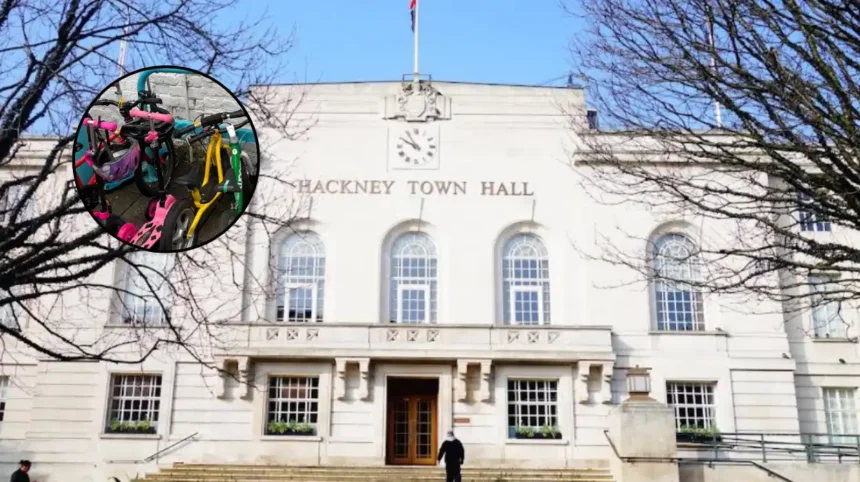
Hackney (East London Times) 11 August 2026 – Hackney Council has officially launched a major campaign demanding an urgent, comprehensive review of the national childcare system by central government. Local authority leaders are calling upon parents and carers across the London borough to submit real-life evidence detailing the financial and logistical obstacles they encounter when attempting to access local provision. The initiative aims to gather qualitative and quantitative data to build a formal case demonstrating that current national framework structures fail to meet the requirements of modern families.
- Key Points
- How Does the Current National System Fail Local Families and Frontline Workers?
- What Actions Is Hackney Council Taking to Support Local Provision?
- How Can Parents Participate and What Are the Next Steps for the Campaign?
- Background of the Particular Development
- Prediction: How This Development Can Affect Parents, Local Authorities, and the Childcare Sector
By collecting accounts from residents using diverse forms of care—including public, private, and voluntary nurseries, children’s centres, childminders, and informal networks—the council intends to compile an extensive evidence base. This evidence will directly inform a report to be delivered to central government ministers, pressing for a structural overhaul of funding and accessibility criteria across the United Kingdom.
How Does the Current National System Fail Local Families and Frontline Workers?
According to details set out in the council’s announcement, successive central governments have failed over several years to resolve systemic deficiencies within early years provision. The local authority noted that while various government support mechanisms exist, navigating the eligibility criteria remains excessively complex, leaving numerous households without adequate state assistance.
The council outlined several key demographics currently underserved by the existing system:
- Single Parents: Households managed by a single parent frequently encounter severe constraints in finding suitable, flexible childcare options that align with employment responsibilities.
- Ineligible Households: Specific financial or administrative circumstances render many families entirely ineligible for standard central government subsidies.
- Frontline and Shift Workers: Parents working non-standard, evening, or weekend hours face disproportionately high costs to secure extended coverage not catered for by traditional providers.
- Families Lacking Informal Support: Parents without localized family networks suffer acute pressure when emergency or short-notice childcare becomes necessary.
What Actions Is Hackney Council Taking to Support Local Provision?
Unlike many other local authorities across the country that have scaled back or eliminated direct early years subsidies due to wider municipal budget pressures, Hackney Council has maintained direct funding for subsidised places within its own network of children’s centres. However, council representatives emphasized that local government intervention cannot serve as a permanent replacement for a fully funded national framework.
Council leaders stated that municipal authorities cannot be expected to shoulder the financial burden of a fragmented sector independently. Describing access to quality early years care as a national issue that must not depend on a “postcode lottery”, the local authority maintained that long-term sustainability requires direct policy intervention and recalibrated funding mechanisms from central government.
How Can Parents Participate and What Are the Next Steps for the Campaign?
The council’s public call for evidence will remain open to all Hackney residents until 11 October 2026. Parents and carers who currently use, have previously used, or plan to use any form of early years care within the borough are encouraged to submit their experiences.
Once the consultation window closes on 11 October 2026, Hackney Council will aggregate and anonymise the collected testimony. This data will form the core of a published public report, which will be submitted directly to central government ministers accompanied by a formal letter demanding legislative and budgetary adjustments. The council aims to leverage the unified evidence base to push for an equitable, affordable model accessible to all demographics.
Explore More Hackney Council News
Hackney Mayor Criticised Over Haifa Twinning 7 October Deadline London 2026
Hackney Council Votes to End Haifa Twin City Deal, London 2026
Background of the Particular Development
The national debate surrounding early years education and childcare funding in the United Kingdom has intensified significantly over recent years. Local authorities across England have faced mounting financial pressures, leading to widespread reductions in discretionary spending, including funding for local children’s centres and municipal nurseries.
While central government has introduced policies such as expanded free entitlement hours for working parents, sector representatives, early years providers, and local councils have frequently pointed out that government funding rates per hour often fall short of the actual delivery costs incurred by providers. This structural shortfall has historically forced nurseries to raise fees for non-funded hours or apply additional charges for consumables, indirectly increasing costs for parents.
Hackney Council’s decision to maintain direct municipal subsidies within its local children’s centres represents a deliberate departure from the national trend of municipal retrenchment. However, with local authority budgets nationwide subject to tight fiscal constraints, councils are increasingly arguing that local safety nets are insufficient to plug systemic gaps in national welfare and educational infrastructure.
Prediction: How This Development Can Affect Parents, Local Authorities, and the Childcare Sector
If Hackney Council successfully gathers a substantial volume of evidence by the 11 October 2026 deadline, the resulting report could serve as a model for other local authorities seeking to challenge central government policy on early years funding.
- For Parents and Carers: In the immediate term, local families gain a direct platform to highlight specific cost and operational barriers. If the subsequent lobbying effort compels central government to adjust funding formulas or broaden eligibility criteria, parents—particularly shift workers and single-income households—could eventually benefit from reduced out-of-pocket costs and expanded flexible care hours.
- For Hackney Council and Other Local Authorities: A successful campaign could alleviate the financial strain on municipal budgets by shifting the long-term funding obligation back to central government. Conversely, if central policy remains unchanged, Hackney Council may face difficult fiscal choices regarding the ongoing viability of its local children’s centre subsidies.
- For Early Years Providers: National reform spurred by municipal lobbying could lead to a restructuring of baseline subsidy rates, providing greater financial stability for private, voluntary, and independent nurseries that currently struggle with operational overheads and staffing retention.