Key Points
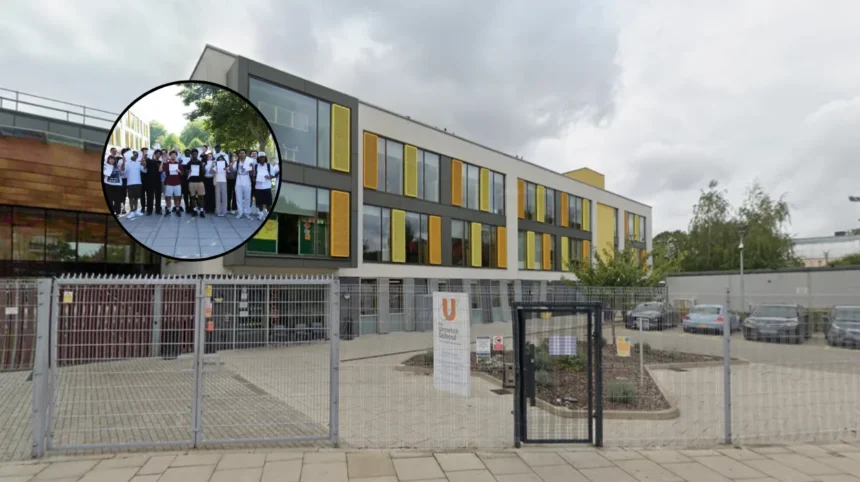
- Record Performance: The Urswick School in Hackney has secured its highest-ever A-level examination results.
- Significant Grade Increase: 87 per cent of all recorded grades reached the A* to C boundary.
- Year-on-Year Growth: The attainment level represents a 12 percentage point rise from the 75 per cent recorded in the previous academic year.
- Sustained National Standing: The sixth form maintains its standing in the top 20 per cent nationally for student A-level progress for the third consecutive year.
- Academic Advancement: The performance underscores standout student achievement and individual progress across the cohort.
Hackney (East London Times) August 13, 2026 — The sixth form at The Urswick School, located in the London Borough of Hackney, is celebrating the official release of its highest-ever A-level examination results, marking a year defined by standout student achievement and measurable individual progress across the entire sixth-form cohort. According to verified figures released by the educational establishment, 87 per cent of all A-level grades achieved by candidates were graded at A* to C. This statistical outcome demonstrates a direct 12 percentage point increase compared to the previous academic year’s performance metrics, where 75 per cent of grades fell within the same A* to C range.
How Does The Urswick School Compare Nationally for Student Progress?
The latest results further consolidate the institution’s ongoing benchmark position within the national educational system. The Urswick School has officially maintained its placement in the top 20 per cent of all schools and sixth forms nationally for A-level value-added progress for three years running. This metric tracks the individual value added to a pupil’s academic trajectory between the completion of their GCSEs and the final award of their A-level qualifications, confirming that students consistently perform above statistical expectations relative to their prior baseline attainment.
Background of The Urswick School and A-Level Progress Metrics
The Urswick School, formerly known as Hackney Free and Parochial Church of England School, is a secondary comprehensive school and sixth form situated in Central Hackney. The institution serves a diverse demographic within Inner London, catering to students across key stages of secondary and post-16 education.
In recent years, the Department for Education (DfE) progress measures—often referred to as value-added scores—have been utilised across England to assess how much progress students make between Key Stage 4 and Key Stage 5 compared to pupils across England who achieved similar examination results at the end of Key Stage 4. Remaining in the top 20 per cent nationally over a three-year period indicates sustained instructional quality, curriculum planning, and targeted academic intervention over multiple successive cohorts, rather than an isolated uptick in performance by a single year group.
Prediction: How Will This Academic Development Impact Local Students and the Community?
The attainment of record-breaking examination results and the maintenance of top-tier national progress rankings carry significant long-term operational and academic implications for key stakeholders in the local community:
- For Current and Prospective Students: The higher proportion of top-tier grades directly enhances university admission outcomes, widening access to higher education institutions, competitive higher apprenticeship programmes, and vocational training pathways. Furthermore, prospective post-16 applicants within Hackney are provided with a clear regional benchmark of academic improvement when selecting post-16 destinations.
- For the School Administration and Teaching Staff: The sustained presence in the upper quintile of national progress metrics strengthens staff recruitment and retention efforts. Demonstrating three-year consistency provides school leaders with empirical backing to sustain current pedagogical frameworks and curriculum design.
- For the Local Hackney Community and Educational Infrastructure: Strong academic outputs from local comprehensive secondary schools help counter historical educational disparities in urban centers, improving overall social mobility indicators within the borough and bolstering confidence in the local state-funded comprehensive education sector.