Key Points
- Hackney Church Brew Co Intervention: A brewery in East London asked their customers not to form single-file queues but rather to fill the entire length of the bar.
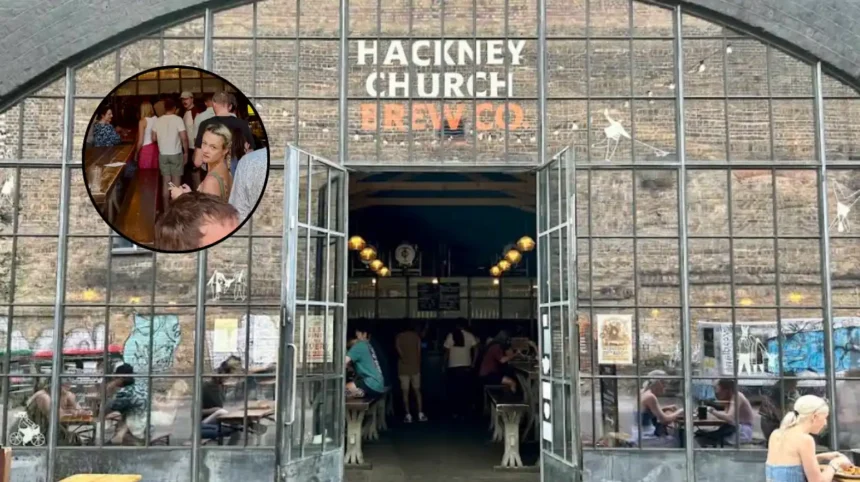
- Viral Online Image: The bar shared an image showing off their “exceptionally British” customer behavior, as the staff was looking at 15 feet of unused counter space while there was a queue out the door.
- Increase in Sales: After the marketing push, the company saw a marked increase in like-for-like sales owing to faster service and shorter wait times for their customers.
- Customers’ Changed Behaviors: The management said that customer behaviors after the pandemic era and politeness issues caused customers to behave like they did in a post office queue in bars.
Hackney (East London Times) August 31, 2026 – An East London brewery has reported a surge in business and smoother operations after successfully launching a public campaign urging customers to stop forming single-file queues at the bar. Staff at the Hackney Church Brew Co taproom in Bohemia Place had previously been forced to shout “please stop queuing” at lines of patrons stretching out of the building, whilst feet of bar space remained entirely vacant.
- Key Points
- Why did Hackney Church Brew Co issue an intervention against single-file queuing?
- How did the campaign impact sales and service speeds?
- Why are British pub-goers queueing in single-file lines?
- Background of the Post-Pandemic Single-File Queueing Trend
- Prediction: How This Development Can Affect Pub Culture and Hospitality Businesses
Following an online “intervention” by the establishment calling out the phenomenon, customer habits changed rapidly, resulting in faster service and an immediate commercial boost.
Why did Hackney Church Brew Co issue an intervention against single-file queuing?
As reported by The Standard, staff at the brewery grew frustrated after witnessing punters instinctively lining up behind one another rather than taking up open spots along the length of the serving area.
Writing on social media alongside a photo of a long line cutting through the venue, the pub stated:
“A bar is not a post office. You do not need to form one enormous, beautifully polite British queue stretching halfway across the taproom while four members of staff stare forlornly at 15 feet of completely empty bar.”
As recorded by Hamish Glenn, managing director of Hackney Church Brew Co in an article published by Broadsheet London, the venue tried multiple methods to fix the issue before going public. Glenn noted:
“We tried signs. We tried politely encouraging people. We tried instructions. We may even have resorted to the occasional bit of shouting. Nothing really worked.”
How did the campaign impact sales and service speeds?
Speaking to The Standard, manager Hamish Glenn confirmed that the pub saw a 20 per cent increase in like-for-like sales compared to the previous week following the intervention, attributing the bump directly to faster service times.
As reported by The Standard, Glenn stated:
“People spent less time queueing and more time enjoying themselves and, ultimately, ordering drinks. The atmosphere felt more like a pub again, and customers weren’t spending half their evening standing in a line. It’s better for the customer, better for the staff and better for the business.”
Writing for Broadsheet London, Glenn further expanded on the operational results, explaining that overall footfall remained roughly the same, but the speed of service allowed spend per head to increase. He noted:
“For the first time in what felt like forever, our bar looked like a pub bar again. People spread themselves along its full length. Staff served multiple customers simultaneously. Drinks moved faster.”
Why are British pub-goers queueing in single-file lines?
As reported by The Standard, Glenn explained that the phenomenon stems partly from altered social habits following Covid-19 restrictions, alongside traditional social awkwardness.
As cited by The Standard, Glenn explained: “Some of those behaviours seem to have stuck.” He added that there is also an element of “misplaced British politeness” at play.
As reported by The Standard, Glenn added:
“People see one person standing behind another and instinctively think, ‘That’s the queue,’ and join the back. Within a few minutes you’ve got 20 people stretching across the room while half the bar is completely empty.”
Writing in Broadsheet London, Glenn argued that traditional bar etiquette relies on an unwritten social contract where punters crowd the bar and trust experienced staff to keep track of who is next. He noted that single-file queuing effectively turns a multi-point serving counter into a single-person checkout system, causing unnecessary delays for everyone involved.
Background of the Post-Pandemic Single-File Queueing Trend
The debate surrounding single-file lines in British drinking establishments has intensified over recent years. Prior to the COVID-19 pandemic, standard pub etiquette in the UK dictated that customers should approach any open space along the bar counter, wait to be noticed, and rely on bar staff to maintain the ordering order.
However, during social distancing mandates between 2020 and 2022, many venues implemented explicit floor markings, stanchions, and single-file queueing systems to manage foot traffic and maintain physical distance.
Publicans across the UK have increasingly reported that these structural habits persisted long after health guidelines were lifted. While venue managers view the trend as an inefficient drain on service speeds and bar capacity, public opinion remains split, with several consumer polls indicating that a proportion of younger pub-goers actively prefer predictable single-file lines over traditional crowding.
Prediction: How This Development Can Affect Pub Culture and Hospitality Businesses
This successful intervention by Hackney Church Brew Co is likely to encourage other UK hospitality venues to actively challenge single-file queueing in their own premises. As independent pubs and taprooms operate on tight profit margins, evidence of a direct sales increase resulting from restored bar-side ordering will serve as a compelling financial incentive for owners to intervene.
For patrons, this shift will likely mean increased signage, direct staff communication, and social media campaigns aimed at re-educating the public on traditional pub etiquette. If more publicans follow suit, drinking establishments across the country may see a return to traditional bar crowding, reducing waiting times and improving peak-hour revenue, while requiring customers to abandon pandemic-era queuing habits in favour of traditional bar service.