Key Points
- Emergency services attended a death at Mile End Underground station in East London, which took place on the rail lines.
- A deceased individual was declared by paramedics at the scene due to quick emergency response efforts.
- The British Transport Police has stated that there were no suspicious circumstances around this death, and a report will be provided to the coroner.
- Services on the Central line were stopped between Liverpool Street and Leytonstone, which led to major delays across the network.
- This occurred during a busy weekend day, affecting numerous travelers.
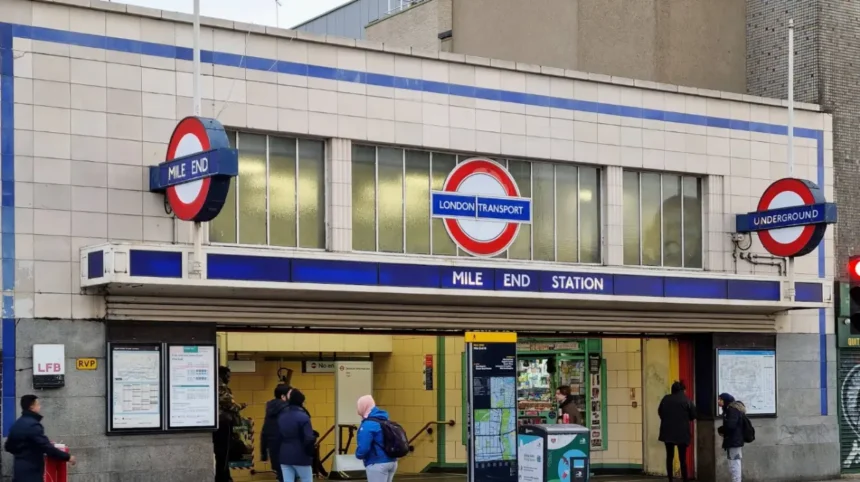
Mile End (East London Times) August 31, 2026 – Emergency response teams were called to Mile End Underground station in East London on Saturday afternoon following reports of a casualty on the tracks, which resulted in a fatality and widespread travel disruption across the London Underground network. Emergency services rushed to the scene shortly after 4:00 pm on Saturday, 29 August, following urgent calls regarding an incident on the Central line platform. Despite the rapid arrival of officers from the British Transport Police alongside crews from the London Ambulance Service, the individual involved was declared dead at the scene.
What Happened During the Emergency Response at Mile End Underground Station?
Emergency responders were dispatched to the station premises immediately after the alarm was raised to secure the area and attempt life-saving measures. As reported by Louis Dargavel Corbett of MyLondon, a spokesperson for the British Transport Police stated that officers were called to the scene at approximately 4:00 pm on Saturday, 29 August, following reports of a casualty on the track. As further reported by Louis Dargavel Corbett of MyLondon, the British Transport Police spokesperson confirmed that officers responded alongside paramedics, but sadly, a person was pronounced dead at the scene.
Following the initial emergency operational response, law enforcement officials assessed the site and established a formal cordon to facilitate investigations. As reported by Louis Dargavel Corbett of MyLondon, the British Transport Police spokesperson confirmed that the incident is not being treated as suspicious and that a official file will be prepared for the coroner in due course.
How Did the Incident Impact Central Line Services and London Commuters?
The tragic event led to an immediate halting of rail operations across key sections of the Central line to enable emergency crews and forensic personnel to carry out their duties safely. Transport for London confirmed that train movements were suspended between Liverpool Street and Leytonstone, two major interchange hubs on the eastern branch of the network. This localized stoppage reverberated across the entire Central line route, leading to severe delays on remaining operating segments for several hours throughout Saturday evening.
Station staff at Mile End assisted in clearing platforms and guiding passengers away from the station concourse as emergency vehicles blocked access roads outside. Alternative routes were made available, with Transport for London accepting Underground tickets on local bus networks, London Overground services, and national rail routes serving East London to mitigate the travel disruption during the peak weekend hours.
Background to Emergency Response Protocols on the Underground Network
The management of incidents involving casualties on the track forms a critical part of Transport for London’s operational safety guidelines. When an incident on the track is reported to the network control centre, power to the affected traction rails is immediately isolated to ensure the safety of both emergency responders and station personnel entering the track bed.
British Transport Police work in close coordination with the London Ambulance Service, including specialist units such as the Hazardous Area Response Team (HART), when attending subterranean transport incidents. These procedures are designed to allow rapid medical evaluation while maintaining physical security across busy public transport infrastructure. Following the clearance of an incident, thorough safety checks of the track, signaling systems, and rolling stock must be completed before transport authorities can grant authorization to resume normal passenger services.
What Is the Future Impact for Passengers and Transport Authorities?
Incidents of this nature highlight the ongoing operational and social challenges facing urban mass transit systems like the London Underground. For the travelling public, particularly those who rely on the Central line through East London, recurring track disruptions underscore the fragility of high-frequency rail corridors during emergency events. Transport for London is likely to continue evaluating passenger safety measures across underground platforms, including structural barriers and enhanced emergency monitoring technologies, to minimize risk and streamline operational recovery protocols.
For the immediate future, commuting audiences using Mile End and adjacent stations may encounter temporary operational adjustments as transport managers process safety data gathered during the emergency response. The incident also reinforces the critical role of support networks and public resources made available across the transport domain to assist individuals experiencing distress near public transit corridors.