Key Points
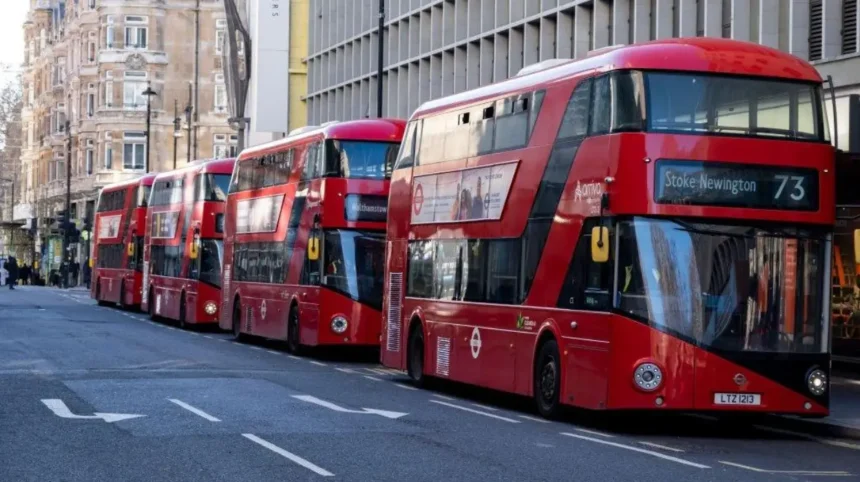
- The Transport for London (TfL) is launching the brand-new SL12 Superloop express bus service in Havering on Saturday, 5 September.
- Free rides will be offered for all passengers traveling along the entire SL12 route during the first seven days of its operation.
- This new route creates a direct express link between key transport interchange points, town centers, and hospitals in the area.
- More frequent departures will operate from early in the morning through late at night for the convenience of both commuters and hospital visitors.
- This event represents another step in TfL’s plan for expanding the express public transportation in outer London.
Havering (East London Times) September 2, 2026 – A new express bus service, the Superloop SL12, is officially launching in Havering this Saturday, 5 September, offering passengers free travel across its first seven days of operation. Transport for London (TfL) confirmed the service rollout as part of its ongoing scheme to enhance orbital transit links across outer London. The introductory zero-fare period aims to introduce residents to the express route, which connects key rail intersections, retail hubs, and critical healthcare facilities with significantly reduced journey times compared to standard local stopping services.
- Key Points
- What is the SL12 Superloop bus service and when does it start?
- Why is Transport for London offering free travel during the first week?
- Which areas and destinations does the SL12 route connect?
- How does the SL12 fit into the wider Superloop transit strategy?
- Background of the Superloop Network Development
- Future Impact and Predictions for Havering Residents and Commuters
What is the SL12 Superloop bus service and when does it start?
The SL12 is the latest addition to TfL’s Superloop network, a strategically planned circuit of express bus routes designed to circle outer London suburbs. The service officially commences operations on Saturday, 5 September. Operating as a limited-stop express service, the SL12 bypasses lower-demand residential stops to provide faster, direct transit between major urban nodes.
Buses will run at high frequencies throughout the week, starting early in the morning and running through to late evening. The introduction of this express corridor aims to reduce reliance on private motor vehicles, ease traffic congestion along Havering’s primary arterial roads, and provide a seamless transfer interface for passengers connecting to National Rail, London Underground, and Elizabeth Line services.
Why is Transport for London offering free travel during the first week?
To mark the public launch and encourage adoption among local residents, TfL announced that all journeys on the SL12 route will be free of charge for the first seven days, concluding at the end of service on Friday, 11 September. Passengers boarding the SL12 during this introductory window will not be required to touch in with an Oyster card, contactless payment card, or hold a pre-purchased ticket.
Transit officials expect the promotional initiative to attract high passenger volumes, allowing daily commuters and local shoppers to test the route’s travel times and connectivity before standard fare structures—including daily caps and the Hopper Fare scheme—take effect from Saturday, 12 September.
Which areas and destinations does the SL12 route connect?
The SL12 route has been mapped specifically to bridge significant public transport gaps across Havering and adjacent east London localities. By stopping exclusively at high-capacity transport interchanges, busy town centers, and major social infrastructure, the express line drastically cuts travel duration across the borough.
Key stops and transport interchanges
The route connects several critical hubs, including:
- Romford Town Centre and Station: Providing rapid interchanges with the Elizabeth Line, London Overground, and national rail lines.
- Hornchurch Town Centre: Connecting shoppers and commuters to local retail corridors and District Line services.
- Upminster Station: Offering links to C2C rail lines and the eastern terminus of the District Line.
- Queen’s Hospital: Delivering direct express access for patients, visitors, and NHS healthcare workers.
By prioritizing these primary locations, the SL12 creates a consolidated corridor that eliminates the need for passengers to make multiple bus transfers or navigate slow, highly frequent local stops.
How does the SL12 fit into the wider Superloop transit strategy?
The Superloop initiative was introduced by TfL to improve outer London’s orbital connectivity, which historically required passengers to travel inwards toward Central London to switch lines effectively. The addition of the SL12 expands this circumferential ring into Havering, creating stronger lateral ties across east London.
By linking key suburban hubs directly, the service caters to modern travel patterns where suburb-to-suburb commutes represent a major portion of local journeys. The buses assigned to the SL12 fleet feature modern vehicle standards, including onboard USB charging points, real-time audio-visual destination displays, and dedicated accessibility areas for wheelchair users and pushchairs.
Background of the Superloop Network Development
The introduction of the SL12 in Havering represents a continuation of Transport for London’s outer London transit strategy, initially unveiled to complement the expansion of the Ultra Low Emission Zone (ULEZ). Following public consultations regarding outer borough infrastructure, transport planners identified a distinct demand for rapid, high-frequency bus networks that avoid the congestion of central zone connections.
Prior to the rollout of the Superloop series, outer London transit relied heavily on radial routes leading inward toward inner-city terminals. Commuters wishing to travel laterally between adjacent suburban towns were often subjected to lengthy journeys on local stopping buses or complex multi-leg journeys on rail networks.
To address this, TfL designed the Superloop concept as an express framework, utilising existing road networks but standardising stop spacing, bus branding, and timetable coordination. Previous iterations, such as the SL1, SL2, and SL10, saw measurable increases in suburban bus patronage, leading transport authorities to authorize the implementation of the SL12 corridor to serve the growing population and commercial activity within Havering and surrounding eastern districts.
Explore More Havering News
Havering Council Proposes Borough-Wide PSPO Restrictions: Community Response, Havering 2026
Havering Council Launches Consultation for Borough-Wide PSPO: Havering 2026
Future Impact and Predictions for Havering Residents and Commuters
The launch of the SL12 Superloop route is expected to bring structural changes to travel habits, commercial engagement, and public infrastructure demand across Havering.
Impact on daily commuters and transit users
For daily commuters, the SL12 will likely decrease total travel time between key rail interchanges like Romford and Upminster. By providing a reliable express alternative, the service may alleviate peak-hour overcrowding on local stopping bus lines that mirror portions of the route. The initial seven-day free travel period is anticipated to drive immediate high demand, establishing new commuting routines early in the service launch.
Impact on local business hubs and healthcare accessibility
Retail corridors in Romford and Hornchurch stand to benefit from increased footfall due to direct, low-friction transit access. Furthermore, the direct connection to Queen’s Hospital addresses longstanding community feedback regarding travel access for patients, visitors, and hospital staff. The reduction in travel friction could lower missed appointments and decrease parking congestion around the hospital site.
Impact on road congestion and environmental goals
Over the medium to long term, if the express service successfully incentivises a modal shift from private cars to public transit, Havering’s primary arterial roads could experience slight reductions in local traffic density. This aligns with broader municipal transport targets aimed at lowering vehicle emissions and improving localized air quality across outer London boroughs.