Key Points
- Romford Conservative Chairman Dominic Swan has leveled scathing criticisms against Reform UK based on their performance within their first 100 days of running Havering Council.
- According to Romford Conservative, Reform UK broke its promises concerning “Hexit” (or exit from Greater London), restructuring politics, re-opening libraries, and taxation.
- Criticisms focus on the council tax hikes and a concession by Reform UK leaders that the community would be “considerably worse off” outside of London.
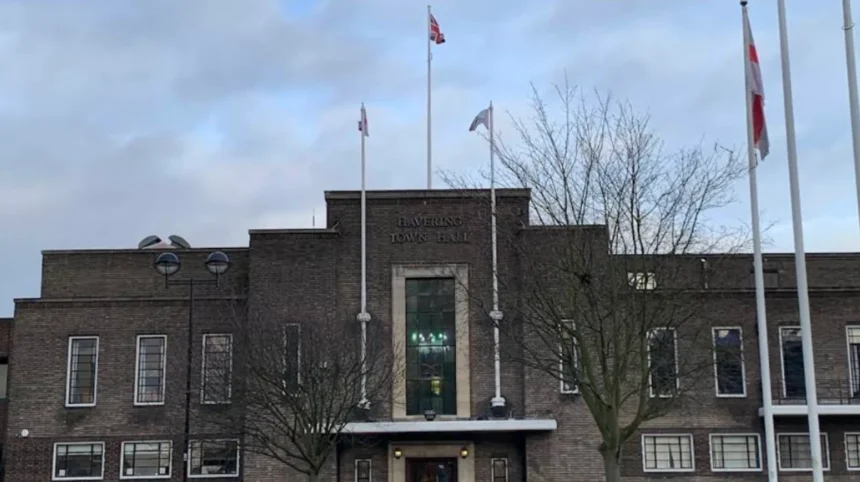
- Questions have been raised about the management of the civic council, including issues such as high staff wages and flying of the Union Jack upside down on the Town Hall.
Romford (East London Times) September 7, 2026 – Romford Conservative Chairman Dominic Swan has formally challenged the Reform UK administration governing Havering Council, issuing a direct response to the political group’s newly published 100-day progress report and accusing them of abandoning core election commitments made to local residents.
- Key Points
- Why Has the Conservative Leadership Challenged Reform UK’s First 100 Days in Havering?
- How Has the Controversy Over ‘Hexit’ and Greater London Membership Unfolded?
- What Are the Key Allegations Regarding Councillor Roles, Libraries, and Local Tax Bills?
- Background of the Havering Political Development
- Prediction: How Will This Development Affect Local Residents and Taxpayers?
Why Has the Conservative Leadership Challenged Reform UK’s First 100 Days in Havering?
Dominic Swan, speaking on behalf of the local Conservative organisation, expressed stark disappointment over the administration’s initial trajectory, arguing that promises regarding structural reform, library re-openings, and municipal council tax cuts have failed to materialise. Criticising the pace at which platform pledges were set aside, Dominic Swan asserted that while running a local authority presents distinct operational hurdles, “the speed with which Reform have forgotten their promises to voters is shocking.” He further stated that the administration has “issued a 100-day report that simply ignores their own pledges.”
How Has the Controversy Over ‘Hexit’ and Greater London Membership Unfolded?
Central to the dispute is the proposal colloquially termed “Hexit”—the political ambition for the London Borough of Havering to secede from Greater London to reduce administrative costs. According to statements highlighted by Dominic Swan, Reform UK originally campaigned on assurances that departing Greater London would yield millions in public savings.
However, following the election, Dominic Swan noted that Reform UK’s own Council Leader publicly conceded that “Hexit would make residents significantly worse off,” subsequently labelling the core proposal a “political distraction.” Dominic Swan observed that less than a quarter of local Council Tax receipts actually flow to Greater London authorities to cover essential regional services, including the Metropolitan Police, London Fire Brigade, and Freedom Pass transport schemes for seniors.
What Are the Key Allegations Regarding Councillor Roles, Libraries, and Local Tax Bills?
Dominic Swan raised additional concerns regarding local governance operational costs, local infrastructure, and household financial strains:
- Governance and Staffing: Despite campaign promises to eliminate 18 councillor positions to curb administrative overheads, Dominic Swan highlighted that no reductions have occurred. Instead, he noted that an additional taxpayer-funded Cabinet position was established for a Reform UK politician, while the Council Leader maintains two full-time taxpayer-funded roles.
- Public Libraries: A core pledge to re-open closed branch libraries on day one of the administration remains unfulfilled, with Dominic Swan pointing out that no operational timetable for their re-opening has been published to date.
- Council Tax Increases: Addressing local tax policy, Dominic Swan emphasised that despite pledges to reduce household expenses, Band D Council Tax expanded again this year by £111.
- Civic Symbols: Turning to civic management, Dominic Swan referenced the restoration of the national flag at the municipal offices, remarking, “I am pleased that the Union Jack is flying over the Town Hall again. Sadly, Reform flew it the wrong way up.”
Looking toward upcoming political debates, Dominic Swan anticipated that the municipal leadership would seek to transfer accountability for local budget deficits and structural pressures onto external authorities, noting that “soon Reform will try and blame their failure on Sadiq Khan or the Labour government – even though they were in power before Reform made their pledges.” He concluded that
“Havering needs a Council that focuses on solving our problems, not slogans and false promises.”
Background of the Havering Political Development
The London Borough of Havering, anchored by Romford, sits on the outer eastern boundary of Greater London. Over recent electoral cycles, local political debates have frequently intersected with broader questions surrounding London-wide administration, transport charging, policing resources, and suburban independence. Reform UK’s campaign in Havering captured significant local attention by promising radical municipal reform, including tax relief, structural downsizings, and a reassessment of Havering’s administrative relationship with Greater London. Dominic Swan’s direct intervention marks a key consolidation of opposition scrutiny as local political parties prepare for mid-term accountability debates.
Prediction: How Will This Development Affect Local Residents and Taxpayers?
This ongoing political contest between the Conservative opposition and the Reform UK administration directly affects local residents in several concrete ways:
- Household Finances: With Band D Council Tax rising by £111, residents will continue to navigate immediate cost-of-living adjustments, while discussions surrounding regional precept allocations remain a focal point of future town hall budget sessions.
- Community Services: The continued closure of local libraries and the absence of a defined restoration timeline directly impact access to educational support, digital services, and public community spaces across the borough.
- Strategic Identity & Services: The retreat from “Hexit” confirms that Havering will remain fully integrated within Greater London structures, ensuring uninterrupted funding models for local emergency services (Metropolitan Police and London Fire Brigade) and public transport access via Freedom Passes, albeit under continued political debate regarding local governance efficiency.