Key Points
- Project Completion: Major roadworks at the notorious Gallows Corner junction in East London have finally been completed following extensive structural and utility works.
- Initial Timeline Delayed: The scheme was originally scheduled to reopen in spring, but unexpected complications regarding water mains replacement pushed the target completion back by several months.
- Council Leader Reaction: Council leader Councillor Keith Prince expressed relief on behalf of local stakeholders, stating that “the nightmare is finally over for residents and businesses who have had to put up with months of unacceptable disruption at Gallows Corner.”
- Widespread Disruption: The protracted closures and lane restrictions caused severe traffic congestion, transit delays, and financial strain for nearby commercial establishments throughout the construction phase.
- Infrastructure Upgrade: The essential works involved complex engineering interventions aimed at ensuring long-term structural integrity and modernising underground utility infrastructure.
Romford (East London Times) September 22, 2026 – One of London’s most protracted and disruptive infrastructure schemes has finally drawn to a close as engineers fully reopened the Gallows Corner junction, bringing an end to months of gridlock, bus diversions, and commercial loss across the London Borough of Havering. The critical East London junction, which connects the A12, A127, and Straight Road, had been subjected to strict lane restrictions and temporary traffic management systems whilst major maintenance and essential utility upgrades were carried out. Although transport authorities had initially planned for the thoroughfare to be fully operational by the spring, unforeseen complications encountered during the replacement of aging subterranean water mains forced contractors to repeatedly extend the timeline, pushing the final completion date back deep into the year.
- Key Points
- Why Were the Gallows Corner Roadworks Delayed Beyond the Spring Target?
- How Did Local Authorities and Leaders Respond to the Reopening?
- What Impact Did the Extended Roadworks Have on Local Businesses and Commuters?
- Background of the Particular Development
- Prediction: How This Development Can Affect Local Residents, Commuters, and Regional Businesses
Why Were the Gallows Corner Roadworks Delayed Beyond the Spring Target?
The primary catalyst for the multi-month delay centred on complex underground utility works that proved significantly more challenging than initial site surveys had indicated. Transport for London (TfL), working alongside utility contractors, identified that critical water mains running directly beneath the complex roundabout layout required full replacement rather than simple localized repairs.
As reported by Ross Lydne of the London Evening Standard, project engineers encountered intricate subterranean pipework networks that demanded specialized excavation techniques to avoid disrupting high-voltage power lines and gas connections servicing East London. The necessity to carefully isolate, drain, and reconstruct these heavy-duty water mains under stringent safety protocols meant that surface-level resurfacing and structural repairs to the flyover approaches had to be placed on hold until the utility infrastructure was fully secured and pressure-tested.
How Did Local Authorities and Leaders Respond to the Reopening?
Local political representatives and community leaders have reacted to the reopening with a mixture of intense relief and sharp criticism over the duration of the disruption. As reported by Noah Vickers of the Local Government Chronicle, Council leader Councillor Keith Prince welcomed the final removal of the cones and barriers while directly addressing the severe strain placed on the surrounding borough.
Councillor Keith Prince stated that “the nightmare is finally over for residents and businesses who have had to put up with months of unacceptable disruption at Gallows Corner.” Prince further emphasized that while the long-term integrity of the infrastructure was vital, the economic and logistical toll exacted on local traders and daily commuters highlighted systemic issues in how major arterial roadworks are planned, executed, and managed across the capital.
What Impact Did the Extended Roadworks Have on Local Businesses and Commuters?
The prolonged lane closures created severe operational bottlenecks for logistics firms, public transport operators, and local merchants who rely on the A12 and A127 corridors. During the peak construction months, journey times through Romford and Harold Wood frequently doubled, causing severe tailbacks that spilled over into residential side streets.
As reported by Jordan Pettitt of the East London Advertiser, local retail owners situated along the perimeter of the roundabout reported substantial drops in footfall and revenue due to restricted access and heavy congestion deterring potential customers. Delivery drivers faced daily delays, while Transport for London was forced to temporarily re-route several key bus services, extending travel times for thousands of daily passengers reliant on connections to Romford Station and Elizabeth line services.
Background of the Particular Development
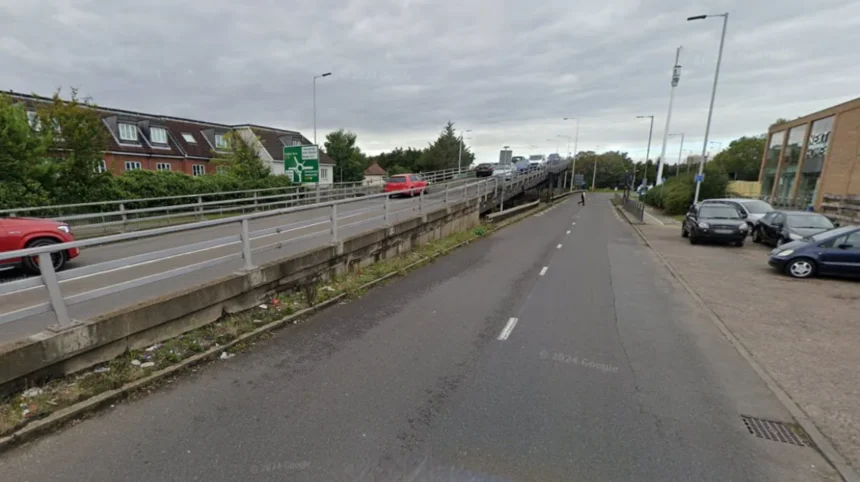
Gallows Corner has long held a reputation as one of the most congested and complex road interchanges in Greater London. Originally constructed in the 1970s as a temporary solution to manage rising traffic volumes between Central London, Essex, and the M25 motorway, the elevated flyover and accompanying five-arm roundabout were never designed to handle the heavy freight and vehicular capacities currently passing through the junction on a daily basis.
Over the past decade, the aging structure has required increasingly frequent emergency interventions, surface patching, and structural assessments. Transport for London had designated the junction for major refurbishment to extend its operational lifespan. However, the requirement to integrate major utility updates—specifically replacing Victorian-era and mid-century water distribution pipes—transformed what was intended as a routine engineering repair into a massive multi-agency undertaking. The friction between transport planners, local borough councils, and utility providers over scheduling and lane management has repeatedly surfaced during previous maintenance cycles at the site, making this latest completion a critical milestone in East London’s transport history.
Prediction: How This Development Can Affect Local Residents, Commuters, and Regional Businesses
The complete reopening of the Gallows Corner junction is anticipated to deliver immediate and wide-ranging benefits to several key groups across the London Borough of Havering and the wider South East movement corridor:
- Local Residents and Drivers: Commuters using the A12, A127, and local feeder routes can expect a substantial reduction in daily travel times. The restoration of full lane capacity will eliminate the severe bottlenecking that previously diverted thousands of vehicles onto narrow residential roads in Romford, Harold Wood, and Gidea Park, thereby improving local air quality and restoring quieter neighborhood conditions.
- Public Transport Users: Transport for London bus routes that suffered chronic delays and emergency diversions will return to standard timetables. Bus passenger reliability for connections toward Romford Station and Elizabeth line transit hubs will improve significantly.
- Local Business Owners: Commercial establishments along the outer edges of the junction and nearby retail parks should experience a recovery in customer footfall. Improved road accessibility and the removal of unsightly construction barriers will make local commerce viable once again for passing motorists and regional shoppers.
- Freight and Logistics Operators: As a crucial arterial linkage connecting London with the Essex ports and the M25, the removal of restrictions will allow hauliers and freight operators to optimize delivery schedules, cutting fuel costs and idle time previously lost in junction queueing.